Updated: August 16, 2026
Unlike the French, the Habsburgs and the Russians, the British Empire was predominantly a naval power. This was both its great strength and a persistent weakness.
It was a strength because, well into early 20th century, no rival could match Britain’s command of the seas. Naval dominance meant control over global shipping lanes—the lifeblood of commerce—and the ability to sustain a far-flung empire.
But it was also a weakness. Britain often struggled to field sufficient land forces, especially for large-scale continental or overseas wars.
Throughout the 18th century, this shortage of manpower forced Britain to rely on aggressive naval impressment and the hiring of foreign troops.
Press gangs and Britain’s naval practices are a topic I explore in my interview with Dr. Chris Magra. In this post, I focus on Britain’s dire need for ground troops during the American Revolution—and its extensive attempts to find them.
The Hessians: More Than the Story We Learned
We Americans learn about the Hessians early on—not only in school, but also in popular culture. For example, the Headless Horseman in The Legend of Sleepy Hollow by Washington Irving was inspired by a Hessian soldier. This story may be based on a Hessian soldier who was decapitated by a cannonball at the Battle of White Plains (October 1776).
But the story of the Hessians goes far beyond what we typically learn.
For starters, they were not merely auxiliary troops. More than 30,000 strong, Hessian forces made up roughly one-third of the British army in America, served in decisive combat roles and held command positions.
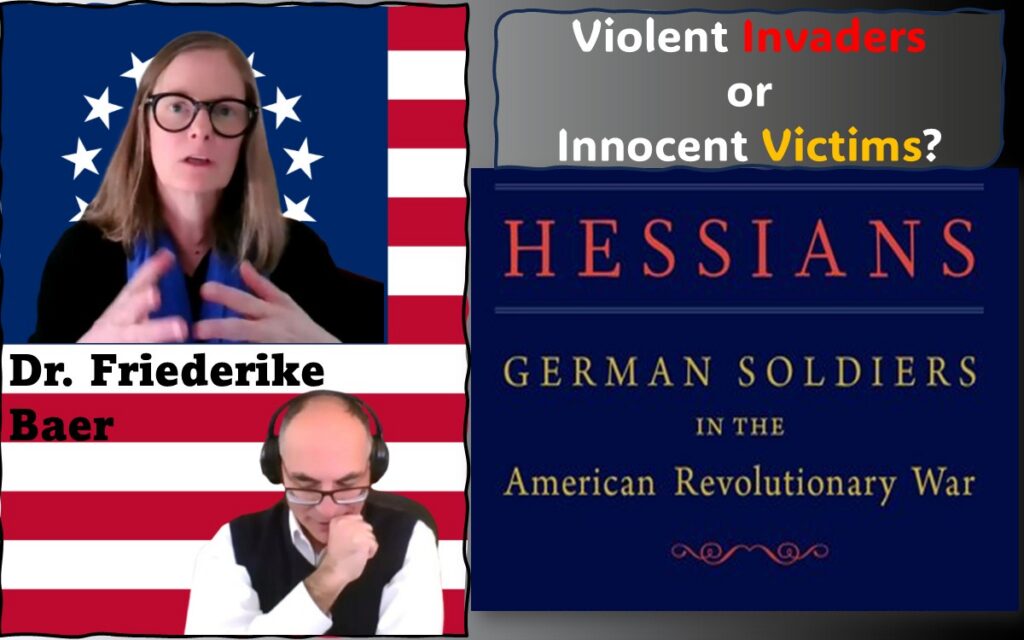
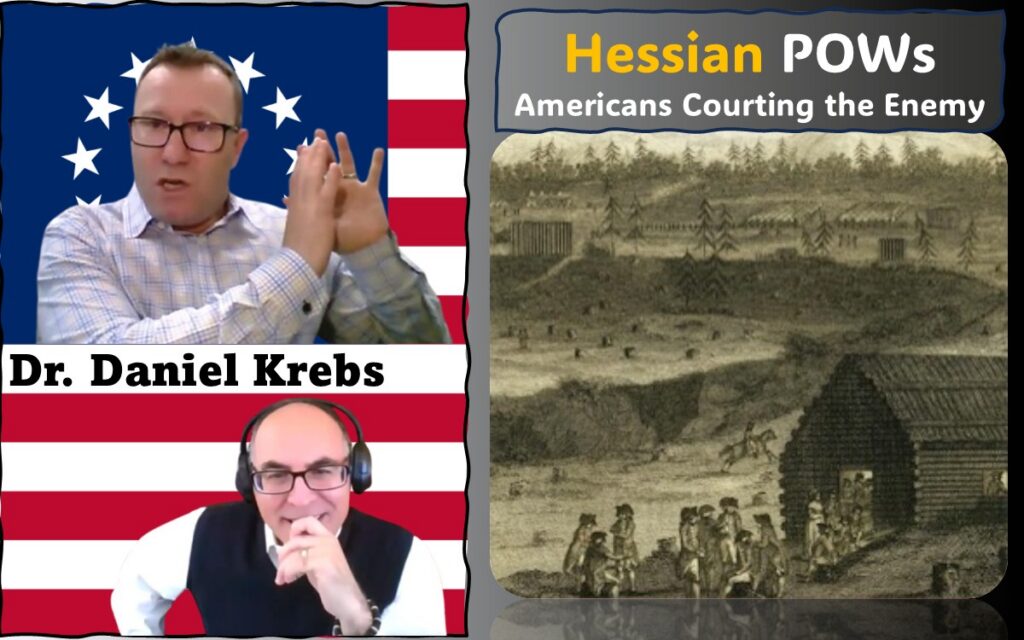
As Dr. Daniel Krebs explains in our interview, German soldiers—of whom the Hessians were a major part—had long been employed by the British, including during the Seven Years’ War (1756–1763). Yet after the American Revolution, this practice came to an end.
The reasons for this shift are fascinating, rooted both in the political developments of the German states and in the shared experiences of German soldiers in America—and of their families back home.
Dr. Krebs tells this story in full. He is the author of A Generous and Merciful Enemy: Life for German Prisoners of War during the American Revolution. That interview will be linked here when it is published.
But before the Hessians ever set foot in America, the British were already spreading a different story: that the Russians were coming.
“The Russians Are Coming!” — But They Never Did
The Russians never came to fight American Patriots in the Revolutionary War.
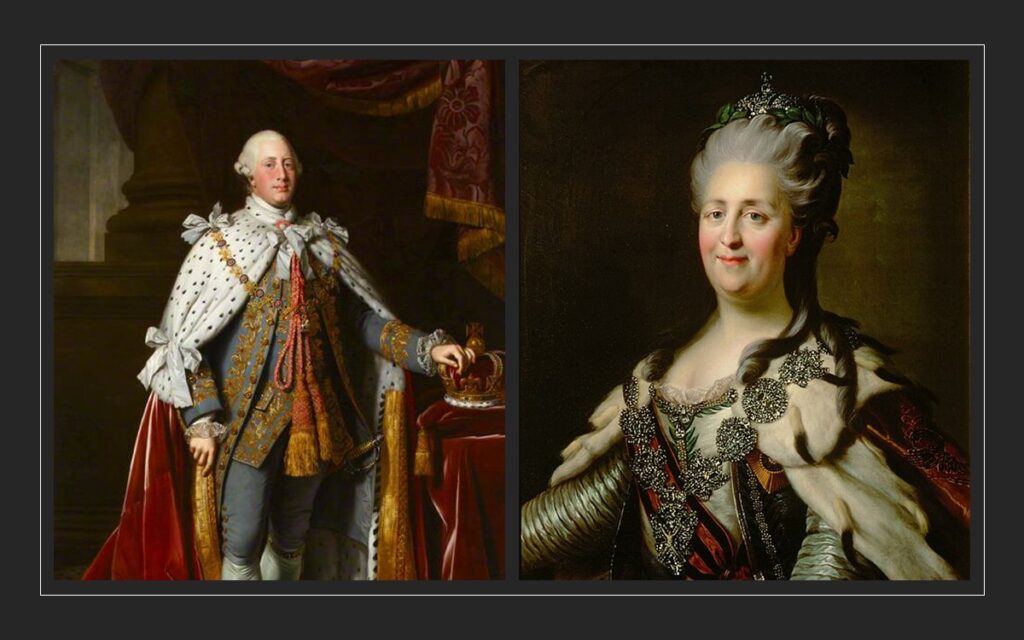
In 1775, King George III was actively courting both the German states and the Russian Empire for troops to fight in the American colonies. It was entirely plausible that both Russian and Hessian forces might have entered British service. However, after Empress Catherine rejected his request, British agents intensified their efforts in the German states—ultimately securing Hessian troops for the war in America.
But that did not stop the British from spreading a different story: that Russian soldiers were already on their way to the colonies to fight for the King.
What Was Behind This Claim?
During the American Revolution, the British sought military assistance from Russia—twice—requesting regular troops and Russian Cossacks. King George III even personally appealed to Empress Catherine II—and was refused.
In September 1775, George III sent a personal letter to Catherine requesting 20,000 infantry and 1,000 Cossack cavalry for service in North America. She declined, citing the need for her forces to recover after the Russo-Turkish War.
In 1779—after Spain entered the war—the British government under Lord North renewed the effort, seeking Russian military or naval support. Catherine again refused, choosing to remain neutral and let Britain bear the strain of the war.
Russia’s “Neutrality” Wasn’t Neutral
The effects of Russia’s stated neutrality were by no means neutral—rather, they were helpful to the American cause.
To begin with, the French reinterpreted Empress Catherine’s rejection of King George as support for the American Revolution, which was a significant morale boost for the Americans.
Second, in 1780, Catherine issued the Declaration of Armed Neutrality, which, in effect, supported the American colonies. It established three key rules:
- Neutral ships could freely access ports of warring powers.
- Goods from belligerent nations on neutral ships could pass unhindered, except for war contraband.
- Only ports actually blocked by naval forces counted as blockaded.
Catherine’s Declaration formed the League of Armed Neutrality- a coalition that protected their shipping from British seizures by conducting armed convoys. Initially, the League only included Russia, Denmark-Norway, and Sweden. But by 1781, Prussia, Austria, Portugal and the Ottoman Empire joined, leaving Britain diplomatically isolated in Europe.
The impact of the Declaration was clear: neutral ships could trade with the American colonies, allowing materials to reach them and easing the impact of the British blockade.
Russia’s Early and Enduring Posture Toward America
From the very beginning of the American Revolution, two traditions emerged within the Russian Empire regarding how to engage with Americans and the United States. Significantly, these traditions continue to shape Russia’s posture toward—and relationship with—the United States even today.
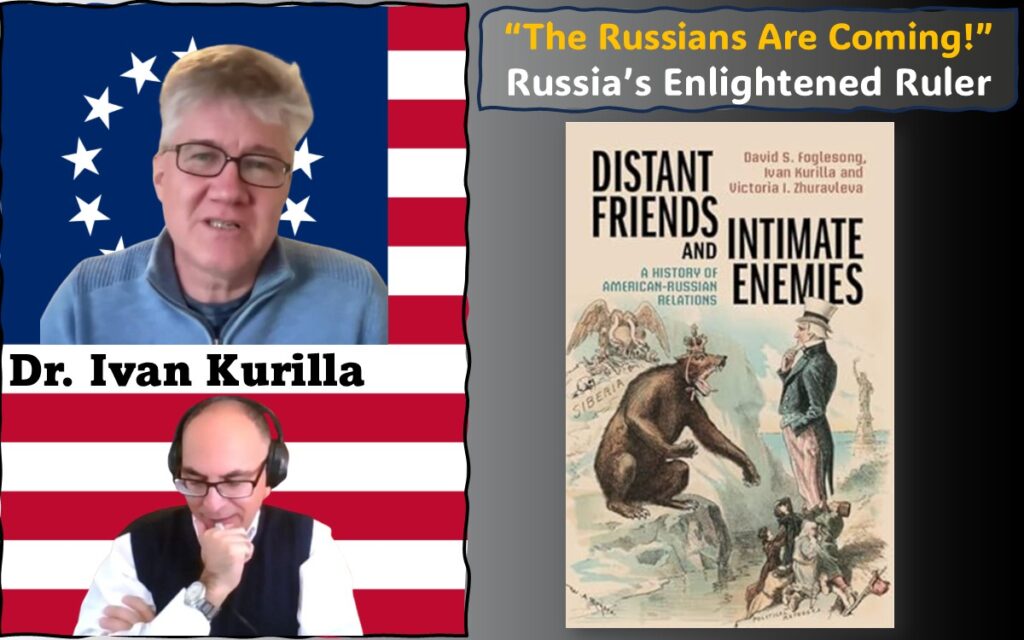
In our program, Dr. Ivan Kurilla explains how the American Revolution intrigued and inspired Russians, and how it caused anxiety for the Russian Empire, including Catherine III – Russia’s so-called “Enlightened Ruler”.
Dr. Kurilla, a professor of the history of U.S.-Russian relations and author of Distant Friends and Intimate Enemies: A History of American-Russian Relations, shares his insights in the program. You can watch his interview in our pragrom and read its Essential Insights and transcript at “Russian Neutrality in the American Revolution: Fear, Strategy, and Opportunity“.
Who Were the “Hessians,” Really?
The term “Hessians” became a shorthand for about 30,000 German troops hired by Britain—but they didn’t all come from Hesse-Kassel. British forces also included soldiers from Brunswick, Waldeck, Ansbach-Bayreuth, Anhalt-Zerbst, and Hesse-Hanau. Altogether, German auxiliaries made up nearly a third of Britain’s army during the Revolutionary War.
Dr. Krebs goes into the full story in detail. That interview will be linked here when it is published.
What Other Sources of Manpower Were Available to Britain?
This question gets to the heart of one of Britain’s biggest challenges: a shortage of troops to fight the American rebels. It’s also the very question we pose in our quiz, which we revisit below.
King George’s Hanover Troops
While King George III was Elector of Hanover and therefore ruled Hanover, Hanoverian troops did not serve in North America. Instead, they were stationed in European garrisons, freeing British regulars for service across the Atlantic.
A notable example of their importance is the Great Siege of Gibraltar (1779–1783), where Hanoverian troops played a key role in successfully defending the fortress against Spanish forces.
The Dutch Say No
Following the outbreak of the American Revolution, Britain, struggling to raise enough troops, turned to its European allies. In 1775, King George III specifically requested the loan of the “Scots Brigade”—a unit of Scottish soldiers serving in the Dutch States Army—to fight in North America.
At that time, the Scots Brigade in Dutch service consisted of three infantry regiments. Historically, the Brigade had sometimes included six regiments (including English ones), but by the 1770s it was composed solely of three Scottish regiments. During the 18th century, including the years leading up to the Revolution, these regiments primarily served as garrison units in the Dutch Barrier forts in Flanders. I should note that many rank-and-file soldiers were not actually Scottish, due to recruitment challenges in Scotland during periods of political tension, yet the organization retained the designation “Scots Brigade.”
Although Stadtholder William V, the Dutch chief magistrate, was related to the British royal family and generally sympathetic to Britain, the Dutch States General—the governing body—rejected Britain’s request for the Scots Brigade. The decision reflected domestic sympathy for the American Patriot cause and was championed by Dutch supporters of American independence, including Baron Joan Derk van der Capellen tot den Pol, who sought to maintain Dutch neutrality and avoid aiding Britain’s suppression of the colonies.
And while the Dutch government declined to help Britain, Dutch merchants in the Caribbean—particularly on St. Eustatius—were supplying war materials to the American rebels. This combination of refusal to provide troops and ongoing trade support for the Patriots created intense tensions that eventually led to the Fourth Anglo-Dutch War, declared by Britain in 1780.
In our program, Dr. Peter Van Cleave, author of “The Dutch Origins of the Quasi War: John Adams, the Netherlands, and Atlantic Politics in the 1790s,” tells the history of U.S.-Netherlands relations during the American Elocution. That interview will be linked here when it publishes.
About Featured Image
Portraits of King George III (r. 1760-1820), by Nathaniel Dance-Holland, and Empress Catherine II (r. 1762-1796), by Alexander Roslin.
Unless otherwise indicated, all images in AARevolution—including those in this post—are in the public domain.
Revisiting the Quiz
Let’s return to the quiz:
In addition to the Hessians, which foreign soldiers did the British attempt to recruit—but were ultimately refused?
- Russian Cossacks
- Indian sepoys
- Iroquois warriors
- Spanish infantry
By now, the answer is clear: the Russians.
But before we wrap up, here are three key references from the quiz worth revisiting:
Indian Sepoys: Supporting the Empire Elsewhere
Although Indian sepoys did not fight directly in the American Revolution, they played a crucial role in supporting the British Empire elsewhere.
As professional soldiers serving the East India Company, they helped secure and expand British control in India, freeing Britain to focus on other imperial ambitions after the loss of its American colonies.
Throughout the 18th and 19th centuries, Great Britain relied heavily on Indian sepoys for military campaigns beyond North America, particularly in the Indian Ocean, Southeast Asia, and Africa.
A notable example is the Siege of Cuddalore in 1783, fought in what is now the southern Indian state of Tamil Nadu, where Indian sepoys made up a significant portion of the British forces opposing the French.
Iroquois Warriors: Betrayed Allies
Iroquois warriors did indeed support the British during the American Revolution. But the story is as complicates as it is tragic.
In our program, Dr. David Silverman, author of The Chosen and the Damned: Native Americans and the Making of Race in the United States, explains how the Revolution devastated the Six Nations of the Iroquois Confederacy. Several nations of the Confederacy allied with Britain, often at great cost to their people, only to be abandoned in the negotiations of the Paris Peace Treaty. The betrayal left the Iroquois politically fractured, socially displaced, and struggling to rebuild in the years that followed.
In our program, you can learn more about this tragic history here: “Native Americans in the American Revolution: The History We Didn’t Learn“.
Spanish Infantry Was Never an Option
Spain did not lend its infantry to the British. In fact, it did the opposite: on June 21, 1779, following the signing of the Treaty of Aranjuez with France, Spain formally entered the American Revolutionary War against Britain.
In our program, Dr. Gonzalo Quintero, whose books include Bernardo de Gálvez: Spanish Hero of the American Revolution and Spain and the American Revolution: New Approaches and Perspectives, explains that even before 1779, Spain was secretly aiding the American Patriots—sending guns, clothing, and funds as early as 1775–1776.
After its official alliance with France (not directly with the American colonies), Spain launched campaigns in 1779, with Bernardo de Gálvez capturing key British positions in Louisiana and West Florida, including Baton Rouge and Natchez and the Siege of Pensacola in May 1781, which marked the completion of Spain’s conquest of West Florida.
Spain also engaged Britain in the Caribbean, Central America, and at the Siege of Gibraltar, applying significant financial and military pressure that indirectly supported the American cause.
Related Interviews and Essays
If you want a deeper understanding of the different forces that fought in the Revolutionary War, I highly recommend the following interviews in our program:
►My interview with Dr. Peter Van Cleave about the history of U.S.-Netherlands relations during the American Elocution.
►My interview with Dr. Chris Magra about the history of British press gangs.
Dr. Magra’s major works include:
- Poseidon’s Curse: British Naval Impressment and Atlantic Origins of the American Revolution
- The Fisherman’s Cause: Atlantic Commerce and Maritime Dimensions of the American Revolution
►My interview with Dr. Daniel Krebs about the history of Hessians. That interview will be linked here when it publishes.
►My interview with Dr. Gonzalo Quintero about the history of Spain’s role in the American Revolution.
Dr. Quinteor’s major works include:
- Bernardo de Gálvez: Spanish Hero of the American Revolution, which received the Distinguished Book Award from the Society for Military History
- Spain and the American Revolution: New Approaches and Perspectives (The Revolutionary Age)
- Spain and the Global Struggle for U.S. Independence – a forthcoming book

►My interview with Ivan Kurilla about Catherin the Great, the Russian Empire and the Russian people during the American Revolution.
Dr. Kurilla’s major works include:
- Russian/Soviet Studies in the United States, Amerikanistika in Russia: Mutual Representations in Academic Projects,
- Distant Friends and Intimate Enemies: A History of American-Russian Relations,
- Echoes of the American Civil War Abroad: Perceptions, Identities, and Historical Memory – 2026, his most recent work,
- Trailing the Bolsheviki: Twelve Thousand Miles with the Allies in Siberia, and
- Amerikancy i vse ostalnye: Istoki i smysl vneshnej politiki SSHA (Americans and All the Rest: Origin and Meaning of U.S. Foreign Policy, 2024), which won the Enlightener (Prosvetitel) Prize in the Humanities as the year’s best Russian-language nonfiction book.
 Russian Neutrality in the American Revolution: Fear, Strategy, and Opportunity
►My interview with Dr. David Silverman about the history of Native Americans, including the Iroquois, in the American Revolution.
Dr. Silverman’s major works include:
- This Land is Their Land: The Wampanoag Indians, Plymouth Colony, and the Troubled History of Thanksgiving,
- Thundersticks: Firearms and the Violent Transformation of Native America,
- Ninigret, Sachem of the Niantics and Narragansetts: Diplomacy, War, and the Balance of Power in Seventeenth-Century New England and Indian Country,
- Red Brethren: The Brothertown and Stockbridge Indians and the Problem of Race in Early America,
- Faith and Boundaries: Colonists, Christianity, and Community among the Wampanoag Indians of Martha’s Vineyard, 1600-1871, and
- The Chosen and the Damned: Native Americans and the Making of Race in the United States, which I mentioned above.
 Native Americans in the American Revolution: The History We Didn’t Learn
►My interview with Dr. Rebecca Brannon about the American Loyalists.
Dr. Brannon’s major works include:
- From Revolution to Reunion: The Reintegration of the South Carolina Loyalists, and
- A Cultural History of Old Age in the Era of Enlightenment and Revolution (1650-1800).
 Was the American Revolution a Civil War? Story of American Loyalists
About This Program
Analyzing American Revolution (AAR) is a special series podcast production of the History Behind News program. In this series, 33 professors (and counting) analyze the American Revolution from 33 different angles through in-depth interviews with host Adel Aali.
Thematic Collection
Tap below for a closer look at the Revolutionary Era themes we examine—and to meet our guest scholars.

Library
- Interview Transcript Highlights
- Interview Image and Artist Highlights
- Quiz Answers and Backstories

Image Gallery
Explore the backstories and artist bios behind images of our Founding—before and after the American Revolution. These visuals shape how we remember—and reimagine—the Revolutionary Era.

Experienced Analysis of History
About HbN Program
The History Behind News program (HbN) is committed to making in-depth history researched and written by scholars enjoyable and accessible to everyone. Our motto is bridging scholarly works to everyday news.
The histories we’ve uncovered encompass an impressively wide range of subjects from ancient history to U.S. politics and economy to race, women’s rights, immigration, climate, science, military, war, China, Europe, Middle East, Russia & Ukraine, Africa and the Americas to many other issues in the news. We also receive advanced copies of scholarly books and discuss them in our program (in the context of current news).

Adel Aali, host. Snapshot from his introductory video to AAR podcast.
232 Scholars & Counting
Our guests are scholars at leading institutions. They are highly recognized, having received prestigious grants and fellowships as well as notable awards, including the Pulitzer Prize. They include celebrated documentary producers, former White House advisors and other high-ranking government officials, and current and former senior reporters of major national and international newspapers. Many have testified in Congressional hearings, and others frequently contribute to major media outlets and widely read publications.
Think You Know the American Revolution?