Updated: August 6, 2026
Introduction
In this interview: “If it helps, John Adams famously said it was one-third, one-third, one-third, one-third patriot, one-third loyalist, and one-third in the middle. And there’s something to that. I would say it’s probably 25% patriot, 25% loyalist.”
Watch this segment in the video below (00:15:38).
Was the American Revolution a Civil War? The American Loyalists were not simply villains in someone else’s heroic story. Many believed in constitutional government, rights, and self-governance — just like the Patriots. What they rejected was armed rebellion. The Revolution forced neighbors, families, and entire communities to choose sides in what increasingly resembled a civil war. Understanding the Loyalists forces us to confront a more complicated — and more human — version of America’s founding.

How to Use This Post
Use this post as reference guide to the American Revolution through the lens of this interview and the broader Analyzing American Revolution program (AARevolution). Navigate using the interactive table of contents above and the timestamps below (in gray) to discover how this interview deepens the story of the Revolution—and to explore how the program unfolds: its key themes, insights, image gallery, scholars list, history quizzes, and related interviews across the series.
Video
Watch the full interview (timestamps below)
Were American Loyalists Fighting A Civil War?
For decades, the Revolution was framed primarily as a war against Britain. But modern scholarship increasingly recognizes it as a civil war within American society. Colonists fought not just British soldiers, but each other — burning farms, seizing property, and forcing neighbors into exile. Loyalty was fluid. Allegiances shifted with occupation, survival, and circumstance. Seeing the Revolution as civil war reveals how fragile and divided early American society truly was.
In this interview, my guest challenges the traditional Patriot narrative, arguing that the American Revolution was not just a war for independence — it was also a civil war. Like the Patriots, Loyalists believed in rights, self-government, and constitutionalism. Dr. Brannon explains that “The maddening, hilarious, ironic thing is they agree on a whole lot of things.” The main point of disagreement between Loyalists and Patriots was their opposition to breaking away from the British imperial economic and political system. Essentially, Loyalists sought reform, not revolution.
Central Question
This conversation raises a central question:
If the American Revolution was driven by shared ideals of rights and self-governance, why did it fracture into a civil war in which many Americans—Loyalists and patriots alike—held similar beliefs yet chose opposing sides?
About My 205th Guest: Dr. Rebecca Brannon
Dr. Rebecca Brannon is a professor of early American history at James Madison University. Her research focuses on 18th century American history and is concerned with broad questions about the American Revolution and its consequences, including the American Loyalists and what happened to them, which is the subject of this interview.
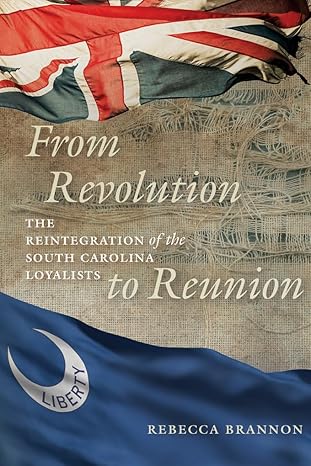
She is the author of From Revolution to Reunion: The Reintegration of the South Carolina Loyalists, which won the Award for the best book of the year on South Carolina history and was named to the Journal of the American Revolution’s 100 Best Books on the American Revolution List.
In addition to the history of American Loyalists, Dr. Brannon is very interested in the history of old age and aging in the 18th century, including our elderly founders and later presidents, She is the co-editor of this forthcoming book: A Cultural History of Old Age in the Era of Enlightenment and Revolution (1650-1800).
You can learn more about Dr. Brannon by visting her academic homoepage as well as personal website.
About the Featured Image
The featured image brings together images of Dr. Rebecca Brennan and Adel Aali from the interview, superimposed on the Betsy Ross flag, alongside the image of Dr. Brennan’s book, From Revolution to Reunion: The Reintegration of the South Carolina Loyalists.
Unless otherwise indicated, all images in AAR—including those in this post—are in the public domain.
AAR Essential Insights
Although the full video and transcript of my conversation with Dr. Brannon are included in this post, I’ve selected several insights that I found particularly revealing and worth emphasizing. These moments — some surprising, others that challenge familiar assumptions — help us see the Loyalists and the American Revolution in a different light.
By the way, these insights are my own takes and interpretations from the interview. For Dr. Brannon’s perspective and exact framing, please watch the interview above and view the transcript below in the corresponding sections.
Why be loyal to the British Empire?
Early in the interview, Dr. Brannon defines Loyalists as “people who supported the king’s cause, supported staying in the British Empire, and therefore rejected what they saw — correctly in some ways — as a minority project.”
But Loyalists did not see themselves merely as subjects of a distant king. They understood — and took pride in — being part of the British Empire. And here is the critical point, one we often miss in school history: many Loyalists believed that as members of the British Empire, they were among the freest people in the world.
That claim may unsettle modern readers. After all, we are taught that the colonies rose up against British tyranny.
The Revolution was indeed a transformative struggle. But it unfolded within a larger global context. Compared to other eighteenth-century empires, the British Empire afforded its subjects significant legal protections and security in their persons and property.
In my conversation about the Boston Massacre with another scholar in our program, Dr. Serena Zabin, she emphasized this reality. After the violence in Boston, British authorities opened an investigation and put the soldiers and their commanding officer on trial. Such legal proceedings would have been far less likely in many other contemporary empires.
The point is not to defend Loyalism or the British Empire.
Rather, it is to recognize the historical context: the American Revolution occurred at a moment when colonists already experienced substantial liberties within the British imperial system — liberties that shaped both the arguments for independence and the arguments against it.
Watch this section in the video above (00:04:35).
What did it mean to be a Loyalist?
One of the most fascinating points from my conversation with Dr. Brannon is this: the Loyalists wanted many of the same things as the Patriots!
To put it in familiar terms: the Loyalists also rejected taxation without representation. They were vocally against the Stamp Act, too.
As Dr. Brannon put it, “the maddening, hilarious, ironic thing” is that Loyalists and Patriots “agree on a whole lot of things.”
The essential takeaway for me is this: Loyalists wanted to bring about change from within the system, rather than upend institutions and break from British government. In other words, they sought reforms — not revolution.
Watch this section in the video above (00:08:30).
Was the American Revolution a Minority Project?
“Minority Project” is Dr. Brannon’s term, not mine — and I highlight it because it surprised me and, I think, challenges a common assumption: that the Revolution enjoyed broad popular support, at least in its later stages.
But Dr. Brannon’s claim is grounded in contemporary accounts and retrospective scholarly studies.
She explains, “John Adams famously said it was one-third Patriot, one-third Loyalist, and one-third in the middle.” Dr. Brannon adjusts those numbers to roughly 25% Patriot, 25% Loyalist, and 50% disaffected — “the neutral, trying to stay neutral, the people who just don’t want any of this and would like to be left alone, please.”
This framing — that the American Revolution was a Minority Project — is crucial. It aligns with other scholars’ interpretations of the Revolution as a kind of civil war, a perspective largely absent from school history. Dr. Brannon notes that both her college students and her teacher-students are often surprised when they encounter this nuance for the first time.
Watch this section in the video above (00:14:22).
Losers or Loyalists?
Continue watching at 4:10 in the video above.
Was it possible to predict who would be a Loyalist or determine who is a Loyalist?
The essential insight here is no — and that’s important because it reveals the confusion and complexity of the Revolution.
In this interview, I press Dr. Brannon on various factors that might, in theory, predict or determine an American’s loyalty to the Crown: geography, occupation, religion, age, and more. With only minor and limited exceptions, none of these factors reliably indicate loyalty.
Adding to the complexity is the astonishing fluidity of loyalty. As Dr. Brannon explains, some Americans fought on both sides at different times. For many, loyalty was not ideological; it was pragmatic — “How do I protect me and mine?” Some colonists expressed allegiance to the King when the British occupied their area, only to disavow it once the British left town.
Watch this section in the video above (00:20:42).
Revolution was also a story of Reconciliation
According to Dr. Brannon, about 250,000 Americans, including women, were actively supporting the British. And around half a million Americans identified as Loyalists. That’s out of a population of roughly 2.5 million — which included 500,000 to 700,000 enslaved people.
So the question is: what happened to these Loyalists?
About 60,000 left the United States (Nova Scotia was their main destination, including for Benedict Arnold). But here’s the remarkable part: many returned.
But how did that work? How could a Patriot live next door to a former Loyalist after the Revolution? How could these former enemies coexist?
For me, this is one of the most beautiful outcomes of the Revolution: reconciliation.
As long as former Loyalists contributed to their communities, they were accepted in post-Revolution America.
There’s a powerful lesson here for 21st-century Americans, living in a highly polarized time: we can — and should — accept each other and act neighborly, regardless of our differences, as long as we contribute to our communities.
Watch this section in the video above (00:38:01).
Interview Transcript (S1E8): Adel Aali and Rebecca Brannon
In our conversation, Dr. Brannon addresses key questions about the Loyalists and the American Revolution. Below is a structured outline to help you navigate the discussion, followed by the full transcript.
Podcast
Watch the full interview on this page with the outline and transcript below, or take the conversation with you on the go through our Spotify podcast.

Outlline
Use the in-depth outline below to follow the discussion and navigate key moments in the interview.
Click for Timestamped Outline
- Selected Highlights (00:00)
- Guest Introduction (02:04)
- Defining the Loyalists and “The King’s Cause” (04:10)
- The American Revolution as a “Minority Project” – Key Moment (05:49)
- Loyalists and Patriots Sharing Ideas About Rights and Good Government (06:56)
- Loyalists, Taxes, and Reform Instead of Revolution (08:30)
- Loyalist Opposition to the Stamp Act and British Taxes (08:52)
- Reform, Stability, and Fear of Civil War – Turning Point (10:57)
- The British Strategy and Loyalist Support During the War (11:07)
- Why Britain Believed the South Was Full of Loyalists (11:25)
- The British “Fatal Miscalculation” About Loyalist Support – Turning Point (13:05)
- Loyalist Militias, Neutral Americans, and Revolutionary Numbers (14:06)
- John Adams’s “One-Third, One-Third, One-Third” Observation – Key Moment (15:38)
- Neutral Americans and the “Disaffected” Majority (16:02)
- Tories, Religion, and Loyalist Identity (17:43)
- Tories, Whigs, and British Political Labels (18:15)
- Quakers, Anglicans, and Religion During the Revolution (21:28)
- Elites, Local Tyranny, and the Fear of Patriot Rule (23:48)
- “One Tyrant 3,000 Miles Away or 3,000 Tyrants Nearby?” – Key Moment (24:15)
- Lawyers, Elites, and Distrust of Revolutionary Leadership (24:41)
- Fluid Loyalties and Fighting on Both Sides (29:05)
- Benedict Arnold, Peggy Shippen, and Shifting Loyalty (29:17)
- Americans Serving in Both Patriot and Loyalist Militias – Turning Point (32:25)
- The American Revolution as a Civil War (38:01)
- Guerrilla Warfare, Occupation, and Violence Against Civilians (38:31)
- Why Americans Rarely Learn This Version of the Revolution (40:49)
- Loyalists After the Revolution (47:20)
- Loyalist Refugees in Nova Scotia, Britain, Jamaica, and the Bahamas (49:05)
- Community Reconciliation and the “Common Good” After the War (51:13)
- Teaching Loyalists and the Complexity of History (43:28)
- The “Adult Version” of History and Revolutionary Gray Areas (44:04)
- Revolutionary War Role-Playing and Historical Perspective (45:21)
- Just One Point (59:23)
- Loyalists Were “Too American” – Key Moment (59:42)
- Loyalists and Patriots Shared Similar Ideas About Self-Government (01:01:04)
Transcript
Note: This transcript was generated automatically and may contain minor errors. It is provided for reference and accessibility only.
Click to View Transcript
Adel:
Dr. Brennan, it’s a pleasure to have you in our program’s special series. Thank you for taking the time for this conversation with me about the American Revolution. So, who are the loyalists?
Dr. Brannon:
The most misunderstood.
Adel:
Yeah, hence my invitation to have you on the program. Yeah.
Dr. Brannon:
And I remember a blog post between American and Canadian based scholars a couple of years ago where one of the Americans wrote about how he wanted to redeem or talk about the losers, and the Canadians were like, hey, wait a second. We’re not descended from losers. The loyalists were people who supported the king’s cause, supported staying in the British Empire, and therefore rejected what they saw correctly in some ways as a minority project.
So, I like to say the American Revolution was a minority project. Only a minority of Americans signed on to what the patriots wanted, had this vision of an independent country that was anti-monarchical, that was a democratic republic, that was independent from one of the world’s great empires. Lots of Americans believed in democracy, believed in self-governance.
Some of them become loyalists, but they’re not convinced that the patriot leaders are doing the right thing, or that they’re confident to carry it out, or that they have the best intentions for everyone. And so, the loyalists define themselves as the people who support the king’s cause. But what they’re doing is saying, things are not bad enough, that armed rebellion is the right answer.
Adel:
Define the term. You said a lot of stuff that I’m going to follow up with questions about, but at the get-go, please define the term that you used several times, king’s cause. What is that cause specifically?
Dr. Brannon:
So, they see themselves as defending the British Empire and their inclusion in it. They see themselves as defending what they call the king’s cause, loyal to the British government, but they always understand it as being part of an empire, not just subjects of a king. So, they do see themselves as being loyal to an existing government edifice that has served them very well, that has protected their international trade and made it lucrative for Americans and Britons to trade around the world.
They see themselves by being British as the freest people in the world.
Adel:
So, are those two different things seeing themselves as part of the British system versus the king’s cause?
Dr. Brannon:
When you say the king’s cause, you’re not necessarily talking about monarchy or King Charles III and whether he’s the best king ever. I don’t think they thought so. I think that you touch on something they don’t agree on.
So, they call themselves loyal to the king’s cause, but when you dig into how they justify it, most of them justify it in very enlightenment-drenched, pro-rights-oriented government, just as the patriots will, that they share a vision.
Adel:
That’s so interesting.
Dr. Brannon:
Yeah, they share a vision that the world, that the right way… I think one way to say it is every era and age has questions that animate it and motivate it. And for the 18th century, one of those questions is, what is good government and how do we get it?
Adel:
I see.
Dr. Brannon:
The patriots come to one answer. We should run our own government without the British empire and we’re in charge now. And the loyalists say, we also believe in self-governance and good government.
We also believe in constitutionalism, that we should have constitutions and that they protect us with fundamental rights. They’re not opposed to any of this. They just think the patriots threaten those arrangements.
Adel:
I see. So, based on what you shared with us, the king’s cause would not preclude a loyalist from saying, hey, we shouldn’t have taxes without representation.
Dr. Brannon:
Absolutely.
Adel:
So, we’re on the same page. Okay.
Dr. Brannon:
So, they actually agree. The maddening, hilarious, ironic thing is they agree on a whole lot of things. And one of the things they agree on is that they don’t like taxes and that they think that the British taxes that are levied in the 1760s and 1770s were a poor political choice.
And some prominent loyalist voices are outspoken against the Stamp Act, for example. They just don’t think you start riots in the streets and throw the taxi in the harbor in response to taxes. But they send strongly worded remonstrances from the colonies to Britain.
They use back channels that they have in the British government to say, that was a monumentally stupid idea and here’s why. They don’t like taxes either.
Adel:
Then could we use the term conservative to describe, well, one of the words to describe loyalists? Would that make sense in the context of that time?
Dr. Brannon:
Yes. I’m going to be like an economist, right? Yes and no on the one hand, on the other hand.
A generation of scholars tried to show that the loyalists were somehow fundamentally conservative by personality, even cantankerous, and they failed.
Adel:
Oh, they failed.
Dr. Brannon:
But you can say that they, what I would say instead is they’re not conservative as we would have understood it politically or as the 18th century would have understood it necessarily in Whigs versus Tories in British politics. But what they are is they value peace and stability and fear civil war.
Adel:
I see.
Dr. Brannon:
And they think the patriots are courting chaos and disorder without due regard for the costs.
Adel:
It seems like loyalists are looking for reform, not revolution.
Dr. Brannon:
Absolutely.
Adel:
I see. Were there any areas within the 13 colonies, any, I know you’ve done a lot of scholarship on South Carolina, but just generally speaking, were there any areas within the 13 colonies that had a higher proportion of loyalists?
Dr. Brannon:
The British thought so. They put an entire military strategy on it during the war for independence. So they start the Revolutionary War convinced it’s a Boston problem, it’s a New England problem and all the other colonies will be brought back into line without too much trouble and or they’ll just let New England get whatever’s meted out by the British army and not go help.
And by the way, New Englanders are terrified this is actually what’s going to happen. I mean, there’s something there. They’re terrified that the rest of the colonies will not come to their aid.
Adel:
Oh, so there’s merit to this British perception. I see.
Dr. Brannon:
There’s merit to it. In the end, history shows the other colonies did, but it was touch and go there for a while. Then the British decide later in the war and sort of the British military dilemma during the Revolutionary War is they can win battle after battle.
They can take all of the big American port cities and they do. The Americans can’t hang on to New York. They can’t hang on to Philadelphia.
They can’t hang on to Charleston. They’re all occupied. Savannah.
And yet the war goes on and on and on. And when I’m teaching students, I often make the point generally in Europe, if you take the big capital city, that’s it, right? The Nazis roll into Paris and France falls.
Adel:
Yeah, yeah.
Dr. Brannon:
British roll into all our capitals and the war goes on and on.
Adel:
Oh, that is such an interesting point. I hadn’t heard that before. That’s wonderful.
Okay.
Dr. Brannon:
So they’re desperate and they turn to the South and they say, we will open a new front in the South because we think it’s full of loyalists and there are a lot of loyalist sympathizers. And then they make their fatal miscalculation and they’re going to take up arms for us and fight and die for our cause. And that is a crucial miscalculation.
Adel:
Is the miscalculation is that they rely too much on them? The loyalists weren’t willing to go so far. Is that it?
Dr. Brannon:
A lot of them are like, whichever way the wind is blowing. That’s the way I’ll go.
Adel:
I see.
Dr. Brannon:
And others are like, yeah, yeah, yeah. I will sign an address saying, welcome, congratulations on taking our city. What do you mean you want me to serve in an armed camp, leave my family and march to some other colony?
You’ve got to be kidding me.
Adel:
Oh, wow. So loyalty, perhaps in words, but not in action. And we’ll get so did this brings up an interesting question.
Did any loyalists, in fact, serve along with the British?
Dr. Brannon:
That’s a great question because I, for the moment, emphasize the loyalists who are wavering or uncommitted or certainly not just patsies for what the British want and need of them. But we talk about how many loyalists there were. And it’s frustrating because you can’t slap an air tag, can’t get in a time machine, slap an air tag on all of them across the revolution.
But some 20, we can track some 20% of the population as being actively loyalist in some way. Men in the family signed up for a loyalist militia and fought for some period of time, even if they’re not willing to do what the British want them to do, which is sort of commit to years on end in the field. They’re willing to serve in a militia.
They’re willing to march for a couple of months. That’s putting their neck on the line.
Adel:
Yeah. And these are active loyalists, the 20% of the population.
Dr. Brannon:
They’re active loyalists. They do something for the loyal cause.
Adel:
Which I guess I can deduce that the percentage of loyalists that also includes inactive sort of passive loyalists is obviously higher. Absolutely.
Dr. Brannon:
If it helps, John Adams famously said it was one-third, one-third, one-third, one-third patriot, one-third loyalist, and one-third in the middle. And there’s something to that. I would say it’s probably 25% patriot, 25% loyalist.
And you’ll notice suddenly that makes the solid majority, the disaffected, as they’re called sometimes, the neutral, trying to stay neutral, the people who just don’t want any of this and would like to be left alone, please.
Adel:
Is that why you call it, is that why you call the American Revolution a minority project? Because it was 25% that were really pushing it through.
Dr. Brannon:
25% are willing to really put their muscle behind it. But a solid majority are not sold.
Adel:
Are not sold. So 20% actively participating in the fighting against the patriots along with the British. What does that number, what would that be in terms of numbers?
What, 30,000, 40,000, what sort of numbers are we talking about? As far as the loyalists?
Dr. Brannon:
Probably a good 250,000 people, if we include women.
Adel:
Okay. But that doesn’t, but those are not the active fighting.
Dr. Brannon:
Right. But they take the consequences as well.
Adel:
They take the consequences, wow.
Dr. Brannon:
If it helps, we estimate that some half a million loyalist identified people stay in the United States after the revolution. In some 60,000, mostly civilians, not soldiers, have to leave the United States at the end of the war and the British take them on transport ships to places like Nova Scotia. So there’s another backwards way of trying to get at the sheer volume.
Adel:
Yeah, the numbers. And we’ll get to the consequences of loyalty to the British crown in a moment. Let’s go back to my original question where I asked you, who are the loyalists?
We touched on some of their allegiances and their desire, what I said, conservative, but that doesn’t really apply to that period. Were loyalists also called Tories?
Dr. Brannon:
Yes.
Adel:
Why? What does that mean?
Dr. Brannon:
The term comes from British politics, Tories versus Whigs. You also see early in the revolution, the Patriots being called the Whigs. So they originally both terms from British politics in.
And then Whigs doesn’t really catch on for the Patriots and Tories do.
Adel:
For the loyalists.
Dr. Brannon:
For the loyalists.
Adel:
So what does that mean?
Dr. Brannon:
The Tories would traditionally be the more monarchical, more conservative party in British politics. And the Whigs would be the radicals, the ones pushing for change. And usually for greater self-governance, although I would say in the 18th century, a lot of it devolves into fighting about trade politics and what will benefit the growing cities.
But that comes to define the loyalists. They don’t usually use it themselves. They usually do talk about I’m loyal.
But some of it is retrospective when they justify later to the British, to governments, the decisions they made. They said, you know, I was always loyal. And they emphasize loyalty as a sort of emotional character calling card.
But I would caution they do it in retrospect, not necessarily in the heat of the war. And sometimes trying to get money out of the British government.
Adel:
Oh, interesting. And these are the ones that were sort of exiled from or self-exiled.
Dr. Brannon:
These are the exiles.
Adel:
And just for my own clarification here, the Tory government was in charge. Tories were in charge in Britain. Lord North, I think, and George III were sort of the Tories in that sense.
Dr. Brannon:
Yeah, the Tories were kind of leading George III into this, what turns out to be a disaster.
Adel:
Yeah, yeah, yeah. That’s interesting. So and their affiliation with Lord North and the Tories and George III.
I keep on going back to that first question. Were loyalists like a cut from specific segments of society, ethnicities, I don’t know, age, religion, or the Presbyterians, Lutherans, I don’t know.
Dr. Brannon:
It’s a great question. Some British military commanders were convinced. There’s one named James Wimsies.
And he is fighting in South Carolina for the British. And he is obsessed with Presbyterians. And he is convinced Presbyterians are the entire problem.
And he’s sort of leading his men through the backcountry, burning Presbyterian churches and cursing Presbyterians. He is an oddball.
Adel:
An oddball, okay.
Dr. Brannon:
He doesn’t care for them all. But so one answer is the Presbyterians are actually no more likely to be loyalists than anyone else. But Wimsies is obsessed with them.
A generation of historians tried to prove, could you determine who would be a loyalist by their religion? Who by occupation? And the answer turns out to be none of those actually predict who will be a loyalist.
With these two small exceptions. One is Quakers are very likely to end up disaffected because they’re pacifists. And they don’t want to serve war.
However, there’s a split among the Quakers. And you get what are called the fighting Quakers, like General Nathaniel Green, who leads the forces in the South, in the Southern Theater. And he’s actually a Quaker.
And he kind of left with his denomination over this issue. And the other is Anglican ministers from the Church of England, because most of them are actually English. They’re trained in Britain and then sent over to the colonies.
So they often turn out to not be born in what becomes the United States, but born in England, trained in England. And some combination of their oath as a clergyman actually involves taking an oath to King George III or the reigning monarch.
Adel:
He’s head of the church.
Dr. Brannon:
He’s head of the church. Something about that plus the fact that they are fundamentally English makes them more likely to be loyalist, which leaves the Church of England in a bad position after the revolution when there are still people who are professing Anglicans, but all their ministers are gone.
Adel:
Were there any Anglican churches left after the revolution?
Dr. Brannon:
Well, yeah. The South is full of them. Virginia is full of them, right?
Adel:
We don’t have it out here in the West. Yeah.
Dr. Brannon:
Right, right. Throw a rock and you’ll hit an Anglican in Virginia.
Adel:
Still to this day.
Dr. Brannon:
Still to this day.
Adel:
Interesting. Did we talk about what it means to be a loyalist? And I try to sort of pin you down to a specific type of, you know, what kind of people would be loyalists?
And you sort of disabuse me of that notion. No, it can cut through different segments of society. Go ahead.
Dr. Brannon:
One thing I could add, however, that is key to understanding some of the loyalists, not all, is that as one of them, Biles once says, and I’m kind of riffing off what he says, he says, is it better to be ruled by one tyrant 3,000 miles away or 3,000 tyrants less than a mile away?
Adel:
Yeah, yeah, yeah.
Dr. Brannon:
And this gets to a, maybe you like the idea of democratic self-governance, but look at who’s loudly proclaiming it and what they’re trying to get for themselves. If you distrust the local elite, maybe you don’t want to hand more power over to them. If you already think they’re abusive, tyrannical, seeking personal profit from government office, which many elites could be accused of, you’re skeptical that this is really just a bad attempt to institute a local group of tyrants.
Adel:
And then use the word elite, and we’re talking about grabbing power. Many of the signers of the Declaration of Independence and those that were generally involved were actually wealthy, and if not wealthy, sort of well-to-do men.
Dr. Brannon:
Yes. And disproportionately lawyers.
Adel:
Yeah.
Dr. Brannon:
I think a third of them are lawyers.
Adel:
I’m sorry.
Dr. Brannon:
A third of them are lawyers, which for your audience would not be typical or representative of the 18th century world.
Adel:
Exactly. I suppose as a former practicing lawyer, I should have some affinity and connection with them, but I don’t cut through the elite society of our country nowadays. Let me just ask this one follow-up question.
Was age a factor? I sort of go back again to ask this, because when you look at revolts, rebellions, revolutions around the world, or crises, it’s usually the young people that are out on the streets trying to bring about change, and their elders say, you know, calm down, maybe we should talk. Do you see what I mean?
So was age a factor, and who’s a loyalist, and who’s a patriot?
Dr. Brannon:
I don’t know if anyone’s conclusively studied that.
Adel:
I’ve never seen it.
Dr. Brannon:
Maybe somebody should.
Adel:
Yeah.
Dr. Brannon:
We know that, I mean, I can certainly point to young loyalists who fight for the militia, fighting is a young man’s game. Yeah. And young men who fight for the patriots, fighting is a young man’s game.
But certainly, if you look at the revolutionaries, they’re very young when they’re actually at the Declaration of Independence signing, when they’re actually, you know, doing this. George Washington is the middle-aged man as commander-in-chief of the Continental Forces. He’s in his 40s, and he’s sort of the, you know, voice of reason and experience, middle-aged man.
You know, Jefferson is, I think, in his 20s. Lafayette is a teenager.
Adel:
I love it. So Ben Franklin stands out, because he’s so much older.
Dr. Brannon:
Yeah, Benjamin Franklin stands out as the old man of the revolution, and the other one they talk about is George Mason, who’s sometimes called the grandfather of the revolution.
Adel:
That’s right, yeah.
Dr. Brannon:
Because they’re both older.
Adel:
Okay, so age is not necessarily a defining factor either. Okay, so…
Dr. Brannon:
And then you think Benjamin Franklin is in his 70s. His son is younger, but his son is the one who becomes the loyalist.
Adel:
The ex-governor of New Jersey.
Dr. Brannon:
The ex-governor of New Jersey, William Franklin, is Benjamin Franklin’s son.
Adel:
Yeah.
Dr. Brannon:
Listeners may know they have a terrible falling out.
Adel:
I bet.
Dr. Brannon:
Never heal their relationship again after that.
Adel:
And William Franklin ends up where? In Britain?
Dr. Brannon:
He ends up in exile in Britain.
Adel:
Does he fare?
Dr. Brannon:
Even has his father’s in France.
Adel:
Oh, wow. Does he fare well in Britain? Does he become part of the government there, or does he sort of just languish?
Dr. Brannon:
He kind of languishes. He repeats all of his father’s mistakes with none of his father’s winning moves. So he has a child out of wedlock and raises it because he had been the child out of wedlock that his father raised.
That’s what I mean by he repeats bad patterns, not good ones.
Adel:
Since you mentioned Benjamin Franklin and William Franklin, any other notable loyalists? Big names in the Americas? Well, in the 13 colonies.
Dr. Brannon:
I would say, unfortunately, Benjamin Arnold.
Adel:
Yeah.
Dr. Brannon:
Speculation that it was his wife, young Peggy Shippen, who’s sort of treated as this femme fatale, but she’s also from a loyalist leading family, the Shippen.
Adel:
So do loyalists morph, evolve through the American Revolution? So let’s say someone who’s initially a loyalist today become a patriot or patriots become loyalists or loyalists that were passive become active loyalists.
Dr. Brannon:
Absolutely. And that gets us to the heart of it’s a civil war. And as I said, a lot of people are just like, which way is the world going?
How do I protect me and mine? And then we add in that many parts of what becomes the United States are occupied during the war. So it’s not just a theoretical or ideological question when the British have occupied your city or territory and you’re essentially living under martial law.
If you were a loyalist and you were keeping your mouth shut and just trying to evade detection and sort of being the guy who never got drunk in public and said something stupid. But, you know, you were cautious, you were careful, but then the British occupy your city and now there’s advantages to declaring your loyalism. You probably do.
That’ll end up working badly for you later when the British leave again. So we have a lot of loyalists who are only identified as loyalists when the British occupy their city or their town. And they may or may not then serve in loyalist, the men may or may not serve in loyalist militias.
So there’s that kind of, they started as one.
Adel:
It’s so fluid.
Dr. Brannon:
It is maddeningly fluid to every side. And there are people who are released from, in South Carolina, the one I’m most familiar with, there are people who, when they try to defend Charleston and they lose for the Patriot cause, the British give them paroles. We don’t want to keep this many people as prisoners of war.
We will parole you. You can go home, but you sign a parole that says, OK, now we’re not going to take up arms.
Adel:
That doesn’t work, does it?
Dr. Brannon:
And then some of them take up arms for the Patriots when the terms change. To be fair, the terms change retroactively. But from the point of view of the British, we sent you people on parole.
What do you mean you’re fighting in the other army? So there’s that kind of fluidity and change. And then there are people who literally fight in both the Patriot and the loyalist militias at different times during the war.
Adel:
I’m sorry, say that again.
Dr. Brannon:
Isn’t that amazing? There are people who literally fight for both sides at different times during the war. Sometimes they’re taken as prisoners of war and they elect to join the side that took them prisoner.
Adel:
Is this?
Dr. Brannon:
This is going to blow people’s minds, but it’s absolutely true. There’s a great example. There’s a guy who, many years after the war, the United States, and may I say the United States has never done a good job of taking care of our veterans.
Revolution is one of those examples. And so the United States begrudgingly finally starts to give veterans pensions in the 1830s to people who- In the 1830s?
Adel:
That far off?
Dr. Brannon:
1820s and 1830s, they finally start to give pensions to veterans who are now suffering from old age and accumulated trauma. And a lot of them also talk about, well, I’ve always had this injury, but now I really can’t do anything with it. But so there’s this great story of this one guy who’s almost all the way through the process of testifying to get his veterans pension from the United States for his Revolutionary War service, which required showing you served at least six months.
Adel:
At least six months, okay.
Dr. Brannon:
Either the Patriot Militia or the Continental Army. And he’s almost through when one of the more savvy examiners asks him where he’s been living for the last 20 years. And he sheepishly admits, Nova Scotia.
Because he had also fought for the Loyalists, he’d had to leave. He’d been living in Nova Scotia, but he had in fact served in the Patriot Militia. And he almost got a pension.
Adel:
And for our audience, and just so I can confirm that I’m correct, Nova Scotia is where a lot of…
Dr. Brannon:
And Nova Scotia is where the British essentially dump their Loyalists.
Adel:
Let me ask a personal question about your work, Dr. Brennan. Some years ago, you start doing this, looking into the history of Loyalists. Were you frustrated by the fact that you can’t pin this down?
I’m asking these questions from you. And there’s not specific segments of society, or specific times, or specific geography. Did that frustrate you when you were looking into this?
Dr. Brannon:
Oh, yeah, because you think you’re going to have this like bloodthirsty, awesome, neat story. And then you remember you’re a historian, and it’s not neat. But it’s certainly trying to track them.
And I think in the field too, we find it frustrating that some of these… There are Loyalists who are ideological in the sense we would understand, or attracted by ideology. They’re the sort of brain trust.
They write things. They write remonstrances in the 1770s. But ideology does not seem to be at that level, like the core American trait then or now.
Right? A lot of Americans are pragmatic. It’s our great strength.
We look to the future, not the past. We focus on the practical. Benjamin Franklin is famous for this, right?
He says, men are never more innocently engaged than in making money. What could be more American than that? And I think to understand this about the Loyalists is to understand this about the American character.
They are just as American as the Patriots. And as a historian, it takes a long, humbling time to figure that out, that there are pragmatic people trying to do the best in a situation that gets less and less pragmatic, that turns into an armed conflict, a civil war, and in which forces them into ever more extreme positions, not necessarily ideologically, but relative to their own health and safety.
Adel:
So based on what you just shared with us, this is not a story couched in the ideology of Loyalists, whatever that may be. And we discussed some of that at the top of our conversation. It’s more about the practical implications of what they do next, right?
So this is not, if we bring it to an epoch of history that are more familiar with our audience, this is not like the elite of the South during the American Civil War in the 1860s, that they cling into the ideology of pro-slavery or polarized politics of our time, whether you are far left or far right. This is more pragmatism of the 1770s, 1780s.
Dr. Brannon:
I think so. And I think then we get into what I hope never happens again, the logic of civil wars, as opposed to political polarization.
Adel:
That’s a good place to take a break. Stay with me and Dr. Brennan as we get into the perspective and talk about civil war. We’ll be right back.
Dr. Brennan, in the last segment, you used the term civil war several times, and we sort of ended that segment with that. So let’s pick that up. Is it too much to say that the American Revolution was also a civil war?
Dr. Brannon:
Not at all. And that’s where the historiography has been going for the last 20, 30 years. That’s where American Revolution scholars have really been delving, not just those of us who love and are obsessed with the loyalists, but more broadly realizing that this was a civil war, and that because it was a civil war, it had the logics of a civil war.
How do you pacify the civilian population who are not obvious true civilians in the context of a civil war? How do you maintain control of the hinterlands if they’re full of people who disagree with you? How do you separate civilian and combatant, really important to 18th century people, but rather difficult during a civil war?
How much are women and children fair game for harassment and intimidation if they and their farms are supporting the enemy?
Adel:
Or like Benedict Arnold’s wife Peggy Shippen, okay.
Dr. Brannon:
Yeah. And so you read these letters that, on the one hand, in occupied Philadelphia and New York, there are balls for the patriot and loyalist elite and the British officers to go to. And George Washington sees himself as a gentleman.
So he allows all kinds of women’s letters to go back and forth across enemy lines. And he knows they can carry intelligence, but it would be unmanly to deny women the opportunity. On the other hand, you see in places like South Carolina that they are routinely burning crops of enemy farms.
They are threatening women. They are burning down houses as well as crops and kicking the families out.
Adel:
And these are patriots doing that to loyalists?
Dr. Brannon:
These are patriots doing this to loyalists. And then sometimes the loyalists do it right back to the patriots. And now you are truly embroiled in a guerrilla civil war where they are literally taking whips to each other’s families.
Adel:
Wow. Why is it that we don’t learn this in school?
Dr. Brannon:
It’s a great question.
Adel:
When I teach about the loyalists- I didn’t learn this in middle school or high school.
Dr. Brannon:
When I teach about the loyalists, students look like I just took candy from a baby. And then they talk about the taxes were so mean and unfair. And I’m like, actually, I hate to tell you, but they were usually taxes that people in the British Isles already paid.
And the novel thing in the 1760s was, hey, you colonists, you’re not broke. You can pay the same taxes we do. We’re not taught that either, that the taxes that the revolution resists, there’s a question of whether they are constitutionally- they’re levied in a constitutionally valid way.
But from an economic standpoint, they’re taxes that already exist, that some Britons are paying and that they’re just saying everyone should pay now. And they’re to try to pay off the war debt from the last war when the American colonists started, but couldn’t resolve themselves and required Britain sending its regular continental army at great expense. So from the point of view of the British, they’re like, hey, wait a second, you whiny little tax dodgers.
Pay up. So that’s the first thing, right?
Adel:
That’s the first thing. So looking at loyalists and making that part of the American revolution.
Dr. Brannon:
You have to see the British perspective. You have to see it in a more dispassionate terms. And you have to see that people could be talking about things that we think sound great, like what’s constitutionally viable and how can we ensure that we all have democratic self-governance and that government comes from the people and miss the fact that the other side doesn’t resist these ideas.
I mean, maybe King George III, of course, he’d like to think he’s all powerful. He knows he’s not, but he would like to have thought that. But that the issue isn’t really democratic self-governance that’s attractive to everybody in this picture.
The issue is the details, the leaders, who is in charge. It’s not that people are evil and don’t want people to have a say in government.
Adel:
So when you teach your students about the loyalists or when you share with them that the American revolution was also a civil war, some of them are hearing this for the first time, right? Absolutely. Is there any pushback?
Do people think that diminishes the story of the American civil war? But just to be fair, I don’t. I’ve read many books on this and I know it’s part of it.
History is much more convoluted once you start actually reading about it. So what’s the reaction that you get when you talk about this?
Dr. Brannon:
I think they do think it diminishes the revolution. And that’s, I think, partly because, well, imagine I’m teaching this big US history survey.
Adel:
Yeah, yeah.
Dr. Brannon:
To a bunch of freshmen and sophomore college students, most of whom don’t want to be there anyway. It’s a general education requirement. And they’re relying on what they think they remember from high school history.
Adel:
Yeah.
Dr. Brannon:
They’re only half listening these days because they’re all shopping for shoes on their computer while I talk. And then this sort of slowly filters in. And I think they do think it diminishes them because they haven’t yet bought into the adult version of history.
Adel:
Yeah.
Dr. Brannon:
That the world is a complicated place full of gray areas. And so, of course, the American Revolution is too. But it’s the moment, I think, that pierces that for the first time for them.
Right. That we have this wonderful myth of what the revolution was. And it’s hard for them to wrap their head around the adult understanding of that.
Just like it is for a lot of other things.
Adel:
Do they ask you a lot of questions? Do you all of a sudden pique their curiosity? And they start saying, wait, what is this?
Dr. Brannon:
Well, for your listeners, the opposite happens. When I teach this to history majors, which is a group of both majors, and some of them are headed to be high school history teachers themselves.
Adel:
Yeah.
Dr. Brannon:
And I have them play a multi-week role-playing game of two years of the American Revolution in New York City. And they all are cast as characters for this multi-day role-playing game. And at first, the ones who are cast as loyalists are like, we’re going to lose.
And I’m like, well, no, because first of all, this is set up as a game. And not at the end of the revolution. So any side can win the way the game is defined.
But second, you don’t understand. In 1775, you’re the only one with the Navy. You’re the only one with a force behind you.
Everyone else is going to have to try to collect an army if they want to fight. And so I try to show them. And you can see their shoulders getting higher through the game as they realize the cards they have.
And they start to think about real politic. And so it’s an incredible teaching tool to get different students to play different parts and to try to put themselves in the shoes of people in the past, however imperfectly. The only people more downcast than they are are the people cast as the enslaved.
We also have to talk to them and show them that while they don’t have a lot of power, here’s the power they’re given in the game. And when I don’t tell them, listeners, don’t tell them all the next time they play the game. But this is true to history.
The other power they have is if they don’t get what they want by the last game session, they can start a slave revolt. They’re guaranteed to die as a character. But they can burn down 20% or more of the city while they’re at it.
Adel:
But it’s a real probability. This is a great teaching. This is wonderful.
Um, what made you pick the story and plight of Loyalists in the sort of the cosmos of the American Revolution history when you were deciding on your own career?
Dr. Brannon:
Oh, absolutely. So I’d always been interested in what we might call popular politics, the people’s politics. And I’d come to grad school thinking I was going to write about something different in a totally different state.
And then realized there were a lot of projects ahead of me. And mine would just be the me too, me too project. And you can’t do that at every job.
So I was doing a lot of reading. And I saw this footnote about the aftermath of the American Revolution. And they were saying, well, yeah, there were people in this place who fought for the loyalists.
And there were people who fought for the patriots, but it didn’t matter because they all moved West afterwards. And I thought to myself, well, that can’t be because one of the things we’d already been trained to know was that people don’t move West randomly. They move West in groups and patterns.
And so they come from the same places to the same places out West. So you would be bringing, for good and for bad, all that community baggage with you. And people would know whether you’d been a loyalist or a patriot.
We wouldn’t know as historians, but they would have. And that’s where it started. Because I started to think about that more and more and more and read a little bit.
And that’s when I realized every, not everything, but most of what had been written about loyalists was about those who find themselves as refugees at the end of the war. They get stuck in diaspora. They’re kicked out of the colonies.
They pay a heavy price for their support of the loyal cause. And they end up in places like Nova Scotia, in places like Jamaica, and in places like Britain. And in Britain, by the way, they write charming letters complaining about the cost of living in London because it’s always been expensive.
Adel:
I was there a couple of years ago. I can attest to that even now. And then also the Bahamas, right?
Dr. Brannon:
And also the Bahamas. And the ones who are used to being slave owners go to places where they can own slaves again. And the ones who are not sometimes end up in Nova Scotia.
Adel:
So you shared this anecdote about the Revolutionary War veteran coming back after 20 some years from Nova Scotia, claiming his pension. And then they find out that he had been living in Nova Scotia. I want to ask you about that because later in our discussion, we talk about essentially a guerrilla style civil war in the South.
As I understand it, and correct me if I’m wrong, Dr. Brandon, a good portion of loyalists, and I don’t know what percentage, but I’ve read this before, actually returned to the United States. What is by then the United States? And you just told me about, I’m sorry?
Dr. Brannon:
No, that’s what hooked me. You were asking me what hooked me. I’m like, everything I read is about the refugees, but they were the majority.
Nobody’s writing about the majority. Why not?
Adel:
So they come back. So how do they fit in? Like you and I are neighbors.
My son died fighting for the American cause and you were for the king. And now we’re living next to each other. However that worked out in the 18th century, how did they fit in to this new America?
Dr. Brannon:
Well, by the way, it’s even wilder. Most of them never leave. They never get kicked out.
Then there are ones who have to leave for Nova Scotia and come back in the next two decades. So there are people who are living beside each other the whole time and have to do the work of reconciliation, living next to each other. And yet they do it well enough that they don’t kick out their neighbors.
And as you say, sometimes they’re living cheek by jowl next door and it’s uncomfortable. It can be very uncomfortable. And there’s this entire, what I rediscovered is this sort of community process of loyalists sort of working to make nice with their neighbors.
They don’t usually put apologies in writing, but I found a few in writing. They’re much more likely, I think, to make them in person. And then they’ll essentially, you’ll get signs that the community has decided to whatever kind of healing work happened and only little bits of it are caught in the historical record.
Then the community might in South Carolina, say two years later, send a petition to the state legislature. Hey, yeah, he was a loyalist, but he’s explained himself and he didn’t really fight against us. He just led the malicious so they wouldn’t harass us.
And he’s always been a good neighbor and he’s been a good neighbor now. And here are, and this is the important part, say 25 people from the community who are men who are willing to sign this or make their mark. We testify he’s a good guy.
And what that really means is we’ve accepted him. We’re not going to kill him in the middle of the night. We’re willing to go forward with him.
Whatever work he’s done behind the scenes and how I must add, however pathetic some of these excuses sometimes seem. What it’s talking about is community revival and reenhancement and the hard work of personal relationships. And you get us clear for when they didn’t go right, the kind of work that the majority is putting in that did go well, because you sometimes see in the record things like there’s this one guy I found in South Carolina and he’s running a very dirty, disreputable boarding house.
And that’s how it got recorded because one of his guests records that he was being driven out because he can’t make nice with his neighbors. And it comes through in the interview. He just starts getting more and more the guy who’s going to be driven out gets more and more aggressive and misty eyed about all the patriots he killed on the battlefield during the war.
And this guy can’t keep his mouth shut. In fact, if you read the record, he kind of comes across as autistic, like he has no emotional intelligence at all. He doesn’t know this is not helpful and he should not say this.
And he keeps doing it and doing it. And then you think, oh, this is the guy that kicked out. Imagine the people with more sense and emotional intelligence who are like, yeah, I didn’t kill your relatives.
I’m so sorry. Can I bring you a casserole, right? The 18th century version of that.
And they get to stay.
Adel:
This is actually a great story. I mean, community comes together. They try to forgive and forget and sort of live and let live.
Maybe Republicans and Democrats can learn from that. Maybe they should. Yeah.
Dr. Brannon:
And they do it by doing this. Fear no evil, seek no evil. And they also do what can you do for us, for all of us?
So they go back to an idea of community where everybody has obligations to the common good. Why keep these people? Well, because they can be helpful in building a stronger nation.
Because they too will contribute to the common good. And what they’re showing is they’re willing to contribute to the common good, whether it be supporting the neighbors financially, paying their taxes, serving in elected offices that nobody wants as opposed to the ones that everybody wants. And so maybe if there’s a lesson for us on polarization today, it starts with they refocus on the common good.
Adel:
That’s wonderful. That is a good lesson. Remember, just a couple of more questions that I want to make sure I catch some points you made.
Remember in the first segment, you told me about John Adams. You said one third, one third, one third, one third, patriots, one third, I guess loyalists and one third, somewhere in the middle. Were there closet sort of loyalists that just never expressed anything and just lived through the American Revolution and thereafter?
I can answer that question myself. If they were, how would you know? Because there’s no record, right?
Don’t we love history? I know. I know.
So, but…
Dr. Brannon:
And there’s no Twitter. So you’re not getting a blow by blow.
Adel:
Exactly. Exactly.
Dr. Brannon:
Most of them were smart enough. They wouldn’t have been tweeting.
Adel:
Yeah, yeah, yeah, yeah. And if they were… So, but there was such a thing, sort of loyalists that just kept their head down and didn’t get involved and…
Dr. Brannon:
Absolutely. And what we can’t tell them apart from is the wannabe neutrals or moderates who also keep their head down and say nothing. And it’s not until British troops arrive on their doorstep that we learn what they really thought.
Adel:
Yeah, yeah, yeah.
Dr. Brannon:
Right. And there we use the records retroactively. But so you can’t tell what’s in someone’s heart.
Adel:
Exactly.
Dr. Brannon:
And you don’t know until they’re forced.
Adel:
This is a bit tangential and it’s also in the future. When the War of 1812 broke out with the British, this is still within the lifetime of many of the people who had fought and lived through the 1770s. This sort of, I don’t know, fracture between loyalists and patriots, that doesn’t surface again, does it?
Does this become a story? Is there anything there?
Dr. Brannon:
Not really.
Adel:
Yeah.
Dr. Brannon:
Because the War of 1812, that’s sort of united. There’s certainly throughout this period, you’ll sometimes see political opposition dropping the epithet Tory. And there is persistent complaints, allegations, epithets that the Federalists are ridden, the Federalist Party is ridden with Tories.
So you see a little bit of that in the War of 1812 in the sense that the Federalists, the New England Federalists threatened to secede from the United States over the War of 1812 and others who sort of say, oh, what a Tory move. But you don’t see it as some major theme or controlling who signs up to go fight.
Adel:
So it’s not like going back to the Revolutionary War loyalists versus patriots.
Dr. Brannon:
The very American loyalist story that happens in the War of 1812 as others is there’s this whole group that get termed the late loyalists. And what they are is they’re people who moved to Canada, what becomes Canada, to Nova Scotia, including during the War of 1812. But in this period, they’re not really attracted for ideological reasons, but they’re poor and they can get a land grant.
And they think this is the ticket to a middling sort, a middling class life. And they move to Canada seeking basically a better financial deal. And they become known as the late loyalists.
They were late to get there.
Adel:
Late to get there. So it’s sort of the economic immigrants, if you will. If you wanted our audience to remember just one point about the loyalists after everything we’ve talked about, what would that one point be?
Dr. Brannon:
Well, another story, perhaps.
Adel:
Sure, please.
Dr. Brannon:
Everywhere the loyalists go as refugees, they drive the British governors, the British officials crazy. They’re too American.
Adel:
They’re too American.
Dr. Brannon:
They assert themselves. They’re convinced their voices matter. They won’t shut up when told.
They believe in self-governance and they think that’s what they supported. They’re too American. And they become a thorn in the side of the British governors of Canada, the British governors of Bermuda, the British governors of the Caribbean.
People find them annoying and call them wigs when they get to Britain because they are outspoken advocates of self-governance.
Adel:
The funny thing is they were being called Tories back in America.
Dr. Brannon:
Exactly. But I think that is so telling, right? They are just as American as everyone else, so much so that they irritate the heck out of authorities everywhere they go.
And what makes them so American, perhaps an American character, is that they are outspoken on their own behalf and on the behalf of self-governance and democracy. Not what people think loyalists are.
Adel:
Isn’t that interesting?
Dr. Brannon:
Fascinating.
Adel:
It really goes back to what we were discussing in segment one, how they really were not all that different from patriots.
Dr. Brannon:
Right.
Adel:
In their sort of conception of government. Wow.
Dr. Brannon:
Which doesn’t make the Civil War that much more mind-blowing.
Adel:
Yeah. Dr. Brennan, thank you so much for educating me and our audience about the American Revolution. And to our audience, if you know of any history that could provide more perspective about the Revolution, please share it with us and tell us what’s your perspective.
Thank you so very much. This was wonderful.
Dr. Brannon:
This was wonderful. Thank you for having me.
Related Interviews and Essays
Religion and Loyalty
Did an American colonist’s religious affiliation predict loyalty to the Crown? Or did members of the same faith fight on opposing sides of the American Revolution?
►My interview with Dr. Kate Carté: Religion and the Revolution: Why the Founders Rejected a National Church
Dr. Carté major works include the following:
- Religion and the American Revolution: An Imperial History
- Religion and Profit: Moravians in Early America
 Religion Was Not the Problem—Religious Division Was
The Boston Massacre
In the notes above, I mentioned my interview with Dr. Serena Zabin. If you want a deeper understanding of the imperial context in Boston, as well as the ideological, emotional, and familial ties of the American colonies to the Empire, I highly recommend this interview: Boston Massacre Reconsidered.
Dr. Zabin’s major works include:
- Dangerous Economies: Status and Commerce in Imperial New York,
- The New York Conspiracy Trials of 1741: Daniel Horsmanden’s “Journal of the Proceedings” with Related Documents, and
- The Boston Massacre: A Family History, which received the 2024 George Washington Book Prize and is the focus of this interview.
 The Breakup of an Imperial Family
What really happened on the of March 5, 1770
About This Program
Analyzing American Revolution (AAR) is a special series podcast production of the History Behind News program. In this series, 33 professors (and counting) analyze the American Revolution from 33 different angles through in-depth interviews with host Adel Aali.
Meet Our Guest Scholars
A structured body of thought on the American Revolution—where leading scholars advancing distinct interpretations that give this program its depth.

Thematic Collection
Tap below for a closer look at the Revolutionary Era themes we examine—and to meet our guest scholars.

Library
- Interview Transcript Highlights
- Interview Image and Artist Highlights
- Quiz Answers and Backstories

Image Gallery
Explore the backstories and artist bios behind images of our Founding—before and after the American Revolution. These visuals shape how we remember—and reimagine—the Revolutionary Era.

Support AAR
AAR is an independent program built on sustained research, preparation, and production. Your support helps continue this series and expand our program.

Experienced Analysis of History
About HbN Program
The History Behind News program (HbN) is committed to making in-depth history researched and written by scholars enjoyable and accessible to everyone. Our motto is bridging scholarly works to everyday news.
The histories we’ve uncovered encompass an impressively wide range of subjects from ancient history to U.S. politics and economy to race, women’s rights, immigration, climate, science, military, war, China, Europe, Middle East, Russia & Ukraine, Africa and the Americas to many other issues in the news. We also receive advanced copies of scholarly books and discuss them in our program (in the context of current news).

Adel Aali, host. Snapshot from his introductory video to AAR podcast.
232 Scholars & Counting
Our guests are scholars at leading institutions. They are highly recognized, having received prestigious grants and fellowships as well as notable awards, including the Pulitzer Prize. They include celebrated documentary producers, former White House advisors and other high-ranking government officials, and current and former senior reporters of major national and international newspapers. Many have testified in Congressional hearings, and others frequently contribute to major media outlets and widely read publications.
Think You Know the American Revolution?