Updated: April 7, 2026
Intellectual Foundations of the American Revolution — Part I
The Enlightenment is not as easy to define as we might expect—largely because the term itself was rarely used by the very thinkers we now group under it.
In many ways, “the Enlightenment” is a label applied after the fact, used to describe a broad intellectual and cultural movement that shaped the 18th century across Europe and the Atlantic world.
Figures like Denis Diderot did not point to a fixed set of doctrines. Instead, they emphasized a larger ambition: changing how people think. Through projects like the encyclopedia he co-edited with Jean le Rond d’Alembert, the goal was to spark what he called a “revolution in men’s minds.”
Seen this way, the Enlightenment is less a defined body of ideas and more a shift in mindset—toward questioning, reasoning, and reexamining the world.
There Was More Than One Enlightenment
It is also important to recognize that the Enlightenment was never a single, unified movement.
What developed in places like Philadelphia could differ significantly from what emerged in Russia or Spain, shaped by local cultures, institutions, and political realities.
Some Enlightenment currents were deeply religious, while others were strongly anti-clerical. Some operated within established institutions like universities, while others positioned themselves in opposition to them.
Because of this, many historians suggest it is more accurate to speak of multiple “Enlightenments,” rather than just one.
What ultimately ties them together is not uniformity, but a shared movement away from inherited authority—toward knowledge grounded in observation, experience, and reason—and a growing willingness to question long-accepted assumptions.
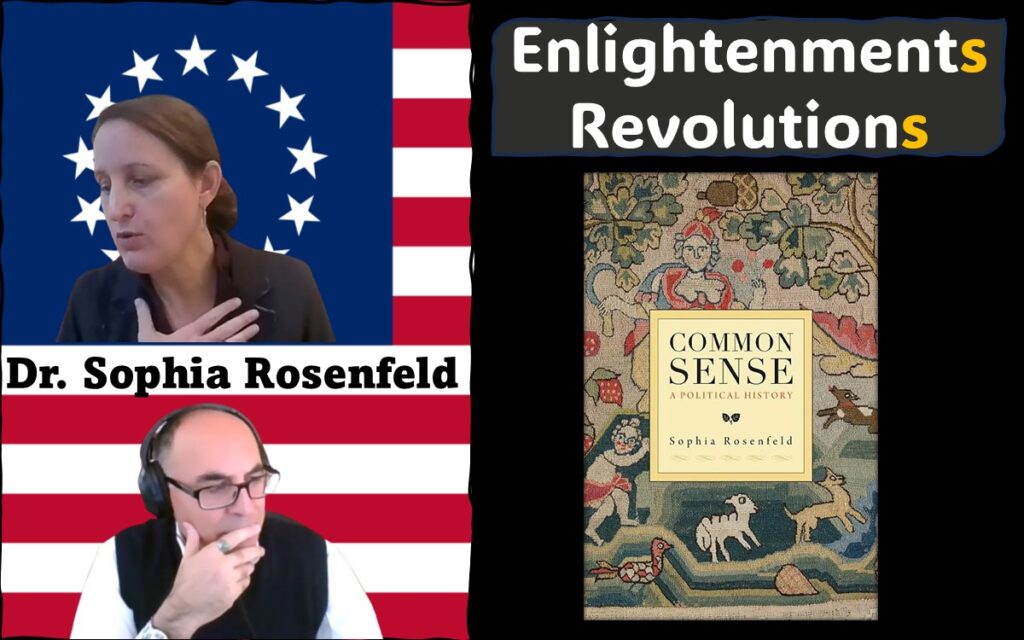
Here is the portion of my interview with Dr. Sophia Rosenfeld that speaks directly to this point:
About Featured Images
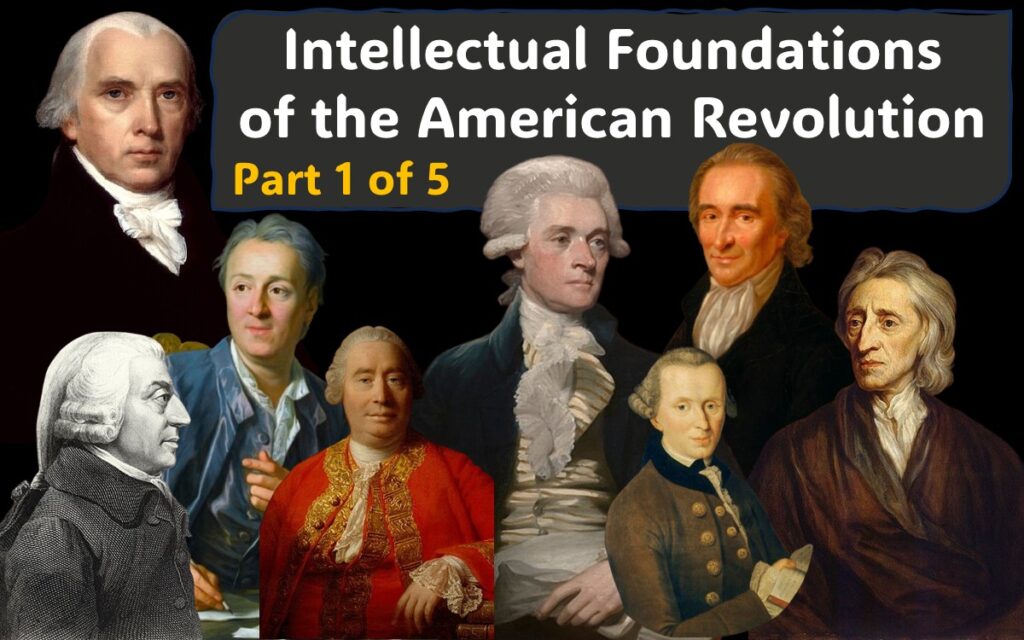
Left to right: Adam Smith, James Madison (above Smith), Denis Diderot, David Hume, Thomas Jefferson, Immanuel Kant, Thomas Paine (above Kant), and John Locke.
Unless otherwise indicated, all images in AARevolution—including those in this post—are in the public domain.
Related Interviews and Essays
For more on the subject on the impact of the Age of Enlightenment on the American Revolution and our Founding Fathers, see my full conversation with Dr. Sophia Rosenfeld—including our interview’s video, timestamps for key sections, and my takeaways.
 The Enlightenment and Intellectual Foundations of the American Revolution
Dr. Rosenfeld’s major works include the following:
- The Age of Choice: A History of Freedom in the Modern World
- Common Sense: A Political History
- A Revolution in Language: The Problem of Signs in Late Eighteenth-Century France
- Democracy and Truth: A Short History”
This 5-Part Series
- Part I: The Enlightenment Is Hard to Define (this essay)
- Part II: Age of Enlightenment, Reason, and Revolution
- Part III: The Enlightenment’s Impact on the American Revolution
- Part IV: Common Sense and Reason in the American Revolution
- Part V: The Enlightenment and the Power of Reflection
About This Program
Analyzing American Revolution (AAR) is a special series podcast production of the History Behind News program. In this series, 33 professors (and counting) analyze the American Revolution from 33 different angles through in-depth interviews with host Adel Aali.
Thematic Collection
Tap below for a closer look at the Revolutionary Era themes we examine—and to meet our guest scholars.

Library
- Interview Transcript Highlights
- Interview Image and Artist Highlights
- Quiz Answers and Backstories

Image Gallery
Explore the backstories and artist bios behind images of our Founding—before and after the American Revolution. These visuals shape how we remember—and reimagine—the Revolutionary Era.

Experienced Analysis of History
About HbN Program
The History Behind News program (HbN) is committed to making in-depth history researched and written by scholars enjoyable and accessible to everyone. Our motto is bridging scholarly works to everyday news.
The histories we’ve uncovered encompass an impressively wide range of subjects from ancient history to U.S. politics and economy to race, women’s rights, immigration, climate, science, military, war, China, Europe, Middle East, Russia & Ukraine, Africa and the Americas to many other issues in the news. We also receive advanced copies of scholarly books and discuss them in our program (in the context of current news).

Adel Aali, host. Snapshot from his introductory video to AAR podcast.
207 Scholars & Counting
Our guests are scholars at leading institutions. They are highly recognized, having received prestigious grants and fellowships as well as notable awards, including the Pulitzer Prize. They include celebrated documentary producers, former White House advisors and other high-ranking government officials, and current and former senior reporters of major national and international newspapers. Many have testified in Congressional hearings, and others frequently contribute to major media outlets and widely read publications.
Think You Know the American Revolution?