Updated: August 16, 2026
We think we know the American Revolution — but what if it was only one act in a global drama? This blog introduces Analyzing American Revolution, a new podcast series where dozens of guest scholars connect the forgotten pieces of the world’s most transformative era.
One Piece of the Puzzle
The American Revolution was only one piece of a global puzzle — a war that stretched from North America to India, from the Caribbean to the coasts of China. And as guest scholars explain in Analyzing American Revolution (AAR), the Revolution was not even the most important piece.
In this special podcast series, historians who have spent decades studying this era reveal how the struggle for independence in the thirteen colonies was part of a much wider transformation that shook empires, redrew trade routes, and redefined ideas of power, faith, and freedom.
The American Revolution, they argue, cannot be fully understood without the rest of the puzzle in place.
Below, in the form of intriguing questions, I share examples of some of those pieces that we examine in depth in this program.
Without realizing it, American colonists had launched a revolution!
My two-part interview with Prof. Kaye, with videos and transcripts, is available here.
How Do Revolutions Happen?
What Is A Revolution?
Are there certain elements that transform a movement – perhaps a rebellion or a revolt, into a revolution?
Do revolutions happen when people are most desperate for change? Or do revolutions happen when governments begin to institute change?
In this program, one guest scholar makes the case for the latter. As he explains it, almost all revolutions erupt after a series of new laws attempt to change the status quo.
In the case of the American Revolution, the British Empire implemented many changes (called Acts) in the 1760s and 1770s. Here are some of those Acts, the names of which are likely familiar to you:
Proclamation of 1763 – Immigrants to the American colonies created an unresolvable issue for Great Britain. It was their unstoppable westward expansion, which pushed them against Native Americans and drove them into conflict with the French. The Proclamation of 1763 forbade colonists from settling west of the Appalachian Mountains.
Sugar Act (1764) – Rum was big business in the American colonies. So when Great Britain’s agents began enforcing (strictly enforcing) trade restrictions, it severely hurt rum production in the colonies.
Currency Act (1764) – Did you know that the American colonies suffered from a constant shortage of gold and silver coins? Money shortage was exacerbated by Britain’s prohibiting colonies from issuing their own paper money. And this created huge economic issues in the colonies.
Stamp Act (1765) – Under this law, all papers—legal documents, newspapers, marriage certificates, etc.— anything you can think of, required a tax stamp.
Declaratory Act (1766) – This is my favorite in the long list of Acts that Parliament pressed on the American colonies. According to this Act, Parliament has the power to make laws that bind the colonies “in all cases whatsoever”.
Townshend Acts (1767) – Actually four acts, and the Tea Act (1773), imposed more and more taxes on the American colonists.
Coercive Acts (1774) – The American colonists called these four acts the Intolerable Acts. What you should know about them is that they were punitive measures passed by the Parliament after the Boston Tea Party (Dec. 16, 1773).
“Common Sense”
Some scholars call Thomas Paine the original Founder. And, of course, that’s a big claim to make. Regardless of whether or not one agrees with that assessment, I think you will find it surprising – and perhaps even shocking, to learn that many of our Founders as well as later generations of the American leaders abhorred and feared Thomas Paine.
So what was it about Thomas Paine and his views that earned him the enmity of the American elite?
In Analyzing American Revolution, we aim to answer this very question in a two-part interview (see Prof. Kaye’s short video above). And as you will note, the answer to this question helps us better understand the ideologies and pragmatic political considerations that shaped the American Revolution and later formed our nation.
France
Any discussion of the American Revolution – and most certainly a podcast series about the American Revolution, must undoubtedly cover the French-American alliance. This is because the French were indispensable to our war against the mighty British Empire.
But let me point out an obvious irony in this situation:
a Catholic, French-speaking, absolute monarch helped protestant, English-speaking anti-monarchy rebel colonies!
Think of this arrangement in the context of the 18th century, when monarchy was still supreme, and when religious affiliations, and even alliances, were still geopolitically important – and not just in Europe but also in the American colonies.
As it turns out, this irony may not have presented much of an irony. As one scholar of late-18th-century French history explains, the French were practicing realpolitik – an approach to geopolitics that was not weighed down with religious considerations or affiliations.
So, were the French rewarded for their support of the American colonies? Or did we leave out France during our 1783 Paris peace negotiations with the British?

Great Britain
How did people in Britain feel about their king cracking down on fellow British subjects in the American colonies? Did the people of Britain even think of the American colonists as their fellow British subjects?
And did their opinions change about the American Revolution between 1775 to 1783?
Is it true that the British were spreading rumors in the American colonies that the Russians are coming… the Russians are coming!
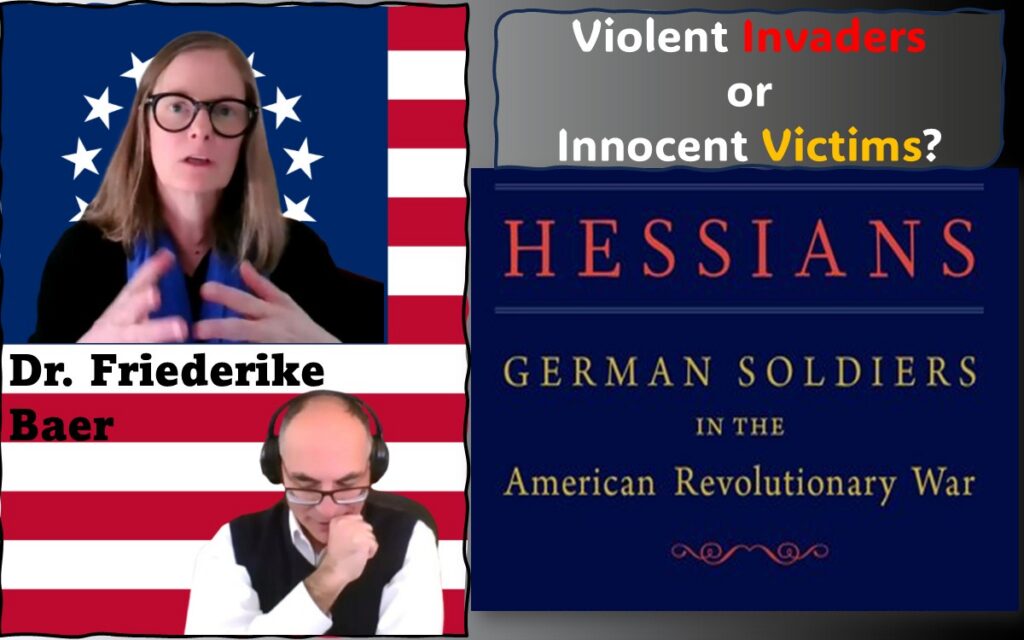
As you well know, the Russians never came. Instead, the Hessians came. And German soldiers coming to America to fight for the British was so unpopular back in the German states that German kings and princes never again rented out their soldiers to other kings or countries.
India
Who was Hyder Ali? And what impact did he have on the American Revolution?
Would the Continental Army and their French allies have won in Yorktown in 1783 without Hyder Ali in India?
China
At the time of the American Revolution, the powerful Qing Dynasty ruled China. And the Qing believed that all Europeans are essentially barbarians and have nothing to offer to China except hard currency – mainly silver!
So did China, specifically the global trade with China, have any impact on the American Revolution? This is a story that is much bigger than the Boston Tea Party.
Spain
What about the Spanish Empire?
Did the Spanish help the American cause? A hint: Siege of Pensacola, March 9 to May 10, 1781.
And if so, why is it that we didn’t really learned about Spain in the context of the American Revolution back in our Middle School and High School years?
One Final Question
Was the American Revolution, in essence, a Civil War?
AAR Podcast: Introductory Video
More vidoes about the American Revolution.
Answering The Above Questions
You should know that I don’t answer any of the questions for you. Rather, I pose those very questions to scholars of the American Revolution and we discuss them in Analyzing American Revolution (AAR).
AAR is a production of the History Behind News program where, as of this recording, I have interviewed 196 scholars (and counting) about world history – and importantly, about the history of our own country.
I am Adel Aali, host of History Behind News, and also host of Analyzing American Revolution.
So I have a good amount of experience in interviewing professors and analyzing history with them. And I now bring that experience to analyze the American Revolution with scholars and also with you.
Generally speaking, in this series, you will hear way less from me, and much more from the professors I interview – 25 interviews and more are being scheduled still.
And that’s the way it should be.
Instead of me reading scholarly works on the American Revolution and telling you what I’ve read – like many social media influencers do, I interview the very scholars who have written those great works. These are scholars who have spent decades analyzing the American Revolution from many different angles. And in this program, they distill those decades of research into an hour conversation with me, which I share with you.
History
For most of us, history is narrated like a story—with a beginning, a middle and an end, and a couple of climaxes in between—all of which are put together usually chronologically.
But that’s not what we do here!
We don’t tell the history of the American Revolution. We rather analyze the American Revolution.
In fact, I am assuming that you already are somewhat familiar with the history of the American Revolution.
For example, I am assuming that you are familiar with the Battles of Lexington and Concord. So instead of telling you what happened on April 19, 1775, we analyze the social, religious, economic and generational conflicts in Concord, MA, that culminated in “the shot heard ’round the world”.
To be sure, my guest scholars do tell tantalizing and even shocking stories about the American revolution. But the point is not to tell stories – not chronologically anyway. The point is to learn about the American Revolution from different perspectives. And we do that by digging deep into disparate subjects, examples of which I have listed below:
- Age of Enlightenment and “Age of Choice
- What is a revolution? When do revolutions happen?
- Was the Boston Massacre a family affair? And if so, what’s the significance of that?
- Who was Thomas Paine and why did many American elite dislike him?
- What were the socioeconomic, religious and generational conflicts that culminated in “the shot heard ’round the world”?
- The Declaration of Independence
- Concord, Massachusetts: A Town In Crisis Pushed to the Edge Long Before the Battles of Lexington and Concord on April 19, 1775
- Our Declaration of Independence in Russian newspapers! Empress Catherine’s geopolitical priorities and why she rejected King George III
- The Loyalists: Was the American Revolution a civil war?
- France: how national desire for revenge impelled France to support the American rebels. And did Americans reward France in return?
- The China Trade: this is a global story that’s much bigger than the Boston Tea Party
- The Dutch: how they helped the American cause.
- The Spanish Empire: money, loans and the Battle of Pensacola. And why we almost never hear about the Spanish Empire in the context of the American Revolution?
- Native Peoples: who did they side with and why?
- Valley Forge & Baron de Steuben’s real contribution to the Revolutionary War
- The Continental Army: who were the men that fought for America?
- Immigrants and the challenges they posed for the British
- Religion: how warrior pastors and powerful religious forces propelled the Revolutionary War
- African Americans: Black heroes and Black antirevolutionaries
- Single Men and Manhood during the American Revolution
- Memory of ’76: how the story of the American Revolution have changed over the centuries
- Myths and traditions of the American Revolution – starting with “Yankee Doodle“
And more interviews are being planned still.

Piecing the Puzzle Together
The American Revolution was never an isolated event. It was shaped by decisions made in London and Versailles, by battles fought in India and the Caribbean, by ideas exchanged in pamphlets and pulpits. It was, in essence, a civil war — and a global one.
In Analyzing American Revolution, we explore all these dimensions—the remembered and the forgotten, the celebrated and the unsung—to piece together a fuller understanding of how the world changed between 1763 and 1783.
My goal isn’t to give you neat answers but to open conversations — with scholars and with you.
I’ve used the puzzle analogy throughout this post, so let me complete the picture. Back in middle school and high school, we were taught the American Revolution as if it were a simple 50-piece puzzle. In reality, it’s more like a 5,000-piece puzzle.
In this podcast, my guest scholars and I, aim to give you a glimpse of that complexity — the many pieces that make up the full story of the American Revolution.
About Featured Image
The featured image in this post (top) is known as the “Betsy Ross” flag, which was used from June 14, 1777, to May 1, 1795. On June 14, 1777, the Second Continental Congress passed the Flag Act of 1777, officially adopting the “Betsy Ross” flag. According to legend, George Washington asked Betsy Ross to sew this first American flag. While Betsy Ross was an upholsterer and a prominent flag makers, there is no historical evidence that she made the first official U.S. flag. Some historians credit Francis Hopkins for this flag design.
About This Program
Analyzing American Revolution (AAR) is a special series podcast production of the History Behind News program. In this series, 33 professors (and counting) analyze the American Revolution from 33 different angles through in-depth interviews with host Adel Aali.
Tap here for a closer look at the Revolutionary Era topics we examine—and to meet our guest scholars.
Visit our Revolutionary Era Blog page for
- Interview Transcript Highlights
- Interview Image and Artist Highlights
- Quiz Answers and Backstories
Images of American Revolution
Explore the backstories and artist bios of the images in our introductory video. For example, did you know that the Peale family—father, uncle, and son—painted George Washington both in rare sittings and later from memory?
Experienced Analysis of History
About HbN Program:
The History Behind News program (HbN) is committed to making in-depth history researched and written by scholars enjoyable and accessible to everyone. Our motto is bridging scholarly works to everyday news.
The histories we’ve uncovered encompass an impressively wide range of subjects from ancient history to U.S. politics and economy to race, women’s rights, immigration, climate, science, military, war, China, Europe, Middle East, Russia & Ukraine, Africa and the Americas to many other issues in the news. We also receive advanced copies of scholarly books and discuss them in our program (in the context of current news).

232 Scholars & Counting:
Our guests are scholars in prestigious institutions, such as Oxford, Yale, Caltech, Harvard, MIT, Stanford, the Hoover Institution, the American Enterprise Institute, Quincy Institute for Responsible Statecraft, King’s College London, Princeton University, Notre Dame, Dartmouth College, Columbia University, the Atlantic Council, Duke, Amherst College, University of Michigan, Rhodes College, Emory University, Northwestern Law, Vanderbilt University, US Naval War College, Air Command and Staff College, Marine Corp University, UVA, Johns Hopkins, Cornell, NYU, Rice, University of Chicago, White House Historical Association, Baylor University, USC, UC Berkeley, UCSF, UCI, UCSD, UC Davis, UCR, Tel Aviv University, Hebrew University of Jerusalem, the Israel Democracy Institute, University of Aberdeen, Universidad Complutense de Madrid, University of Navarra, University of Seville, Helsinki University, Diego Portales University (Chile), Lund University (Sweden), University of Edinburgh, Near East University (Türkiye), Cardiff University, the Free University of Berlin and many others.
They include Pulitzer Prize winners, renowned documentary producers, former White House advisors and other high-ranking government officials, and current and former senior reporters at The Wall Street Journal and New York Times Magazine. Many have testified in Congressional hearings and others frequently contribute to major media outlets and widely read publications, ranging from the BBC, NPR, PBS and MSNBC to The Wall Street Journal and The New York Times.
Think You Know the American Revolution?