Updated: April 20, 2026
Reconsidering the Boston Massacre – Part IV
If the shooting on King Street was chaos, the trials that followed were something else entirely—carefully staged, deeply political, and just as consequential.
From the start, this wasn’t only about guilt or innocence. It was about perception—who could claim the moral high ground, not just in Boston, but across the empire. In that sense, the trials were as much performance as legal process.
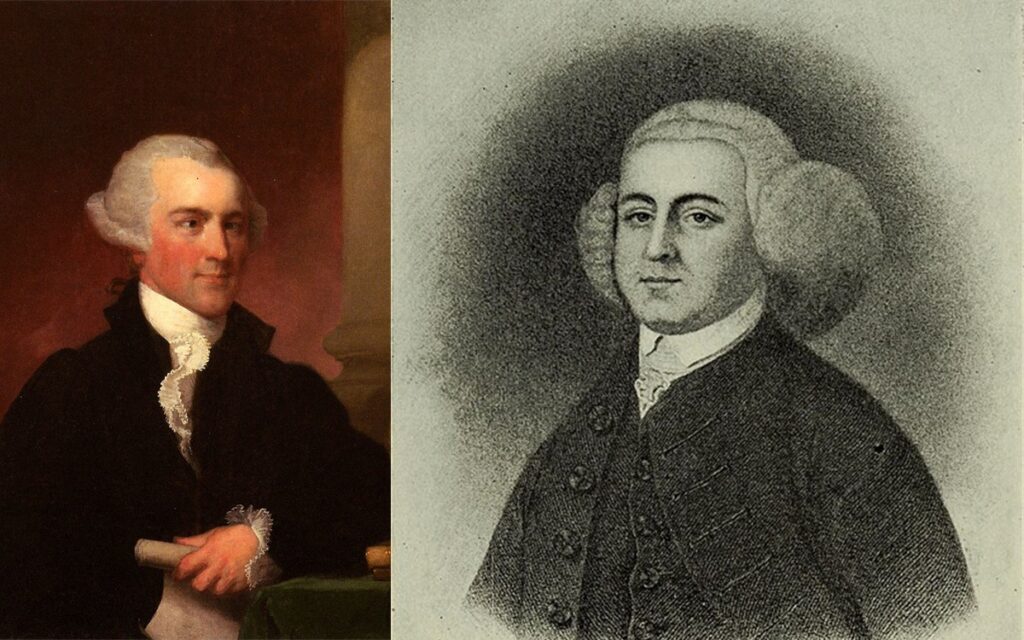
The Sons of Liberty made a striking choice. Confident in their case, they ensured the soldiers would receive a strong defense—turning to John Adams and Josiah Quincy. Not everyone agreed. Some worried that fairness might backfire.
Staging Justice: Law, Optics, and the High Ground
Adams himself was uneasy. Defending British soldiers put him in a difficult position politically. But he took the case—and made a critical move.
He separated the trial of Captain Thomas Preston from that of the soldiers, arguing there wasn’t enough evidence to prove that Captain Preston gave the order to fire. The gamble worked. Preston was acquitted.
But the soldiers were shaken. Their defense had rested on following orders—now that protection was gone.
In their trial, Adams shifted to self-defense.
Threading the Needle: Self-Defense, Identity, and the Verdict
That argument required a delicate balance. He needed to show the soldiers were threatened—without portraying Boston as lawless.
So he reframed the crowd.
Adams argued those confronting the soldiers were not “respectable” Bostonians, but outsiders—sailors, apprentices, and even pointed to figures like Crispus Attucks in ways that would be unacceptable today.
It worked. Six of the either soldiers were acquitted. Two soldiers were found guilty of the lesser charge of manslaughter.
And yet, despite the politics and the strategy, the trials were widely seen as a victory for the rule of law. There was no rush to judgment, no predetermined outcome.
Even more striking—Adams’ role didn’t hurt him. It elevated him.
Which leaves us with a tension worth sitting with:
This was political. It was calculated. It was performative.
But it also held.
And that matters—because a trial like this would have been unimaginable in many contemporary empires. For all its flaws, the British system allowed for something rare in moments like this: a contested process where law, politics, and public opinion collided—and none fully won.
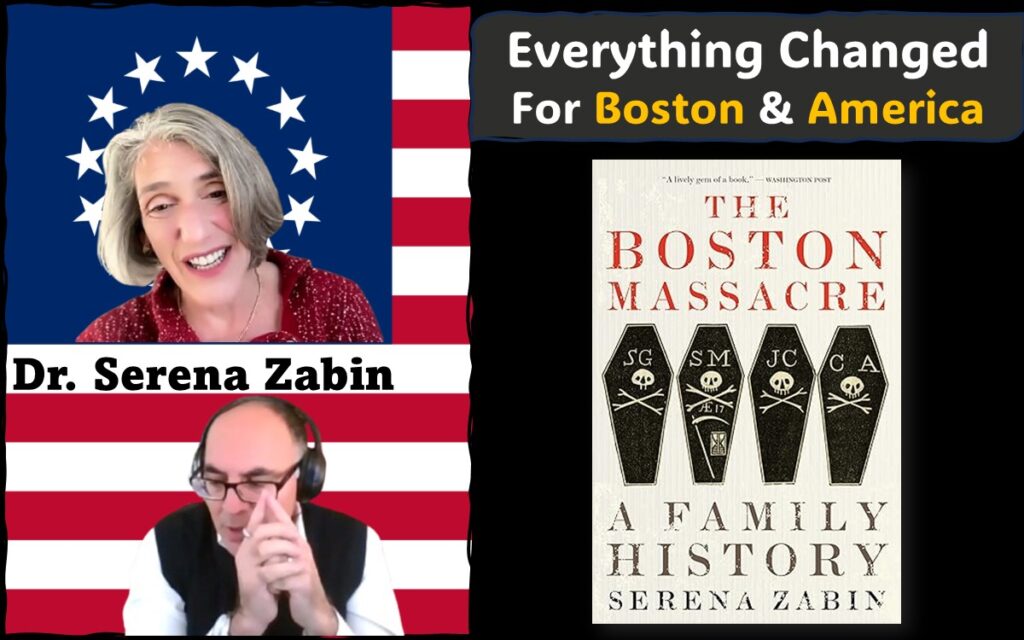
Here is the portion of my interview with Dr. Serena Zabin that speaks directly to this point:
About Featured Image
John Adams (painted by Benjamin Blyth, c. 1766) and Josiah Quincy II (painted posthumously by Gilbert Stuart, c. 1825).
Unless otherwise indicated, all images in AARevolution—including those in this post—are in the public domain.
Related Interviews and Essays
For more on the subject on the real history of the Boston Massacre, see my full conversation with Dr. Sophia Serena Zabin—including our interview’s video, timestamps for key sections, and my takeaways.
 Propaganda and Politics: The Permanent Rupture with Britain
Dr. Zabin’s major works include:
- Dangerous Economies: Status and Commerce in Imperial New York,
- The New York Conspiracy Trials of 1741: Daniel Horsmanden’s “Journal of the Proceedings” with Related Documents, and
- The Boston Massacre: A Family History, which received the 2024 George Washington Book Prize and is the focus of this interview.
This 5-Part Series
- Part I: Was the Boston Massacre Really a “Massacre”?
- Part II: Did British Soldiers and Bostonians Know Each Other?
- Part III: Paul Revere’s Depiction of the Boston Massacre
- Part IV: The Trial: Politics & Performance (this essay)
- Part V: The Permanent Rupture: Shattered Families and A Broken Imperial Family
About This Program
Analyzing American Revolution (AAR) is a special series podcast production of the History Behind News program. In this series, 33 professors (and counting) analyze the American Revolution from 33 different angles through in-depth interviews with host Adel Aali.
Thematic Collection
Tap below for a closer look at the Revolutionary Era themes we examine—and to meet our guest scholars.

Library
- Interview Transcript Highlights
- Interview Image and Artist Highlights
- Quiz Answers and Backstories

Image Gallery
Explore the backstories and artist bios behind images of our Founding—before and after the American Revolution. These visuals shape how we remember—and reimagine—the Revolutionary Era.

Experienced Analysis of History
About HbN Program
The History Behind News program (HbN) is committed to making in-depth history researched and written by scholars enjoyable and accessible to everyone. Our motto is bridging scholarly works to everyday news.
The histories we’ve uncovered encompass an impressively wide range of subjects from ancient history to U.S. politics and economy to race, women’s rights, immigration, climate, science, military, war, China, Europe, Middle East, Russia & Ukraine, Africa and the Americas to many other issues in the news. We also receive advanced copies of scholarly books and discuss them in our program (in the context of current news).

Adel Aali, host. Snapshot from his introductory video to AAR podcast.
217 Scholars & Counting
Our guests are scholars at leading institutions. They are highly recognized, having received prestigious grants and fellowships as well as notable awards, including the Pulitzer Prize. They include celebrated documentary producers, former White House advisors and other high-ranking government officials, and current and former senior reporters of major national and international newspapers. Many have testified in Congressional hearings, and others frequently contribute to major media outlets and widely read publications.
Think You Know the American Revolution?