Updated: August 2, 2026
Reconsidering the Boston Massacre – Part V
The Boston Massacre can be understood as a kind of “family history”—and not just metaphorically. It was lived, quite literally, in the homes, streets, and relationships of Boston itself.
When the Army Brought Its Families
When British regiments arrived in 1768, they didn’t come alone. Alongside roughly 2,000 soldiers came hundreds of women—many of them wives—and over a thousand children. A city of about 16,000 was suddenly forced to absorb them—with no real place to put them.
Why the Army Lived Among Civilian
Despite barracks on an island in the harbor, imperial authorities wanted troops in the city—to police unrest and make their presence felt. The result was forced intimacy.
Boston became one sprawling, improvised living arrangement.
Soldiers and their families were quartered wherever space could be found—spare rooms, sheds, warehouses, cellars. Civilians rented out what they had. Daily life became shared life.
And once soldiers and civilians lived alongside one another, something more complicated than occupation took shape. They ate together. They socialized. They formed relationships—blurring the lines we now draw between “British” and “American.”
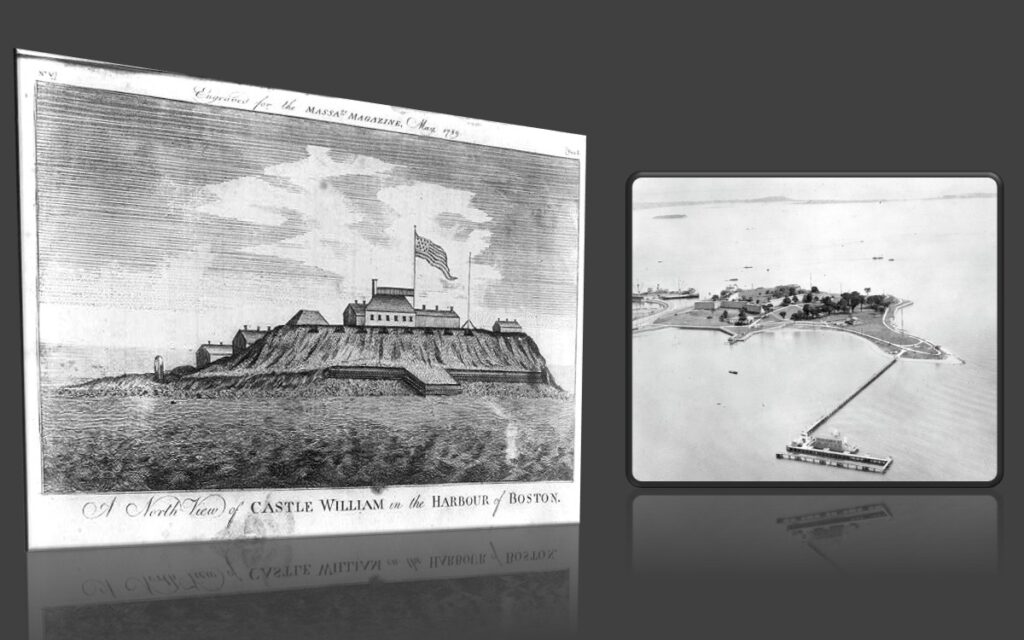
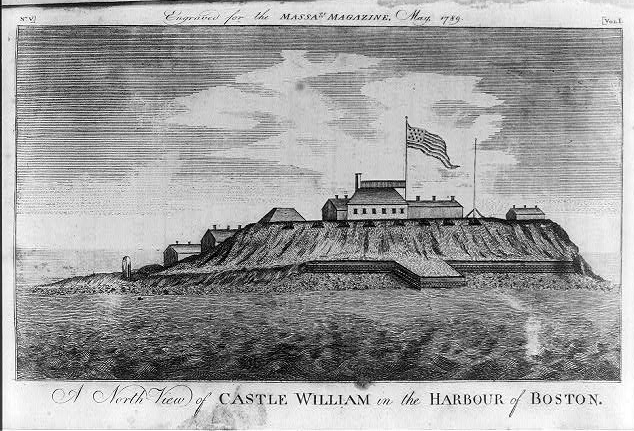 Castel William, located on Castle Island in Boston Harbor, was used by the British as a garrison and stronghold to house troops, particularly during the escalating tensions leading up to the Revolutionary War. It served as a secure, fortified location for British soldiers and officials, separate from the mainland city. This image is of Castle William rebuilt by American forces in 1776 and renamed Fort Adams. In a 1799 ceremony attended by President John Adams, it was renamed Fort Independence. As can be seen in the featured image, Fort Independence is still located on Castle Island in South Boston.
When Soldiers Became Family
Some of those relationships became marriages—around forty recorded in church registers—and many more informal unions. Children were born into communities that blended soldiers and civilians, with local godparents standing alongside military families.
These were “fictive families”—networks of connection that weren’t strictly biological, but no less real.
Even the messier parts of urban life were shared. Court records suggest soldiers and locals sometimes fell into petty crime together. This wasn’t just coexistence. It was entanglement.
And that’s what makes what followed so consequential.
Because the Boston Massacre didn’t erupt between strangers. It happened among people who, in many cases, knew each other.
The Empire as Family
But there’s also a deeper layer—the way people in the 18th century understood political relationships.
The British Empire was described in familial terms. The king was the father. The colonies were his children. Loyalty wasn’t just political—it was personal. Even the phrase “mother country” reflects this worldview.
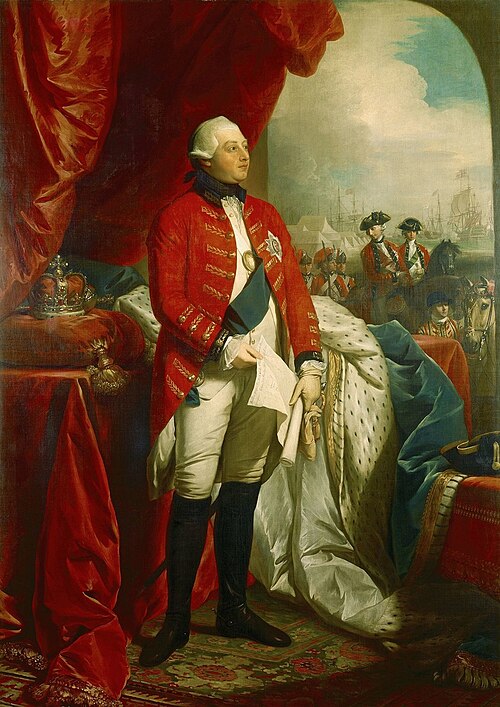 George III in 1779, with symbols of rule, scenes of the Royal Navy and British Army at war, by Benjamin West
A Family Breaks Apart
But what happens when that family turns on itself?
The Boston Massacre exposed the fragility of those bonds. Imperial unity—once imagined as familial—looked far less stable when soldiers fired on the king’s own subjects.
And the consequences weren’t abstract.
When the troops left Boston, families were physically torn apart. Some soldiers departed, leaving wives and children behind. Others stayed, effectively deserting to preserve the lives they had built. Some women followed the army, separating from their own families.
In every direction, bonds were breaking—not cleanly, but unmistakably.
That’s why Dr. Serena Zabin calls the Boston Massacre a “bad divorce.”
It wasn’t just political. It was social and emotional—a tearing apart of relationships that had briefly made the empire feel intimate.
And it left lasting damage.
An Imperial Family
Boston’s economy contracted. Social networks unraveled. And the illusion of a unified imperial “family” no longer held.
What remained was something colder. More distant. More divided.
The Boston Massacre, in that sense, wasn’t just a flashpoint of violence. It was the moment an entangled world—lived in homes, streets, and families—began to come apart.
Not cleanly.
But like a family falling apart.
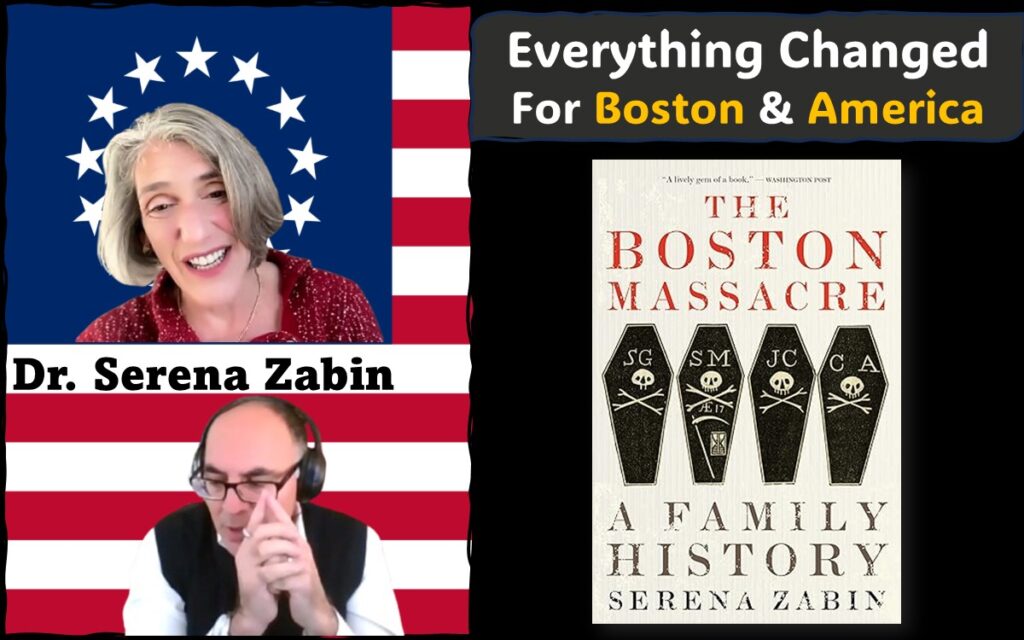
Here is the portion of my interview with Dr. Serena Zabin that speaks directly to this point:
About Featured Image
Left: Castle William on Castle Island. Fortifications were destroyed by the British during their 1776 evacuation of Boston
Rebuilt by Americans; surveyed by Paul Revere. Renamed Fort Independence in 1799, with John Adams attending the ceremony. Right: Fort Independence, Castle Island, Boston Harbor, 1942 (WWII). Both images are in the Public Domain.
Unless otherwise indicated, all images in AARevolution—including those in this post—are in the public domain.
Related Interviews and Essays
For more on the subject on the real history of the Boston Massacre, see my full conversation with Dr. Sophia Serena Zabin—including our interview’s video, timestamps for key sections, and my takeaways.
 Propaganda and Politics: The Permanent Rupture with Britain
Dr. Zabin’s major works include:
- Dangerous Economies: Status and Commerce in Imperial New York,
- The New York Conspiracy Trials of 1741: Daniel Horsmanden’s “Journal of the Proceedings” with Related Documents, and
- The Boston Massacre: A Family History, which received the 2024 George Washington Book Prize and is the focus of this interview.
This 5-Part Series
- Part I: Was the Boston Massacre Really a “Massacre”?
- Part II: Did British Soldiers and Bostonians Know Each Other?
- Part III: Paul Revere’s Depiction of the Boston Massacre
- Part IV: The Trial: Politics & Performance
- Part V: The Permanent Rupture: Shattered Families and A Broken Imperial Family (this essay)
About This Program
Analyzing American Revolution (AAR) is a special series podcast production of the History Behind News program. In this series, 33 professors (and counting) analyze the American Revolution from 33 different angles through in-depth interviews with host Adel Aali.
Thematic Collection
Tap below for a closer look at the Revolutionary Era themes we examine—and to meet our guest scholars.

Library
- Interview Transcript Highlights
- Interview Image and Artist Highlights
- Quiz Answers and Backstories

Image Gallery
Explore the backstories and artist bios behind images of our Founding—before and after the American Revolution. These visuals shape how we remember—and reimagine—the Revolutionary Era.

Experienced Analysis of History
About HbN Program
The History Behind News program (HbN) is committed to making in-depth history researched and written by scholars enjoyable and accessible to everyone. Our motto is bridging scholarly works to everyday news.
The histories we’ve uncovered encompass an impressively wide range of subjects from ancient history to U.S. politics and economy to race, women’s rights, immigration, climate, science, military, war, China, Europe, Middle East, Russia & Ukraine, Africa and the Americas to many other issues in the news. We also receive advanced copies of scholarly books and discuss them in our program (in the context of current news).

Adel Aali, host. Snapshot from his introductory video to AAR podcast.
232 Scholars & Counting
Our guests are scholars at leading institutions. They are highly recognized, having received prestigious grants and fellowships as well as notable awards, including the Pulitzer Prize. They include celebrated documentary producers, former White House advisors and other high-ranking government officials, and current and former senior reporters of major national and international newspapers. Many have testified in Congressional hearings, and others frequently contribute to major media outlets and widely read publications.
Think You Know the American Revolution?