Updated: April 20, 2026
Reconsidering the Boston Massacre – Part II
One of the most revealing and underappreciated layers of the Boston Massacre story is just how socially entangled British troops and Boston residents were before the shooting on King Street. It’s easy to imagine a rigid divide — angry townsfolk on one side and “British soldiers on the other — but the reality was far more complicated.
British soldiers had been stationed in Boston since 1768 to enforce unpopular tax laws and support customs officials. And between then and March 5, 1770 — nearly two years, they had been living among the civilian population and sharing the rhythms of town life.
Boston, at the time, was a relatively small city of about 16,000 people, and the presence of more than a thousand troops in its streets, taverns, shops, and common spaces meant that British soldiers and people of Boston bumped up against each other constantly. Some soldiers were quartered in tents on the Boston Common or in nearby barracks, but others rented rooms in Boston homes and interacted routinely with local families and business owners.
Scholars have even pointed out that familial bonds and personal relationships sometimes developed across this divide — including marriages and romantic connections between soldiers and local women, and children who grew up knowing the red‑coated soldiers as part of the town’s daily life.
These face‑to‑face interactions complicate the simplified story of a faceless British “occupation”.
The soldiers who patrolled Boston streets bought goods and socialized in the same spaces that Bostonians did. So many residents knew — and were known by — the very men whose muskets would later were allegedly aimed at a civilian crowd on March 5, 1770.
On the night of the Massacre, as a crowd grew around a lone sentry outside the Town House (now known as the Old State House), some of the troops who marched out to support him may have seen familiar faces among those hurling insults, snowballs, and debris.
What this deeper social picture reveals is a world of overlapping lives — neighbors and acquaintances caught up in rising political tensions that increasingly strained these everyday bonds. This context doesn’t diminish the impact of the violence on March 5, but it enriches our understanding of how ordinary people and soldiers alike were pulled into the larger currents of colonial resistance and imperial authority. Instead of a story of completely separate camps colliding, the lead‑up to the Boston Massacre was shaped by a much more personal, tangled web of community and connection.
Here is the portion of my interview with Dr. Serena Zabin that speaks directly to this point:
About Featured Image
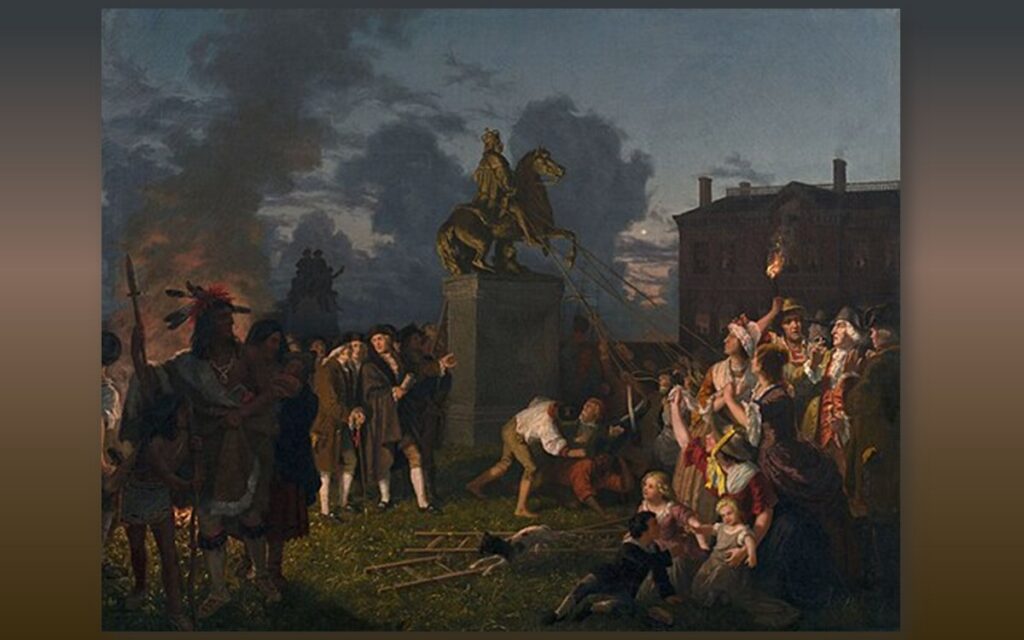
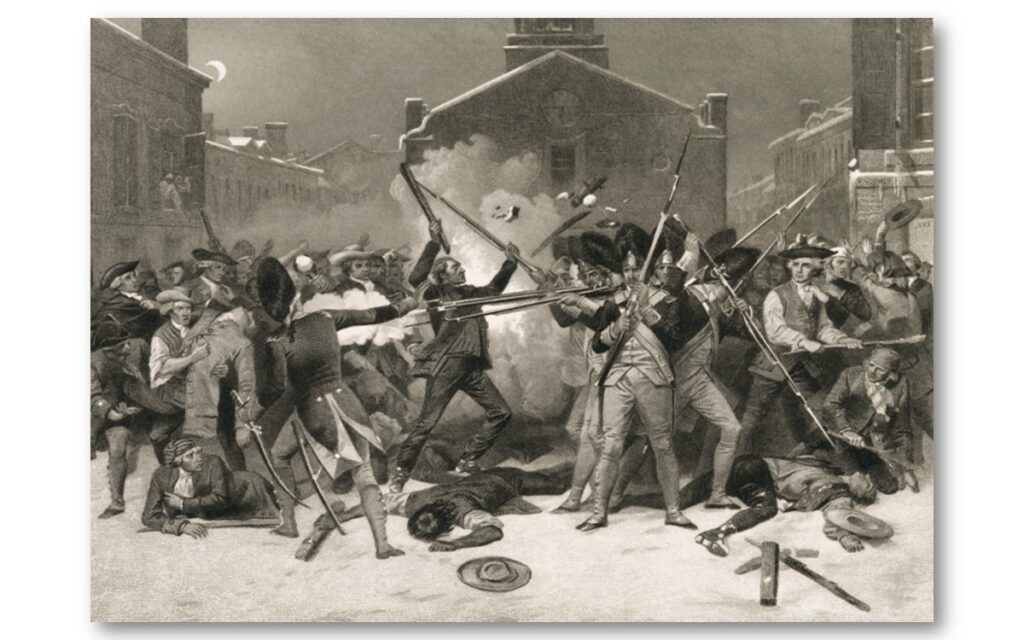
The featured image depicts the Boston Massacre, showing people in Boston and British soldiers intermingled during the shooting—unlike Paul Revere’s famous 1770 engraving, which portrays them as clearly separated by thick plumes of gunshot smoke. Alonzo Chappel’s 1878 depiction is generally considered more historically accurate. In our program, we examine the purpose and propaganda motivations behind Revere’s engraving in conversation with Dr. Serena Zabin, linked below.
Unless otherwise indicated, all images in AARevolution—including those in this post—are in the public domain.
Related Interviews and Essays
For more on the subject on the real history of the Boston Massacre, see my full conversation with Dr. Sophia Serena Zabin—including our interview’s video, timestamps for key sections, and my takeaways.
 Propaganda and Politics: The Permanent Rupture with Britain
Dr. Zabin’s major works include:
- Dangerous Economies: Status and Commerce in Imperial New York,
- The New York Conspiracy Trials of 1741: Daniel Horsmanden’s “Journal of the Proceedings” with Related Documents, and
- The Boston Massacre: A Family History, which received the 2024 George Washington Book Prize and is the focus of this interview.
This 5-Part Series
- Part I: Was the Boston Massacre Really a “Massacre”?
- Part II: Did British Soldiers and Bostonians Know Each Other? (this essay)
- Part III: Paul Revere’s Depiction of the Boston Massacre
- Part IV: The Trial: Politics & Performance?
- Part V: The Permanent Rupture: Shattered Families and A Broken Imperial Family
About This Program
Analyzing American Revolution (AAR) is a special series podcast production of the History Behind News program. In this series, 33 professors (and counting) analyze the American Revolution from 33 different angles through in-depth interviews with host Adel Aali.
Thematic Collection
Tap below for a closer look at the Revolutionary Era themes we examine—and to meet our guest scholars.

Library
- Interview Transcript Highlights
- Interview Image and Artist Highlights
- Quiz Answers and Backstories

Image Gallery
Explore the backstories and artist bios behind images of our Founding—before and after the American Revolution. These visuals shape how we remember—and reimagine—the Revolutionary Era.

Experienced Analysis of History
About HbN Program
The History Behind News program (HbN) is committed to making in-depth history researched and written by scholars enjoyable and accessible to everyone. Our motto is bridging scholarly works to everyday news.
The histories we’ve uncovered encompass an impressively wide range of subjects from ancient history to U.S. politics and economy to race, women’s rights, immigration, climate, science, military, war, China, Europe, Middle East, Russia & Ukraine, Africa and the Americas to many other issues in the news. We also receive advanced copies of scholarly books and discuss them in our program (in the context of current news).

Adel Aali, host. Snapshot from his introductory video to AAR podcast.
232 Scholars & Counting
Our guests are scholars at leading institutions. They are highly recognized, having received prestigious grants and fellowships as well as notable awards, including the Pulitzer Prize. They include celebrated documentary producers, former White House advisors and other high-ranking government officials, and current and former senior reporters of major national and international newspapers. Many have testified in Congressional hearings, and others frequently contribute to major media outlets and widely read publications.
Think You Know the American Revolution?