Updated: August 6, 2026
Introduction
In this interview: “1776 witnesses the drafting of the first written constitutions in the history of the world. Those were those new state constitutions that Congress called for in May of 1776. So that’s why this year was not a rebellion. That’s why this year was a revolutionary transformation in government…”
Watch this segment in the video below (07:47)
Why did the Declaration of Independence come near the end—not the beginning—of America’s revolutionary transformation?
What happened during the initial months of 1776 that made independence almost inevitable?
And why did Americans begin writing entirely new constitutions before they had even declared independence?
In this interview, Dr. Edward Larson dissects the extraordinary events of January through July 1776 and argues that even before declaring independence, the American Revolution was about much more than separation from Britain. As Thomas Paine argued, if the Revolution accomplished nothing more than independence, then it was not worth pursuing. Instead, 1776 witnessed a profound transformation: Americans fundamentally redefined the source of political authority. No longer was authority handed down by a monarch. Rather, authority rose from the people themselves.
Video
Watch the full interview with Dr. Larson (timestamped outline below)
Key Themes
- From Reconciliation to Separation
- The Shift to Popular Sovereignty
- The First Written Constitutions
- Building a Consensus for Independence
- Making The Case for Independence

Central Question
This conversation raises a central question:
How did seven months transform the American Revolution from a movement for rights and reconciliation into a revolution for independence and popular government?
How to Use This Post
Use this post as reference guide to the American Revolution through the lens of this interview and the broader Analyzing American Revolution program (AARevolution). Navigate using the interactive table of contents above and the timestamps below (in gray) to discover how this interview deepens the story of the Revolution—and to explore how the program unfolds: its key themes, insights, image gallery, scholars list, history quizzes, and related interviews across the series.
1776 Was More Than a Year of Independence
When 1776 began, most American Patriots were not fighting to establish an independent nation. Rather, they fought for rights and reconciliation—to preserve what they believed were their rights as British subjects while remaining loyal to the Crown.
Over the next seven months, however, a series of military, political, and ideological developments steadily transformed both the objectives of the Revolution and the nature government.
The destruction of Norfolk, the King’s determination to suppress the rebellion, Thomas Paine’s “Common Sense,” Britain’s Prohibitory Act, the Halifax Resolves, and Congress’s call for new state governments all accelerated a dramatic shift in public opinion. By the time the Declaration of Independence was adopted on July 4, Patriots had embraced not only the necessity of independence, but also the revolutionary principle that legitimate government derived its authority from the people rather than monarchy.
About My 221st Guest: Dr. Edward Larson
Dr. Edward Larson holds the Hugh and Hazel Darling Chair in Law and is University Professor of History at Pepperdine University. Dr. Larson has published more than one hundred articles and a dozen books, including the following:
- The Return of George Washington: Uniting the States, 1783-1789 – New York Times Bestseller
- Summer for the Gods: The Scopes Trial and America’s Continuing Debate Over Science and Religion – winner of the Pulitzer Prize
- Declaring Independence: Why 1776 Matters – his most recent book, discussed in this interview.
About Featured Image
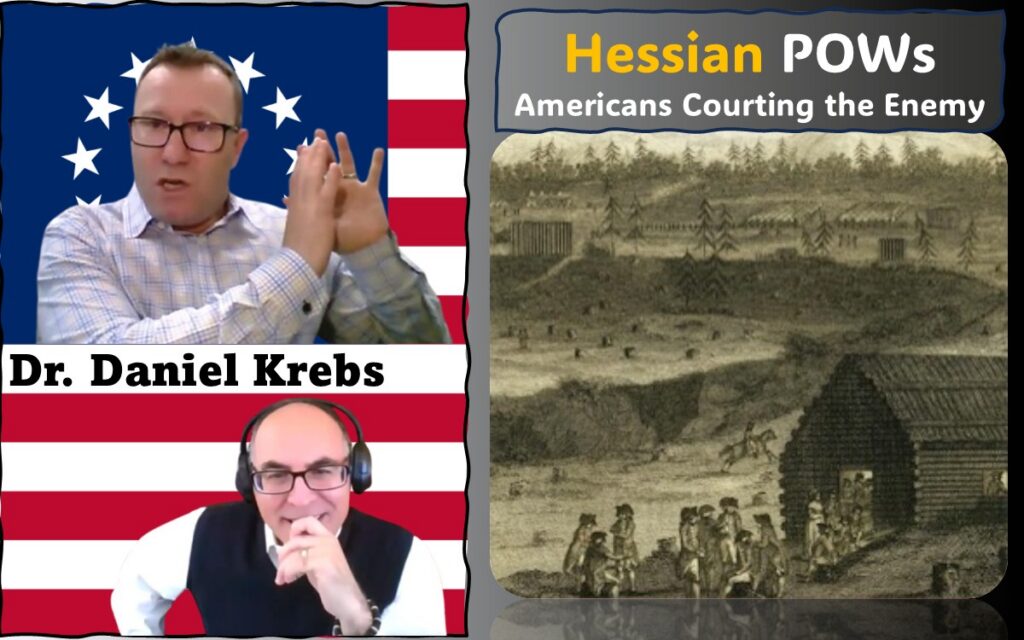
Image of Adel Aali (program host) and his guest, Dr. Edward Larson, superimposed on the Betsy Ross flag, along with the cover image of Dr. Larson’s recent book “Declaring Independence: Why 1776 Matters”.
AAR Essential Insights
Although the full video and transcript of my conversation with Dr. Larson are included in this post, I’ve selected and summarized several insights that I found particularly revealing and worth emphasizing. These moments — some surprising, others that challenge familiar assumptions — help us see 1776, the Declaration of Independence and the American Revolution in a different light.
By the way, these insights are my own takes and interpretations from the interview. For Dr. Larson’s perspective and exact framing, please watch the interview above and view the transcript below in the corresponding sections.
The Revolution Was About Sovereignty, Not Simply Independence
For many of us, the story of 1776 begins and ends with the Declaration of Independence. We picture a dramatic break from Britain, a new nation, and the birth of the United States. But that is only part of the story.
What struck me most in this conversation is that the Revolution was not simply about who governed America. It was about where government itself derived its authority.
For centuries, sovereignty flowed downward from a monarch. Kings ruled because they were kings. In 1776, that principle was turned on its head. Political authority now flowed upward—from the people.
That shift helps explain why 1776 produced more than a declaration. It also produced written constitutions, representative government, and the conviction that law—not rulers—should govern society. Independence was the political outcome. The deeper revolution was constitutional.
Viewed this way, the American Revolution becomes much larger than a colonial dispute with Britain. It represents one of history’s most consequential experiments in self-government. That is why 1776 matters not only to the United States, but to the modern world.
Watch this segment in the video above (00:04:49)
Was January 1776 a Turning Point?
When we think of turning points in the American Revolution, July 4 usually comes to mind. But this interview made me reconsider whether the real turning point began six months earlier.
January 1776 was an extraordinary month. The burning of Norfolk convinced many colonists that Britain was prepared to wage total war against its own subjects. King George III‘s speech to Parliament confirmed that reconciliation was slipping away. Then came Thomas Paine’s Common Sense, reframing the crisis by arguing that monarchy itself—not simply Parliament or taxation—was the problem.
These developments did not merely happen to occur in the same month. Rather, they reinforced one another. Together, they gave Americans new reasons to question the imperial relationship, while Paine gave them a new way to interpret those events. Even George Washington, who had entered the war to defend the rights of British subjects rather than fight for independence, began changing his position during this period.
Seen through that lens, January was more than the opening chapter of 1776. It was the month when the Revolution began moving from demands for rights toward demands for independence.
Watch this segment in the video above (00:09:23, 00:19:39)
George Washington Opposed Independence?!
Continue watching at 11:39 in the video above
What Changed in February 1776?
January had already shaken many Americans’ faith in reconciliation. February pushed them even further. One of the month’s most consequential developments was Parliament’s American Prohibitory Act—a law that revealed just how dramatically Britain’s view of the colonies had changed.
On its face, the Act was an economic weapon. Parliament prohibited American trade, authorized the seizure of American ships and cargo, and treated colonial commerce as if it belonged to a foreign enemy during wartime. But what caught John Adams’s attention was something much deeper. Britain was applying the rules of international warfare to its own colonies, treating American ships as if they belonged to another nation rather than to British subjects.
That explains why Adams called it an “act of independency.” By treating the colonies as foreign belligerents instead of part of the British Empire, it was unintentionally strengthening the case for independence. As I listened to Dr. Larson explain this, I could not help but appreciate Adams’s insight. He recognized that Britain’s actions were speaking just as loudly as the arguments made by American patriots.
Seen in the context of February 1776, the implications were profound. Just weeks after the destruction of Norfolk, King George III’s speech to Parliament, and the publication of Common Sense, the American Prohibitory Act reinforced the growing impression that the imperial relationship had fundamentally changed. Americans were not simply moving toward independence. Many believed Britain itself had already crossed that line.
Watch this segment in the video above (00:30:13)
March 1776: What the Patriots Were Really Fighting For?
By March 1776, the issue was no longer simply defeating the British in battle. The Continental Army wanted its fight to secure something permanent.
One of the most revealing insights in this interview is that many soldiers feared Congress might eventually negotiate a settlement to secure something permanent.
From their perspective, that would make months of sacrifice—and the lives already lost—a hollow victory. Joseph Ward’s plea to “cut the Gordian Knot” captures that growing frustration. The army was no longer satisfied with rights and reconciliation. It wanted permanence. It wanted independence.
That insight also changes how we think about the Siege of Boston. It was not merely a military stalemate. It became a period in which the meaning of the war itself was being debated. By March 1776, many Americans had concluded that if they were willing to sacrifice everything, they should do so for a nation of their own—not for another attempt at reconciliation.
Watch this segment in the video above (00:35:52)
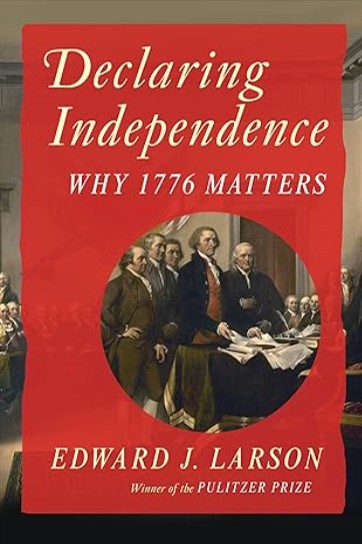 Dr. Larson’s book discussed in this interview
April 1776: When the South Joined the Cause
By April 1776, the question was no longer whether independence had supporters. The question was whether enough colonies would embrace it together.
The Halifax Resolves marked an important turning point because North Carolina became the first colony to authorize its delegates in the Continental Congress to support independence. That decision carried weight far beyond North Carolina. It signaled that support for independence was spreading beyond New England and gaining momentum in the South.
What I found especially interesting is Dr. Larson’s emphasis on John Adams’s reaction. Adams had long worried that the southern colonies would hesitate while New England pushed ahead. The Halifax Resolves changed that calculation. Suddenly, independence looked less like the cause of one region and more like the emerging consensus of thirteen colonies.
That is why April 1776 mattered. The movement for independence was no longer gathering support one colony at a time. It was becoming a truly continental movement, making a united declaration increasingly possible.
Watch this segment in the video above (00:47:14)
Was May 1776 Already the Month of Independence?
By May 1776, the momentum toward independence had become unmistakable and unstoppable. Yet what fascinated me most in this interview is that the pivotal moment did not involve the Declaration of Independence. It involved a resolution adopted by the Second Continental Congress that most Americans have never even heard of. And John Adams believed this resolution was “independence itself.”
At first, that struck me as an exaggeration. But the more I listened to Dr. Larson, the more his reasoning made sense. Congress was urging every colony to abandon its royal government and establish a new one based on the authority of the people. In other words, Americans were being asked to replace governments that derived their authority from the King with governments that derived their authority from their own citizens.
That was a revolutionary step. More than a month before July 4, colonies were writing constitutions, declaring that political power rested with the people—not the King—and creating entirely new systems of government. The Declaration of Independence would announce the break with Britain. But these new constitutions were already putting independence into practice.
The more I think about it, the more I appreciate Adams’s point. If a people begin governing themselves under constitutions of their own making, have they not already taken the most important step toward independence?
Watch this segment in the video above (00:56:27)
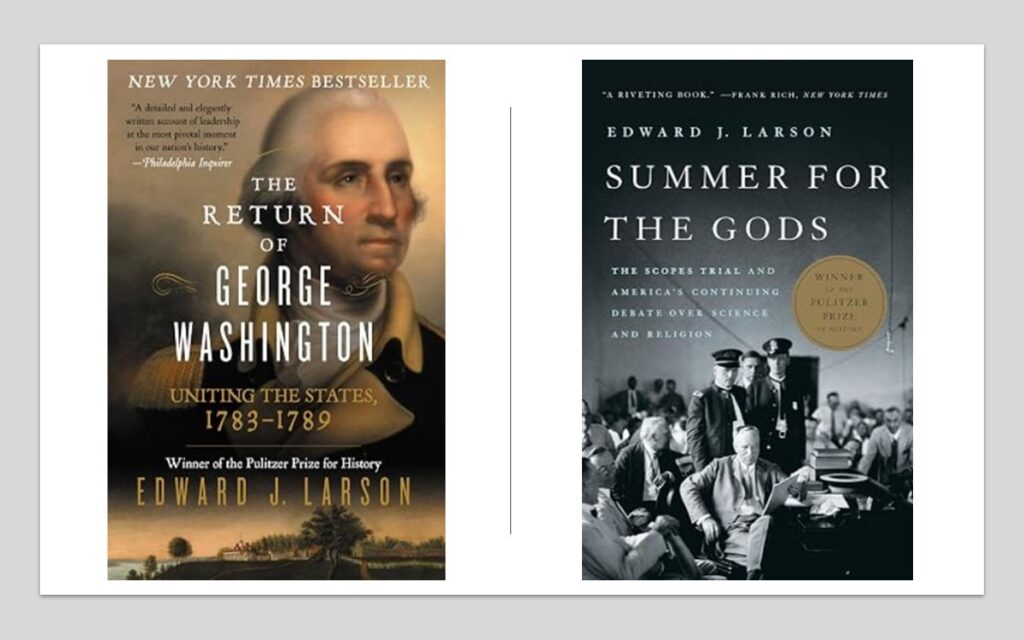 Other notable books by Dr. Larson
Did Thomas Jefferson Really Write the Declaration of Independence?
Like many Americans, I grew up thinking of the Declaration of Independence as Thomas Jefferson’s singular masterpiece. This interview challenges that assumption—not by diminishing Jefferson’s achievement, but by placing it in a much broader historical context.
Dr. Larson argues that Jefferson was less an author creating something entirely new than an extraordinary editor assembling the best ideas already taking shape throughout the colonies. George Mason’s Virginia Declaration of Rights, Jefferson’s own earlier writings, Richard Henry Lee’s resolution for independence, John Adams’s earlier work, and Benjamin Franklin’s editorial revisions all found their way into the final document. Jefferson’s gift was transforming those ideas into prose that has endured for nearly 250 years.
I was especially struck by the irony that, at the very moment we celebrate Jefferson as the author of the Declaration, he believed the more important work was taking place in Virginia, where a new constitution was being written. History remembered the Declaration. Jefferson believed constitution-making would shape the future.
Perhaps that is the greatest lesson from this conversation. Great historical documents rarely emerge from a single moment of inspiration. More often, they are the product of many minds, many debates, and many months of refinement. The Declaration of Independence was no exception.
Watch this segment in the video above (01:33:15)
The Interview (S1E25): Adel Aali and Edward Larson
In our conversation, Dr. Larson addresses key questions about 1776, the road to declaring independence, and the American Revolution. The detailed outline and full transcript below supplement the video above.
Podcast
Watch the full interview on this page with the outline and transcript below, or take the conversation with you on the go through our Spotify podcast.
Outline
Use the in-depth outline below, with its key moments and turning points, to follow the discussion and navigate the interview.
Click for Timestamped Outline
- Selected Highlights (00:00:00)
- Guest Introduction (00:02:17)
- Why 1776 Was More Than Independence (00:04:09)
- A Revolution in the Nature of Government (00:04:56)
- Sovereignty Moves from King to People (00:05:34)
- The Three Fs of 1776 (00:07:18)
- Freely, Fairly, and Frequently Elected Representatives (00:07:18)
- From the Rule of Men to Constitutional Government (00:07:35)
- Norfolk, Virginia, and George Washington’s Shift (00:09:34)
- The Fire That Destroyed a Southern Port City (00:09:41) – Key Moment (00:10:51)
- George Washington Moves from Reconciliation to Independence (00:11:39) – Turning Point (00:12:20)
- Did the British Really Burn Norfolk? (00:15:31)
- British Cannons, Patriot Fires, and a Hidden Report (00:16:26)
- The Story That Fueled Revolutionary Outrage (00:18:32)
- Thomas Paine’s Common Sense Arrives at the Perfect Moment (00:19:26)
- Timing, Timing, Timing: Norfolk, King George III, and Paine (00:19:45)
- Monarchy Becomes the Problem, Representative Government the Answer (00:23:26)
- Words and Deeds Turn Rebellion into Revolution (00:26:18)
- How Common Sense Gave Americans a New Lens (00:26:38) – Key Moment (00:27:07)
- John Adams and the Revolution in Hearts and Minds (00:28:45)
- Britain’s American Prohibitory Act Changes the Stakes (00:30:05)
- Why John Adams Called It an “Act of Independency” (00:30:15)
- Britain Treats the Colonies Like a Foreign Enemy (00:33:29) – Turning Point (00:34:08)
- The Continental Army Wants Independence, Not Compromise (00:34:51)
- Joseph Ward and the Fear of Rights Without Freedom (00:35:11)
- Soldiers Push Congress to Cut the Gordian Knot (00:41:19)
- Boston, Dorchester Heights, and the Halifax Resolves (00:43:11)
- Henry Knox’s Cannons Force the British to Evacuate Boston (00:44:19) – Key Moment (00:44:24)
- North Carolina Authorizes Independence Through the Halifax Resolves (00:48:32) – Turning Point (00:49:04)
- From State Constitutions to a Unified Declaration (00:51:32)
- Why Pennsylvania and New York Could Not Be Left Behind (00:55:58)
- John Adams’s Preamble and the May Revolution Before July 4 (00:56:40)
- Pennsylvania Flips and the Declaration Takes Shape (01:10:32)
- The “Soft Coup” Against John Dickinson’s Assembly (01:10:51)
- George Mason, Thomas Jefferson, and the Language of Equality (01:27:52)
- July 2, July 4, and the Final Push for Unity (01:43:49)
- The Vote for Independence and the Need for a Unified Declaration (01:44:12)
- Editing the Declaration: Thomas Jefferson, Benjamin Franklin, and Compromise (01:48:23) – Turning Point (01:49:18)
Transcript
Note: This transcript was generated automatically and may contain minor errors. It is provided for reference and accessibility only.
Click to View Transcript
Adel:
Dr. Larson, it’s a pleasure to have you in our program’s special series. Thank you for taking the time for this conversation with me about the American Revolution. Before we analyze the details of what happened in 1776, I want to ask a foundational question that essentially jumps right out of the title of your book, which is, declaring independence, why 1776 matters.
So why does it matter? Obviously, we declared independence, that’s why it matters. But is there like a deeper story here?
Dr. Larson:
I think so. That’s why I did the book. And it’s actually not so much independence.
It’s funny, we did declare independence. But the message of the book, the thesis of the book, what I discovered by looking at that year, and what I did is I just, rather than look at the revolution, which others have done, or just narrowly on the Declaration of Independence, I looked at the entire year. And being sort of an archival nerd, I just went through all the newspapers, all the letters, all the speeches, all the resolutions by this colonial and state legislatures, or assemblies, the letters back from the soldiers, the letters to the editor in newspapers and essays.
And what I found was actually, it was not so much a independence as a revolution in the nature of government. It’s what made, it’s why, as noted in one of your earlier podcasts on Thomas Paine, it’s why Thomas Paine could argue this is something you understand never before. This changes the world.
This is great significance. Why I could emphasize that? Because it was a revolution in the nature of government, where government moved from being the king was sovereign.
And think, if you read Shakespeare, when you have a book like Henry, a play like Henry IV, or Henry V, they always refer to the kings as England. They don’t refer to them as Henry IV. It’s England and it’s France.
That’s what they did because they were sovereign. And what changed was the basis of government authority and sovereignty, building on ideas that had come up in the Enlightenment and were elaborated by people like John Adams and Thomas Paine and Thomas Jefferson and others, is the basis of government authority became the people. They embraced, you could either call it representative government or republican government, in the sense that, as many of the state constitutions, new state constitutions of 1776 said, quoting from North Carolina one, but it’s virtually the same in Virginia and all the others, all political power is vested in and derived from the people only.
And to do that, you have to have the people’s freely, fairly, and frequently, the three Fs of 1776, freely, fairly, and frequently elected representatives who truly do represent the people adopting laws. And so that’s why Adams and Paine and the others could say, we’re no longer the rule of men, but the rule of law under constitutional government. And also 1776 witnesses the drafting of the first written constitutions in the history of the world.
Those were those new state constitutions that Congress called for in May of 1776. So that’s why this year was not a rebellion. That’s why this year was a revolutionary transformation in government that Paine could call or Adams could call when before in all history of people had the opportunity to write their own governments, write their own constitutions.
That was Adams’s words and thoughts in government. Paine said similar things. Jefferson said similar things.
It makes that year not just pivotal for the colonies, it’s pivotal globally.
Adel:
So I have three takeaways here. One is that not so much independence, which ties into the second takeaway, is that it’s a revolutionary transformation. And that transformation takes some time.
And you and I are going to discuss that in a moment. But it’s also, how should I, it’s kind of a psychological, emotional, and also a cognitive transformation of appreciating this change and accepting it. And I’ve said three takeaways.
My third one is not so much a takeaway as in, I think I’m going to borrow this phrase, three Fs of 1776 from you, Dr. Larson. So let’s walk through 1776 and we’ll start with January and just January 1st. What happens in Norfolk, Virginia on the first of that year?
Dr. Larson:
On the first day of January, a Royal Navy flotilla commanded by the Royal Governor of Virginia, but it was a Royal Navy flotilla, bombards Norfolk, Virginia, which was then the second largest city in the American South, the main port for Maryland. It was right at the mouth of the Chesapeake. So it was the main port for that whole estuary, that whole network of plantations.
Because remember back then the two, the British view that the two centers of rebellion was, were Massachusetts, Boston area, and the Virginia tidewater. So this was the key to the tidewater of Virginia and Maryland, the Albemarle region of North Carolina. And Norfolk, Virginia, stand right at the mouth of the Royal Navy flotilla, which had been engaged with patriot occupiers.
Basically, Virginia and North Carolina militia had occupied Norfolk. They bombarded there where they were stationed and a resulting fire ended up decimating the city. 98% of the buildings in the entire city, again, the second largest city in the American South, were utterly destroyed.
Adel:
Wow.
Dr. Larson:
That became, that was published up and down as the acts of a out of control monarch. It was blamed on George III’s policies. It was blamed on British policies.
And it became another example of British atrocities and the fact that Britain was no longer, you know, what, when later, later that month when George Washington, who of course was from Virginia and relied on the, that tidewater to get his products to market. That’s why the, when he heard about it later in January, he heard about Norfolk, he wrote to his aide-de-camp, first time he backs independence. Before that, he was leading the troops, but he was defending the rights, as he put it, when he made, when he went up to take command in Boston, he passed through New York and he told the New York assembly, I’m not fighting for independence.
I’m fighting for our rights as British subjects. He wrote at the, when after I heard about that, he said armed conflict. Then he added, and the reasoning and common sense will not lead many Americans not supporting separation.
He becomes a convert to independence. And the great example was the destruction of Norfolk.
Adel:
Oh, wow. That’s a big deal. I was going to ask you the impact of it, but you just articulated that that’s a humongous deal because George Washington, historically up to this point is kind of a conservative person.
I’m not using our modern parlance of conservative. I’m just with respect, like he was not a John Adams or a Sam Adams to put it that way.
Dr. Larson:
Well, he was for reconciliation. He was like John Dickinson. That’s one reason he was chosen and he was willing to fight.
Well, he wrote the Fairfax resolutions along with his neighbor, George Mason, that had come out a year before. And the Fairfax resolutions call, we are willing to fight. We’re willing to arm.
Fairfax militia will come out and defend our rights as British subjects of the King. Those rights were, we can only be among them, or we can only be taxed by our own representatives. So they were willing to fight for that, but then they go on and this is not designed for independence.
This is not, we’re loyal to the King. We just demand our traditional rights as English subjects of the King, which is exact. The mantra was rights and reconciliation.
John Dickinson never moved beyond it, but John Adams was actually there in 1775, as was Thomas Jefferson. His summary view of the famous pamphlet of 1774, the summary view of the rights of British citizens, of Americans, was that we have a right to our, we have our right to British subjects. We are equal to any of the voters, and he called them the electors, any of the 1,000, 160,000 electors in England, every American is equal to them.
That’s where the equal phrase we later hear in the Declaration of Independence comes from, the summary view by Jefferson. But he said, but we are under the King. We pledge our allegiance to the King.
That was the old rights and, we want our rights and we want to reconcile. And it shifts to, we want our liberty and independence. And that’s a transition.
The people that were there by 1775, Benjamin Franklin, Samuel Adams, maybe Richard Henry Lee, there were a few people who had realized before that we’re never going to get our rights from England. But it took time to bring people over because this was the, you know, they traditionally believed their rights came from being British subjects and they differentiated themselves, say, from the French.
Adel:
At that time, really, you see the evolution, the revolutionary transformation, borrowing your phrase, occur within 1776. Before we go on to another big event in January, I just want to ask a question. This could be a podcast onto itself, but I’ll ask it because I think it’s really important and it’s also just fun to probe it.
Did the British really burn Norfolk, Virginia, or is there a conspiracy sort of layer below it?
Dr. Larson:
Certainly the Americans, the people in the colonies believed the British had burned it. The British started by, basically, with their cannons from, they were offshore, they were on the coast, and they had, they were trying to hold the area. The Patriot forces, the Virginia and North Carolina militia, had moved in and taken over the city and there was a standoff between them.
And soldiers would hide behind the warehouses and take potshots at the British sailors. British sailors would take their muskets and take potshots at the Patriot militia, back and forth. That had been going on for weeks.
And what happened was the British got frustrated with that and they had orders to, they used their cannons and they basically were trying to blast all the buildings, the warehouses along the docks that were used. Then a fire started.
Adel:
Kind of like the waterfront structures, right?
Dr. Larson:
The waterfront structures were hit by the cannons. The fire started and destroyed the entire town, literally 98%. There were drawings that were published around the country.
You can, your viewers can look them up online and you’ll see these pictures from 1776 of literally a destroyed town. Now, what was later determined by a Virginia, what the British claimed at the time was that, no, we just bombed the buildings and the winds were such that it wasn’t going to spread. What we think is to deprive us of a port, the Patriot militia themselves destroyed the town.
And they argued that the Americans denied it, that the Patriot press denied it, called it a British atrocity. That’s the news that all the Americans basically believed. Later studies by the Virginia that were kept secret.
They didn’t- Were kept secret. They kept secret until it finally came out in 1842. I think it was 1842, 1840s.
And they had determined that it was backfires established by the militia that wanted to deprive the British of what would be an ideal base. And in the end that destroyed the city. And then the Virginia paid reparations, paid money to the people whose houses were destroyed.
That was all done basically later in the war. But the actual findings of that report were kept secret for decades.
Adel:
That is fascinating. So there’s much more to this story. The Patriots were involved in this fire.
And none of that really matters because the story that came out and fueled, so to speak, no pun intended, the revolution was that the British actually burned the city. And that’s the story that everyone in 76 was going with.
Dr. Larson:
Well, they did start it.
Adel:
They did start it. Yes, yes. You make an interesting point that by the end of January, George Washington starts believing and actually writing, penning this about independence is the goal.
But between what happens on January 1st to the end of January, another big event occurs. And I say big from the perspective of hindsight. And that’s on January 10th.
Thomas Paine’s Common Sense, which you already mentioned, publishes. We’ve done several episodes on this, but I want your perspective. Does that change anything in 76 or even like in January?
Dr. Larson:
Well, yes, it does. It gives a new lens. I think that if let me qualify that.
I think if Thomas Paine’s Common Sense had come out a year earlier or a year later, it wouldn’t have made any difference. But it came out. Timing is everything.
Everyone would say that. As they say with real estate, location, location, location, historians say timing, timing, timing. If you read the newspapers and you get this, if you read the newspapers at the time, three things appear simultaneously in the newspaper.
One was reports of the British burning of Norfolk. Another was the report of the king’s speech from the throne. Basically, every year the king made a speech from the throne to parliament.
It’s like the State of the Union address. And in that speech, it actually came out very end of October, but it doesn’t reach the colonies because there’s a transition time. There’s no electronic communication.
And you don’t see it. You don’t read it in the newspapers until January. You can read it popping up in newspapers.
It appears in one newspaper in December, but the first town it reaches and then it spreads. And that in that speech, the king declared that the colonies were open rebellion. He said he was going to assemble troops, the largest foreign army ever assembled by Britain, 32,000.
It turned out to be 32,000 soldiers, including he was going to hire Hessian or German mercenaries, which were viewed as bloodthirsty at the time. And he was going to assemble the largest fleet in naval history. And he was going to retake the colonies.
He was going to capture them. So, and then at the same time, they received news of Thomas Paine’s Common Sense, which came out on January 10th, but you’ll see it in the They’re reading one that the king has vowed that the colonies are in open warfare and he is going to crush, crush the revolt with Hessian troops, foreign troops, naval blockade, naval ships. And it turned out 32,000 soldiers from drawn throughout the empire.
Plus they received word of an example. Norfolk became an example of what they were going to do, destroy these coastal towns, destroy the means of trade and commerce. And then they read Thomas Paine’s Common Sense.
And what Common Sense does, it’s been written over the fall. It was recommended as, as you know, well, by not by Thomas Paine, but by Benjamin Rush, one of the members of a physician who was a member of the Continental Congress from Pennsylvania. And he was, he had befriended Thomas Paine because they were both abolitionists.
They held that in common. And he realizes Thomas Paine’s a great writer. He’s for independence and he persuades Thomas Paine to write a pamphlet, a pamphlet.
It’s 80, it’s 80 some pages long. It’s a short book. He suggested, Rush suggested the name Common Sense.
Then they draw in at the end, they draw in Benjamin Franklin and Samuel Adams, and they read it to each other and they hone it. They’re honing it during December to getting it sharp. But it happens to appear in January, just when news of the King’s speech and the example of Norfolk’s deeds and actions and what come, what his Common Sense offers.
It draws on Enlightenment thinking and it uses religious rhetoric because Thomas Paine had been a lay minister in the Methodist church or had been involved with the revival movement in England. So he knew how to speak the biblical language. So it combines Enlightenment thinking and religious rhetoric to argue that the cause of the problem, and remember, it’s right after the reading of King’s speech, the cause of the problem is not Parliament and its declaratory rights and its taxes.
The cause of the problem is the King. Monarchy, different phrases, monarchy, not this monarchy or that monarchy, but any monarchy can slay the world in sackcloth and ashes. And of more worth, he writes, of more worth to man and to the sight of God is one honest man than all the crowned ruffians who ever lived.
That authoritarian government is the problem, and the answer, it argues, is truly representative government, freely, frequently, and fairly elected representatives. And he gives a model constitution with an annual terms. Everything’s representative because the goal of government, he argues, is the protection of individual security and individual rights.
Life, liberty, you can say. And the goal of government, the ultimate goal of government is to maximize human happiness, the happiness of the people at the least expense. And he argues that authoritarians don’t think that way.
Authoritarians are after their own interests. They want to feather their own nest. They want to help themselves, and they go frequently to war.
He makes all these arguments against, based on the nature of government. Now, you can see this rooted in the, I mean, it reads just like a, to me, he claimed this wasn’t true. Paine claimed it wasn’t true.
But to me, it reads like a popular version, the graphic novel version of John Locke’s thoughts in government. It’s the same sort of logic. And he says, representative government is the answer.
The rule of men has led to destruction. We need the rule of law. We need constitutions.
He makes all those arguments. And so what that does is in light of Norfolk and in light of the king’s blusterous speech, his charges, his accusations, he sounds like an authoritarian, which he was. And then you hear about Norfolk and you say, wow.
See, that’s to me, what I love about this story is when I read through it this way, I saw that what changed a rebellion for rights into a revolution is it takes both ideas and actions, deeds and words. And what common sense gave was it gave a new lens for its readers to see what was happening, a new understanding, those ideas. And that’s why I quoted it earlier, but Washington is just an example.
You can read this, not just in Washington, and I quote them at nauseam, but Washington says armed warfare, Norfolk, plus the irrefutable reasoning of common sense. He didn’t know who the author was because it was anonymously published because it was treasonous. But plus the irrefutable logic of common sense will not leave anybody not supporting of separation, was the phrase he uses, or independence.
And so that’s how I see words and deeds. And think about back then, a top selling newspaper, we had a lot of newspapers. The Americans were the most literate people in the history of the world.
60% or more of a free white Americans could read and write. That wasn’t true anywhere. England, it was 5% or something like that.
And so they could read. The best selling American newspapers, what, 5,000 circulation? Over 100,000 copies of common sense fly off Patriot presses.
It was read, it was read aloud, it was read in… Preachers quoted the religious parts in sermons, we know, it was read in coffee shops. The troops read it widely up in Boston, and it gave people a new lens to understand what was happening and a new solution.
Others had come to that before, but it popularized the cause of independence, but it only resonated because what was happening around them. So yes, I think common sense was important, but it was important in context. I love the later words.
John Adams, who’s very reflective, years later, long after he’d been president, wrote a letter to Thomas Jefferson, who was also former president at that time. They both served, they both been deeply involved in 1776. They were both on the committee that wrote the Declaration of Independence.
And John Adams writes that what was the revolution? And a rhetorical question. And then in the letter, he answers his own question.
John Adams always answers his own questions. And he writes, the war, it wasn’t the war. The revolution was in the hearts and the minds of the American people, and it was all over by 1776.
That was his conclusion. And, you know, there’s something to it.
Adel:
Yeah. And I think common sense has a lot to do with that as far as hearts and minds, along with what was happening and also timing, timing, timing, as you emphasized. And I think you dedicate a chapter to common sense in your book.
It’s an important event. Something interesting happens as I was flipping through the pages of your book, reading, and I come across page 53. And John Adams says this about an act that had just passed in February of 76 by the British Parliament.
It’s the American Prohibitory Act. And this is what John Adams says, act of independency. He’s saying this about a British act.
So what does that mean? A British act is an act of independency for the American colonies? What does that mean?
Dr. Larson:
Well, the American Prohibitory Act, it was actually passed. Of course, Americans only heard about it in February. It was passed in December, and it was passed following on the King’s speech.
And what the Parliament passed was a law basically prohibiting trade by the colonies. What it did is it followed up on the King’s speech, which had stated his view that the colonies were an open rebellion. And so in line with international law, Parliament passed an act that prohibited all trade by the Americans.
Countries still do that. It’s like the United States president recently declared all trade by Iran can’t happen. He prohibited trade by Iran.
Okay, that’s what the British did, but they did it to part of their own country. So what they did, viewing the colonies, and they said that the Americans can no longer trade with anybody, even with the British. Now, remember, the Americans were already boycotting.
They’ve already announced boycotts years before, and they’ve been enforcing them with the First Continental Congress in 1774. But now the British were saying, you can’t trade with us. And any ship carrying American goods is subject to seizure by the Royal Navy or by British privateers.
And the goods they take are subject to confiscating and can be awarded a price. Back then, if you were a privateer, you could take a ship of another country, a merchant ship. Like, if you were a British privateer, you could take a French ship when the French and the British were at war, and then you could take the goods back and you’d get to keep half of the value.
You could sell them and the government would get the other half. That’s what they declared about all American shipping. That means John Hancock ships.
That means the ships of all the other American merchants carrying American goods. They could be seized on the high seas by British Navy or British privateers. So you can’t ship, you can’t trade, you can’t send your goods to France.
You can’t send them to the Caribbean colonies like Barbados. And so when they declared that basically Americans were an open rebellion, it’s a logical thing to do. During the Civil War, Lincoln declared the same thing about the South.
He basically barricaded the South in with a blockade and he confiscated anybody trying to sell Southern goods. You try to cut them off. Well, that’s what the British did to the Americans.
And John Adams said, well, that’s equivalent of a declaration of war because it’s done to somebody, it’s done to foreign countries. It’s done in a time of war. And so they have essentially, and he knew that that act would turn, again, they received word of it in December, February.
So shortly after Norfolk, after reading the King’s speech, after reading Common Sense, now they’re reading the Prohibitory Act. And the Prohibitory Act, since Americans’ whole lifeblood is trade, America’s trading colonies. And so he said, when people read this, well, it’s over.
Adel:
So in effect, John Adams is saying, look, it’s not so much what we think or what we do. Look, even the British are treating us as a separate country by, yeah, oh, that’s really interesting. This is essentially like almost a gift to the advocates of independence in February saying, look, they’re treating us.
Let’s move on to March. And at this time, the big thing that’s going on in our story is the siege of Boston, which starts in April 75 and continues through March. I want to ask you about March 5.
It’s an important date. But before I do that, I think another important thing that you flag out in pages 49 and 50 of your book is something by Joseph Ward. And I’m going to read that for you and our audience.
It goes as such. Independence would have a great effect upon the army. Some now begin to fear that after all their fatigue and hazards and the cause of freedom, a compromise will take place whereby Britain may still exercise a power injurious to the liberty, peace, and safety of America, cut the Gordian Knot, tying the colonies to Britain.
What’s the context here? Is he fearing that somehow on March 5, the British will begin to leave, but will enter some sort of half negotiations? What’s going on?
Why does he need to make this almost declaration, go, cut the Gordian Knot?
Dr. Larson:
Well, he’s afraid there’s still a lot of patriots. Even after Common Sense, there’s still some patriots. There’s sort of a rear guard action led by John Dickinson in the Continental Congress, and there were some in Massachusetts as well, who were still arguing for rights and reconciliation.
If Britain will just give us our rights, that means we can be only taxed by our own assemblies, but those assemblies are still under the king. If we have rights and reconciliation, there’ll be a deal. He’s arguing, and you’ll see it in the letters from the soldiers.
It’s not Joseph Ward was on the front lines, but as you’d mentioned, what had happened is after Lexington and Concord, which was in April of 1775, when the British soldiers, British had sent about 4,000 troops to occupy Boston, just as they tried to occupy the Chesapeake. Those were the centers of revolution, and these troops were ordered to enforce the various taxes on the Collins, the Townshend Tariffs, the various taxes going back to the Stamp Acts. Stamp Acts had been repealed, but other taxes.
They were trying to enforce British rule, and so they based in Boston. In Boston back then, people don’t know who are there now, but it was almost like an island with a tiny spit of land, and then it was surrounded by islands and also peninsulas of land, one on the north, where Charleston, North Carolina, Charlestown, and then Dorchester Heights in the south sort of surround it, sort of cup around it. This island in the middle, you’ve got the harbor.
They have highlands on both the Bunker Hill and Breeds Hill in the north and Dorchester Heights, which is where the Kennedy Library is now, if you want to know where it is. A lot of this has been filled in now, but that’s how Boston Harbor looked. It was a great harbor.
Well, the British were safe on this island, on this Boston, and the British Navy, and the Americans had no Navy, protected them, filled the harbor. So after Lexington and Concord, the colonial militia of all New England, Massachusetts, Rhode Island, New Hampshire, and Connecticut poured in, about 15,000 soldiers occupied this land, based, headquartered at Harvard Yard in Cambridge, and Ward was one of their leaders. The Continental Congress, in the summer of 1775, adopt that army as the Continental Army, send George Washington up to lead it.
He arrives in the summer of 1775, and their job was to hopefully drive the British out of Boston and reestablish rights and reconciliation. So, but basically, it was a stalemate. The British couldn’t push beyond.
They tried. They were afraid of the Breeds Hill and Bunkers Hill, that if the Americans, patriots, would bring down cannons and place them on Breeds Hill and Bunker Hill, and they had these short-range cannons, they could blast the British out of Boston. They could basically just fire cannons and destroy the city.
And so that’s why in the summer of 17, late spring, actually, of 1775, they tried to occupy, and they succeeded, Bunker Hill, but Breeds Hill and Bunkers Hill, to protect their northern flank. And so they sent all these soldiers, but the Americans heard about it before, because they had great spies, and they occupied the hill first, and they basically blasted the British troops marching up this hill with their, until they ran out of musket balls. They finally ran out of ammunition, but they took aim, particularly at the officers, and they just plowed them down, until they had to retreat, when they ran out of musket balls.
And the British did succeed in taking the hill, but at a tremendous loss of British life. And so they had the highlands in the north, where these short-range cannons could reach Boston. They protected their facilities.
But then Washington showed up, and he tried, but he couldn’t really attack the British, because of the fleet of ships, even though he outnumbered two to three, basically three to one. They were trapped on the outside. The British had everything that could be protected by the Navy.
And so what had happened, and you mentioned, so there was this long-term siege of Boston, and these troops, and Joseph Ward was part of it, these troops were growing increasingly frustrated. We’re sitting here all through the winter, and we’ve got to be fighting for something. We’re going to suffer out here through all the winter, fighting these British, and they’re just going to come up with a deal.
And so you see this, like what you were quoting, you can see it also in the letters from the troops. And I had one ancestor who was among those troops. Oh, wow.
But they were sending letters back to their delegates, like John Adams and Samuel Adams in Philadelphia, saying, we want to be fighting for something. You’ve got to assure us we’re going to get, especially after they read Thomas Paine’s Common Sense, we want to assure we’re going to get our permanent assurance of our liberty. We want independence.
And so there’s a push from the troops to make this for independence, but still that stalemate continued until, as you mentioned, until March when it’s finally broken.
Adel:
Oh, wow. So the soldiers want to make sure that after everything, all the sacrifices, financial, leaving family, and also lives, and just, you know, health and everything, that there’s actually an independence. That is fascinating.
Let’s move on to April. You already talked about, you mentioned North Carolina once. I want to ask you about an interesting publication, and that’s called the Halifax Resolves.
You discuss it in pages 56 to 58 of your book, particularly in those pages. First answer this, and then we’ll go into details of what it is. Was it a big deal when it published?
Dr. Larson:
It was a big deal for this reason. And you can read this. The impact probably was best captured by John Adams, who is very much impressed originally with both Abigail and John were really steeled by Common Sense.
But then you had the March aspect, that in March, what had happened in March in Boston, on March 5th, was that Washington, basically Henry Ox, the young artillery officer, had the brilliant idea that there are these huge cannons up at Fort Ticonderoga that the Americans have captured. If we bring those cannons down, we can put them on Dorchester Heights, which is further away, and we can still blow the British out of Boston, and we can sink all their ships. And that’s done over the winter.
They’re pulled over in an amazing effort. They’re pulled over the snow. The British never get word of it.
And on March 5th, they’re situated on Dorchester Heights. And when the British see the cannons on Dorchester Heights that can reach Boston, they have to leave. So they evacuate.
Now, that is important in March. And the Halifax Resolves that you’re trying to get me to are a reflection of that, is that the Americans finally, the patriots, I should say, have finally succeeded in driving the British from Boston. They voluntarily evacuate the town because maintaining the town is untenable once they’re the big cannons from Ticonderoga are on Dorchester Heights.
And so they evacuate Boston. And suddenly, you know, you’ve had the King’s belligerence. You’ve had the King’s activities.
You’ve had Thomas Paine’s common sense giving that we have to have independence. And the claim in common sense, common in common, in common sense, the argument against it, the argument of John Dickinson and the reconcilers, we can never beat the British. They’re the biggest army in the world.
And we’re fighting for life, liberty, and the pursuit of happiness or security, our individual liberty, and our right to pursue our own happiness, which is our own meaning and our own purpose. If we have representative governments, we, he claims in common sense, we can defeat any power because what our goal is so noble, it will empower us. Well, that’s what exactly what the the soldiers had bought this.
If you give us a noble enough cause, we’ll fight to the end. Then when the British evacuate Boston, their 4,000 troops sail away. It’s an example.
We can, we actually can.
Adel:
We can do it.
Dr. Larson:
We can drive them away. And word of that reaches the Southern colonies. And British had also tried to expand their power.
They had tried to sail in and take Charleston in the South Carolina, and they’d been turned back by the famous fort that the cannon balls bounced off of that is, you know, in the Palmetto flag. And so the, the, the fear is, will the North, that with Boston and with everything that happened in Boston and the Tea Party and everything else, they’re ready for independence, but they thought that the rest of the colonies weren’t ready, especially the South, which had always been plantation agriculture and relied on the trading, the tobacco and the rice and other plantation crops. But when North Carolina then meets together and their colonial, basically their patriot legislature, what had happened in all the States, except Pennsylvania is that the local assemblies had been abolished by the King and they continued to meet as independent conventions.
So it was the old government, the old patriot, the old colonial assemblies, the lower houses of the legislature, the upper houses were appointed by the King or proprietor. So they never mattered. The lower houses, which had always been their, their bastion of support, whether it was in Massachusetts or Virginia or North Carolina or South Carolina, they had continued to meet throughout this period.
And they became, except in Pennsylvania, where they remained in reconcilist hands. What happened is the Pennsylvania, the North Carolina assembly in April adopts the Halifax resolves. Halifax, by the way, was away from the coast.
It was up on the Virginia border. It was way, basically from the British Navy, which was, was sailing up and down the South, the North Carolina coast. It was removed from that.
And it was the old colonial assembly now meeting as a North Carolina convention. And they say, we’re ready for independence.
Adel:
Wow.
Dr. Larson:
They authorize their delegates in Philadelphia, the constitutional convent at the excuse me, the second continental Congress to back independence. And when that reaches Philadelphia, you get the advocates of independence, which are now led by Benjamin Franklin, John Adams, Samuel Adams, Richard Henry Lee of Virginia, these other advocates of independence, they say, we’ve got the South. We, North Carolina is now with us.
They too want independence. And quickly they hear word that South Carolina and Virginia are thinking the same way. So if they had the North, New England, which they called the East back then, but they mean what we think of as New England, the one, two, three, four New England colonies at that time.
And we have the South. John Adams in his letters often used the talk to, he varied. He sometimes say, we’re like a bunch of 13 horses or 12 horses.
And we’ve got to get to the stable at the same time. Or we’re like, we’re like 12 ships, 13 ships, all the colonies. We got to get into harbor at the same time.
Some of us are going faster, like Massachusetts. Now he finds out, he always worried about the South because they were more aristocratic. They had, slavery was, there was more slavery.
There was a bigger class division between rich and poor. He says, they’re going to be laggers. And he found out they’re not laggers at all.
They’re, they’re getting into harbor too. And so that was viewed as by the proponents of, of independence as a major accomplishment. Now we had, they had North Carolina and soon it became clear they had South Carolina as well, backing independence.
So that was in basically by April.
Adel:
Yeah, that was in April. So to one comment, you know, that we have the South as John Adams excitedly states, proclaims, that story is not full yet. They still have to work with the South and I’ll get to that in a moment.
But the question I have is this, we’re still in April. We’re far from July. Does unanimity matter?
Is it integral or at this stage where our founders, let’s say Washington, some of them like Richard Henley in the continental Congress, John Adams, you know, Hancock, others, do they, are they prepared to have independence based on a majority or super majority? Or is it all about unanimity?
Dr. Larson:
Well, it’s, it’s actually, they would talk about unanimity, but it’s actually somewhat between a super majority and unanimity. If you really do study their letters and their writings, what they’re thinking is, what are we going to take to be a viable republic? And when you think about it back then and the way they thought about it in early letters, and you can read this in 1775, you can read it in early 1776, is the old British colonies really stretched from Newfoundland, Nova Scotia, through what’s now Maine, then part of Massachusetts, down through what’s known as the 13 colonies to Georgia, but then also include the richest and most powerful ones of all Barbados, Jamaica, the ones in the Caribbean, up further north, Bermuda and Bahamas.
Adel:
And there’s also, I think, West Florida or something?
Dr. Larson:
Well, Florida goes in and out of whether it’s British or Spanish. It’s a trickier one. It’s British at the time.
So yes, it includes West Florida and East Florida as separate colonies. So they’re originally sending letters and common sense, versions of common sense, but also earlier sending letters trying opposition to the Stamp Act, opposition to the Townshend Act, to try to draw in Barbados, Jamaica, Nova Scotia. In 1775, George Washington sends two armies north from Boston because he’s got more men than he needs, 15,000.
He doesn’t need 15,000 to bottle in 4,000 British troops in Boston. He sends two armies, one through Maine and one through New York State, Lake Champlain, to conquer Canada. They do take Montreal.
Benjamin Franklin goes up to Montreal because he can speak French and there are hardly any of the patriots who can to talk with these guys to try to bring them in and try to have a pincer’s movement on Quebec. But on December 31st, last day of the year, they fail in a blinding snowstorm and attack on Quebec. And then the British send more troops and reinforce Canada and drive the Americans out in early 1776.
So the Americans are thinking all that. So yes, unanimity, they want to have Barbados, they want to have Jamaica, they want to have Nova Scotia, but they never get them. But below that, what do they need?
Well, they know they can’t be divided. You can’t have just New England, that’s not feasible, that’ll collapse, that’ll be crushed later. You can’t have just New England, it’s not big enough.
And originally, the Second Continental Congress, First Continental Congress had, depends on how you count, Delaware. It’s not technically independent of Pennsylvania yet, but they have basically New Hampshire to South Carolina at the First Continental Congress and the beginning of the Second Continental Congress. Finally, Georgia shows up, but Florida never comes, Bermuda never comes, Bahamas never come.
And so, well, this is big enough, we can do with this. But if you have something in the middle that divides them, and then you think of the key colonies, Pennsylvania basically cuts across the entire colonies. New York, you can’t have without those because they divide.
Sure, they could probably do it without Delaware. They could probably do it without Rhode Island. But they’ve got, by April, I think we’ve got the Northeast or New England, and we’re getting the South.
But remember, Virginia and all since for 10 years, Virginia and Massachusetts have been the locus of the rebellion, and the opposition to taxes. But they do think, yes, we can’t do this. Pennsylvania is the second most populated state.
We can’t do it without. Philadelphia is the largest city among the colonies. New York is a critical harbor, and it connects up to Canada.
We can’t do it without New York. We can’t do it without Pennsylvania. We have to at least bring, and we’d love to have Nova Scotia.
We’d love to have Barbados, but we at least need the core colonies, the old historic colonies on the eastern side.
Adel:
On the 13 colonies, great. Dr. Larson, moving on to May, there’s something really interesting that develops. John Adams writes something, and it’s a preamble, and we’ll get to that in a moment.
But this is what he says about the preamble. He says, a complete separation from Britain, a total absolute independence. Then later, they talk to him about the preamble.
They ask him, and he says this about the preamble. He said, I thought it was independence itself. This is around page 70, 71, 72 of your book.
We’re still in May. We are not in July. The Committee of Five that drafts the Declaration of Independence, I don’t think it has even been formed in May, yet he’s saying about this preamble, I thought it was independence itself.
What’s going on here?
Dr. Larson:
It’s a great point. What had happened is with the Halifax Resolves, they now, the pro-independence, remember, the battle among the patriots, among the patriots themselves. Remember, John Dickinson, he’s a patriot.
He had written his famous letters that were critical a few years before, critical toward the whole revolutionary movement. But he never moves beyond rights and reconciliation. There’s a core, and his faction controls Pennsylvania, for sure.
He has two homes. He’s originally from, he has homes in Delaware. He’s a huge landowner with plantations and slave labor.
That’s basically based in Delaware, but he’d married into an important Philadelphia family. He’s leader of the Rights and Reconciliation Group. He wants all these rights.
Only the colonies can impose taxes on themselves. All these rights. He wants all the rights that British people have in Britain under the king.
He wants to dispose parliament, but he’s not for independence. He’s for remaining under the king. Now, he’s leading that faction.
John Adams, beginning about February, he moves and becomes the leader with Benjamin Franklin, eclipsing his own cousin, Samuel Adams, who’d been a leader before. He becomes a leader of the independence movement within the- Continental Congress. So you’ve really got Adams and Franklin against Don Dickinson.
Now, when they have the South, they finally have a majority because each state in the Continental Congress, each colony, I should say, it’s still colonies, each colony has one vote. But when you add South Carolina and North Carolina, and of course you have Virginia, and you ultimately add Georgia, you’ve got a majority. They never had a majority before.
And now using that majority, they begin passing resolutions that build toward independence. They still have Pennsylvania, thanks to Dickinson, who controls the legislature there, and their satellite states, colonies of New Jersey, Maryland, and Delaware, plus New York, which is its own independent operator, who have passed resolutions. They’ve gotten their colonial assemblies to pass resolutions supporting rights with reconciliation and saying, our delegates can never support anything that supports independence.
Adel:
That’s five states. That’s five states that you named. Pennsylvania, New Jersey, Maryland, Delaware, and New York, which are kind of operate separately.
But that’s five states that are reluctant at this point.
Dr. Larson:
Yeah, but there are 13 states. So you got a majority.
Adel:
Yeah, yeah, yeah, yeah.
Dr. Larson:
With the South, with the Halifax Resolve, with South Carolina and North Carolina supporting independence in Georgia. And Delaware is sort of funny because it’s not really an independent colony. They’re really a linked colony with Pennsylvania at this time.
They have a separate local assembly, but they are under one royal governor. They’re all part of the Penn proprietorship under Penn’s appointed governor. Now, so their status in Philadelphia is sort of questionable.
Do they get an independent vote? But the point is you’re right. But now the pro-independent forces for the first time.
And so what do they try to do? Well, John Adams is now really the key thinker here. And, but he’s working closely with Richard Henry Lee of Virginia, absolutely.
And with Benjamin Franklin of Pennsylvania, who’s in the minority of his own, in his own state. And what they say is, ah, we can call just with majority vote, we can call that every colony should repudiate its royal government. They all have charters from the king or the king through a proprietor, like the Penns in Pennsylvania, or the Calverts in Maryland.
So based in England, they all have a royal colony that gives sovereignty, ultimate sovereignty, the king. Well, they can call on every colony. And remember, we weren’t a United States or United Colonies then, we were a bunch of independent colonies, each claiming that their assembly can pass all the resolutions affecting us.
The parliament in England has passed a declaratory act way back in, in 1766, that says parliament can pass laws affecting all the colonies on any matter whatsoever. That’s what the colonies are opposing and says, no, our assemblies can pass act. We have to get them approved by the king.
He can veto them. He’s our sovereign. And he says, no, you, you cannot, you can no longer work under a royal charter.
We’re in a state of war, thanks to the, thanks to the, the American Prohibitory Act, the king’s speech, the Halifax Resolved, we’re in a state of war and therefore calls on every colony to adopt a new Republican government, a new constitution. Now, remember at this time, no nation in the world has a written constitution. The colonies have written charters, but those aren’t written constitutions.
Those were written by the king. This declaration, which Adams working with Lee and Franklin push through, use their majority power to push through, they call on each colony to adopt a new constitution. Now what Adams is thinking is he doesn’t think that the, he thinks these states is where sovereignty is lodged.
So if the states write their own written constitutions under with, with making the people sovereign, remember that phrase in the North Carolina constitution passed in 1776, it begins with all political power is vested in and derived solely from, from the people, solely, solely, solely from the people.
Adel:
Yeah.
Dr. Larson:
Yeah. And every, the others say the same thing. You have to read the same thing in the Virginia constitution, which was written in, in June of 1776 in response to this resolution, the resolution on independent governments calling on every colony to write their own independent government.
And Adams argued, this is independency as each colony adopts its own written constitution, making the people sovereign as, and that they are governed through their own assemblies that are supposed to be freely, fairly, and frequently elected representatives that we’re independent. That’s it. We’re breaking from the king.
We’re breaking from the Royal charters. And so that resolution passes. And then once it passes and it’s it itself, it just calls upon all the colonies to adopt the new constitution that serves their purposes.
Then Adams gets authority to write the preamble to it. And he writes this fiery preamble that lists all the grievances against the king, the same grievances you’ll see later echoed in the declaration of independence, grievances against the king, why we need these, why this is, we’re establishing our own independent governments. And then two days later, he gets a majority vote to push through the preamble that gets added to the resolution that’s sent out all into all the states.
And now suddenly South Carolina, North Carolina, Virginia, the other colonies begin right, New Hampshire’s already done it. New Hampshire, Vermont wants to become a state. They all write their own new governments and these constitutions, the constitutions of 1776 are really amazing documents.
And I try to analyze them. They all basically declare independence. They basically, they establish a declaration of rights.
That is, these are the rights and they include that all powers in the people. And they often include, you know, free speech and different aspects. Some of them abolish slavery.
Some of them say- Wow. Franklin starts that. Franklin is in the chair in July and he writes the, he’s the chairman of a convention called the Pennsylvania Convention Constitution.
And he changes all men are created equal, which is sort of ambiguous to all men are born free. He’s already president of America’s first abolition, world’s first abolition society. He’d been that president for a while.
And so he’s pushing that. Massachusetts ends up adopting the same language, abolishing slavery in Massachusetts. So does New Hampshire.
So does Vermont. So you have these rights put in here. And then they all articulate a frame of government.
And so they all, and the frame of government is basically an all-powerful legislature with a weak executive. Some of them have independent courts. Most of them have independent courts.
Some have judicial reviews. Some don’t. They vary because each state is sitting there coming up with its own constitution.
But they all have a broad electorate, basically all free white property owning or taxpaying males, which is basically virtually all males, electing the lower house of legislature. New Jersey lets women vote too. Choosing the lower house of the legislature, which basically has all power.
Some states only have a lower house legislature, Georgia, Pennsylvania, the ones that are following Thomas Paine’s ideas and Franklin’s ideas. And they become, they say all power is vested in it. They all one-term legislatures responsive to the people.
So basically what Adams does is not only does he write his Impramble, but in the same month, he writes what I think is the most important thing John Adams ever does in his life. He writes a second pamphlet called Thoughts in Government that becomes a model for constitution writing that says that this, when in the course, when in history have free people ever been able to write their own governments? This is something new.
It’s a very enthusiastic document. It’s his, basically, it’s his version of how these governments should work. He includes checks and balances and he publishes that in May.
And that becomes the model for writing the North Carolina, the constitution, the New Jersey constitution, the Maryland constitution. So we have all these documents coming out in May and John Adams, you know, you can question how good a president he was, but boy, he was important in 17.
Adel:
Yeah. Yeah. Very, very important.
So in a way he’s not wrong when he says, I thought it was independence itself, because by now you have at least eight former colonies. Well, they’re sort of in a state of limbo at this point, but they write their own constitutions. This is a giant step towards independence if we have not collectively declared independence yet.
Still, this is, you see where it’s going, which takes me to one important holdout. You mentioned Pennsylvania, which essentially effectively is sort of the boss of Delaware, if you will, and two other states, New Jersey and Maryland, sort of satellite states. Then you have New York, which does its own thing.
I get those. But something important happens to Pennsylvania in May, which you sort of, in pages 78 to 80, you talk about it as a fascinating story, and you call it a soft coup.
Dr. Larson:
Right.
Adel:
What happens in Pennsylvania? Does Pennsylvania flip?
Dr. Larson:
Yes, Pennsylvania flips, but it’s the only colony slash state that doesn’t do it through their, why I call it a coup, is through their old assemblies. In every other state, like Virginia, what had happened is the old Virginia assembly, the House of Burgesses, becomes dominated by patriots, reforms itself as the Virginia Convention, and power just continues in that body. They drive off the royal governor, and they continue to operate.
Same thing happens in South Carolina, North Carolina, Massachusetts, Connecticut, Rhode Island, New Hampshire. What’s different in Pennsylvania is Pennsylvania is a proprietorship colony, like Maryland was. That is, their royal governor is appointed by their proprietor, who has his authority under the king.
In this case, it’s the Penn family. The descendants, grandson of William Penn is still the proprietor, and he appoints the royal governor. Now, he is living in England.
He’s, backing the king, but it, what is developed in Pennsylvania is there’s a group of wealthy people, basically the merchant class, John Dickinson is part of it, who get along very well with the proprietor. They, it’s not as, they don’t face the same oppressions that the, that the colonists in Virginia and Massachusetts, where they had royal governors who really did bring oppression on them. Pennsylvania has, has had a softer regime, and John Dickinson, who is a major landowner, with his, with the family he married into, he’s as, as a large enslave, I think he’s the largest enslave holder, in the whole, in the Delaware Valley, and large plantations, and working with the merchant class, and actually Robert Morris, the future financier of the revolution, is part of this, and they have a proprietorship faction that is one faction that all throughout the Patriot period has had a strong representation in the Pennsylvania assembly. Now, there’s the faction that’s more radical, that includes basically the artisans and the tradesmen, and of course, that’s Benjamin Franklin.
Benjamin Franklin has always identified himself as an artisan and a tradesman. He’s a printer, even though he’s become very wealthy, he’s a very good artisan and tradesman, and he’s the leader of that faction, and there are others in it, and then there’s…
Adel:
Which are like a rung below the proprietors, the aristocratic class, like a Dickinson’s.
Dr. Larson:
Right. Robert Morris would exemplify the merchants. The richest man in the colony is probably Robert Morris.
Dickinson’s, Dickinson and the family he marries into are close second, they’re more land, they’re more large plantations. The small farmers tend to go with the merchants, tend to go with the tradesmen, they go back and forth. They tend to go with the tradesmen, they tend to go with the artisans, but the tradesmen and artisan class.
So you’ve got that class, and you’ve got the aristocrats and the rich merchants, but you have a third faction, and that’s the Quakers. Originally, it was a Quaker colony, and there’s still a Quaker faction, and the Quaker faction is, of course, they’re Quakers, they’re against war, so they can’t involve, they can’t engage in a military revolution, they just can’t. And so they are for reconciliation, they want their rights, but they want reconciliation.
So they align themselves with the Dickinson faction, and they’re able to control the assembly. Indeed, there’s new elections forced in May, in early May, and they retain a small majority control of the Pennsylvania assembly. Now, it is a complicated story, but it’s a wonderful story, because it’s the only, you know, French-style revolution that occurs in the colonies.
Now, meanwhile, Franklin and his sort of merchant, farmer, artisan, tradesman class is in the minority in the assembly. But when over, and when the Continental Congress, which is meeting in Philadelphia, when they passed the resolution on independency, really, Adams’s main goal, and this is in his letters, and it’s in Franklin’s letters, there’s a paper trail. Their real goal is, they already have the South, they have the North, they’re trying to force the middle colonies to fissure cut bait, to push them toward independence.
And so they call for all the colonies to adopt new governments. And that’s the vehicle that now the artisan class, Franklin’s group, uses this as a vehicle. And what they do is, they have formed, basically, chapters of the Sons of the Revolution, or the Sons of Liberty.
They have their, just think of the French Revolution, they have their committees on correspondence in all the towns of Pennsylvania. And they start conspiring together to take over the Pennsylvania Assembly. Now, in May, they force an election, but the reconciliation group retains control.
And they reassert that Pennsylvania will not declare independence and will do nothing. So they vote against the resolution on independent governments. But what Franklin organizes, and Franklin’s a political mastermind, he organizes that their faction, which controls maybe 40, 45% of the Assembly, they pull out.
They don’t show up. And the Assembly no longer has a quorum. The Assembly can’t act because they don’t have a quorum, because none of the representatives in Franklin’s faction, in the laborer, sort of the independence faction, show up.
And they, instead, call the Philadelphia chapter of the committees on correspondence, or the pro-independence group, they call a meeting, and they call, they hold a, they call a meeting for all, uh, where they basically, um, assemble outside the statehouse, which is now Independence Hall. And there’s 6,000 of them show up. And they start demanding the Assembly, they pass a series of resolutions demanding that this Assembly, the official Assembly, which can’t hold a session because they don’t have a quorum, they demand they relinquish control.
And they call for all of the committees on correspondence. Remember, these are like the rebel groups in France, in the future French Revolution. They call them all to send representatives in Philadelphia and assemble, basically, an alternative government.
And so they all send representatives, and the Assembly can’t do anything. And they finally just quit. They just leave.
And they turn the state…
Adel:
By Assembly, you mean the Assembly, that’s a combination of the land-owning aristocrats, the rich merchants, and the third group, the Quakers.
Dr. Larson:
But the Quakers…
Adel:
They quit.
Dr. Larson:
But the Quakers won’t fight. Remember, they won’t fight. They won’t fight their own people, they won’t fight anybody.
So they basically quit. And the government is basically turned over to this unelected group of representatives from all the Patriot committees. These are the pro-independence Patriot committees that have formed in every town in Pennsylvania, and every county has one, that basically are the ones that hate the proprietor, they hate the merchants, they hate the rich aristocrats, and they have no connection with the Quakers.
And there are Lutherans in some place, there are Presbyterians in another place, there are Franklin’s group in Pennsylvania, in Philadelphia. And they start meeting together, and they basically act like a government, even though they’re not elected by anyone. And they declare that Pennsylvania now supports, like the Halifax Resolutions, they declare that Pennsylvania now supports independence.
They appoint new members, including Franklin, of course, who’s retained, new members to the Continental Congress. Dickinson no longer represents us, in other words. And they also call for a constitutional convention to write a new constitution.
And they call for elections to a new constitutional convention. And they also authorize the militia to join the other militias and fight the British. The Pennsylvania militia can now fight the British.
Of course, the Quakers won’t even authorize a militia, period. And then they have this new constitutional convention that meets in late July and August, and Franklin chairs it. And basically, Franklin, working with them, writes a new constitution for Pennsylvania through this elected sort of, first it was unelected, that’s why it’s sort of a coup, and then their own elected body.
And that body, both those bodies, first the first one, and then the second one, which is really just a constitutional convention, they authorize, they act as if they’re the government of Pennsylvania. They collect taxes, they do all the activities of a government until the new constitution can get approved. And then by the fall, by which time Franklin’s, of course, often France’s our ambassador, they basically establish their new constitution.
It’s very much, the constitution they draft is very much like Thomas Paine’s constitution, the constitution that Paine proposed. It makes it different than the Adams, it’s a one house assembly as opposed to a bicameral. John Adams is all concerned about checks and balances.
Thomas Paine and Benjamin Franklin are more concerned about representative government. We want as representative assembly as possible. And so you get two models of state constitutions battling with each other, but they’re both pro-independence.
And that flips one little curious, you get me going and I can’t stop. Delaware uses the opportunity of the soft coup in Philadelphia to say, well, we’re not part of that. They’ve always wanted to be independent, but they could never break from the pens.
And they declare themselves an independent. And they then adopt their own much more conservative, much more government down. But what the key steps was that this rebel government, as you call, it’s not elected by anybody.
The rebel government repeals the prohibition for the Pennsylvania delegation at the constitution. They repeal the provision that they can do nothing to back independence.
Adel:
This allows- You mean the Pennsylvania delegation to the Continental Congress. Continental Congress.
Dr. Larson:
When they do this in June, when they take power in a soft coup in June and they repeal what the elected representatives- Remember, this is a government. They haven’t been elected by anybody. They’re literally representatives sent by the pro-independence local committees, self-appointed committees.
They repeal it. That allows Pennsylvania delegates legally to vote for independence. And when they flip, Delaware, Maryland, and New Jersey also flip and allow their delegates to, at their own discretion, support independence.
And suddenly you get those states are authorized by beginning of July. They weren’t authorized before. They would have had to vote no.
It wouldn’t have been unanimity. And they get New York not to- It had originally prohibited its delegates to vote for independence. They don’t allow it to vote for independence, but they allow it to abstain from voting on independence.
And that’s why when Richard Henry Lee’s resolution, the Virginia Resolution, which the Virginia Convention that’s writing its new constitution, when it comes for a vote, 12 states can vote yes for independence, 12 colonies, now states, and New York can abstain. Legally, that does the flip.
Adel:
That does the flip.
Dr. Larson:
Without the coup in Pennsylvania, none of this could have happened. And the coup wouldn’t have happened, but for Ben Franklin and Benjamin Franklin and John Adams and Samuel Adams, they’re all working together, Benjamin Rush, to pull off this flip in the Pennsylvania, this incredible flip that I don’t understand why people don’t talk more about.
Adel:
This is really interesting.
Dr. Larson:
Really the one revolutionary act.
Adel:
Yeah. You sort of tied in, not sort of, you directly tied in the Halifax results back in April to what Adams’ preamble in May to this coup that, I’ll just be honest, when I’m reading, I’m like, oh, this is an interesting story. But then as I’m reading your book, I’m like, no, this is a big story.
This changes everything. So, you know, earlier you said Pennsylvania, which just cuts through the states, through the 13 colonies, that’s what I mean. That flips, and with that, four other states come along.
You have said in the past that the South was already there. You mentioned North Carolina, of course, we have the Halifax results and South Carolina goes along. Virginia is a hub of activity.
But then I want to sort of quickly ask this. Something funny happens. You mentioned this almost in passing in page 85.
If I’m making too much of it, you tell me if I’m making too much of it. But here, Virginia, which is one of the two centers of the revolution, you have Massachusetts, you have Virginia, sort of passes the buck here saying, kind of defers responsibility of declaring independence to the collective body versus itself.
Dr. Larson:
Is that what happens? Well, it does. It does declare independence and it’s working on its constitution in June.
Once the resolution of independent governments, it goes to work to drafting its own constitution. And that constitution basically establishes, has that key line that all political power is vested in and derived from the people.
Adel:
Are you talking about their constitution or Virginia Declaration of Rights?
Dr. Larson:
Well, the Declaration of Rights is part of the constitution. Oh, I see. It’s the first part of the constitution.
Constitution has three parts. The first part is the Declaration of Rights. It’s what George Mason writes.
And it includes the key phrase that sovereignty rests with the people. And that’s in June. They’re working on that.
And that, and so they, and that follows the resolution of independent governments, which Richard Henry Lee, indeed, when that resolution of independent governments passes, all the delegates in Philadelphia from Virginia, except one, one has to remain to represent them. All the others go back because they know they got to write a constitution now. So Mason and, and George Wyeth and Richard Henry Lee, they all go down to Williamsburg to write their new constitution.
Just as the Dell, all but one delegate from North Carolina goes South after the Halifax resolves to write their constitution. The one who’s left behind is the junior one, Thomas Jefferson. And he’s curious because he thinks the actions in Virginia, he thinks the action is the new constitution in Virginia.
And the reason why he gets to write the declaration of independence is he’s the only one for Virginia left there. He wants to be, he’s stuck in Philadelphia. He’s stuck in Philadelphia.
He says, no, let me go to all the actions was down in the writing of the constitution. Cause he too agreed that that was the important acts, but they do say, recognizing what Adams has been saying all along and Richard Henry Lee and Adams are working hand in glove, Richard Henry Lee of Virginia Adams from Massachusetts. They’re working on independence hand in glove with Franklin.
They think we need this unanimity, basically that we can’t be split up. The South isn’t viable alone. New England isn’t viable alone.
We need the colonies. And so they say, well, if we get, we’ve got the resolution of independency, which Adams thought was good enough, but we need a uniform declaration of independence. We need each, we need each state.
They definitely believe that sovereignty was in the States. They need each state to declare independence, but we need a uniform declaration uniting us. That must be unanimous.
Somebody can abstain, but it’s got, there can’t be any no votes. And so they do pass the buck. Now it’s funny is the people don’t realize it.
When the constitution is approved in June, they hold a celebration in Williamsburg. They take down the British flag. They put up Washington’s flag, which was of course, Washington had a flag for his troops.
And they think they declare, they proclaim, they think they’re independent. They celebrate their independence and their leaders are saying, no, not quite. We have asked that we think there has to be a uniform document.
And Adams agrees, has finally come around to agree. Because the argument is the only way we can deal with other countries, we need some other country to represent, recognize their independence. And a uniform declaration will help solidify us because these European colonies, if they, countries, if they want to support us, because we’re going to, we’re going to need French support.
We hopefully will have Spanish support. We hope we’ll have Dutch support. All the enemies of England should support us, but they can’t deal with each colony independently.
They have to deal with the group. And so the leaders in Virginia and the others realize we need at least some sort of uniform declaration. But if you read that declaration closely, the declaration really always talks in the terms of we, the delegates, not we, the states, that they also understand that ultimately that they’re great believers in state power and state sovereignty.
And so it’s sort of a very artfully written chameleon document, the Declaration of Independence, but it, it models what all the states are doing.
Adel:
So when you say it’s a very artfully chameleon document, I’ve read it. It’s beautifully written. Not just the preamble that everyone is familiar with, but also even the grievances.
And in our program, we’ve gone through several of the grievances, the way it’s been sort of, not just written, sort of positioned. See, we look at the Declaration of Independence as this foundational and consequential document, even though you said Thomas Jefferson, the youngest member of the Virginia delegation, was all ticked off because he’s stuck in Philly and he thinks all the action is in Virginia, which sets me up for this question. This big document that we think of today was, how much time did they give Jefferson to do this?
Like, here’s a couple of months, go research, come back, you know, how does this play out?
Dr. Larson:
No, that’s a, it’s a great question. Adams used to needle Jefferson. He says, you know, you wrote that document in an afternoon and Jefferson would counter, no, it took me a day and a half.
But Adams would say, but there’s nothing new in it. And he’d say, well, they didn’t ask me to write anything new. They asked me to summarize existing thoughts I was supposed to write as a representative.
And what it really does is Jefferson had been so interested in the Virginia Constitution that he spent most, once Virginia’s committed to write a new constitution declaring independence, he spends most of his time sitting in Philadelphia, writing drafts and sending them down to Virginia. And because he keeps hearing, you know, the Virginia, there’s so many delegates, they’re all fighting. They’re not really.
What really happened is George Mason realizes he’s a bunch of people can’t do anything on their own. And he basically adopts the tasks of writing it himself and they buy his document. But, and his declaration of rights and his opening part reads a lot like the preamble.
But if you look at the declaration of independence, the lion’s share of it over half is the grievances. And back then the grievances were the important part. That’s what they read to the troops.
That’s what they read. They read, it’s ticking off all the things the king has done wrong and why he’s not fit to be a leader of a free nation. And that’s what they cared about much more than the preamble and the conclusion.
And the grievances are basically the same grievances that are in Jefferson’s 1774. So he’s already written those 1774 summary view, his great pamphlet of 1774, which he had written to send up to the first Continental Congress. Now, what he, those are the grievances.
He sends those grievances down to the Virginia Constitution Convention. They’ve already written the governmental structure part. They’ve already Mason has written that.
That’s a two house legislature, basically the governors powers and things like this. And they’ve written this declaration of rights that become it’s reads sort of like our preamble of the declaration of independence. They’ve already written that.
And they basically take Jefferson’s constitution. When it comes down there, they pull out the grievances and plump them in to the Virginia constitution. So he does get that part.
Meanwhile, Mason and the people in Virginia have sent up to Jefferson, their draft constitution. So what he does is he basically lifts Mason’s that, which is the, the opening part of the Virginia declaration is section one is that all men are by nature are free and independent and have certain inalienable rights or inherent rights that says they cannot be deprived of it. And these are the enjoyment of life, liberty, and the means of securing acquiring property and pursuing and obtaining happiness and safety.
That’s section one of the Virginia declaration of rights. And then it goes, then it says the key line, all power vested in and consequently derived from the people, the one that gets stuck into everything. And then it’s sort of that government ought to be institution for common benefits, the protection and security of nations.
It’s best capable with the greatest degree. We want a government that’s best capable of the greatest degree of happiness and safety is most effectively secured against the danger of malappreciation. Basically, it reads like the preamble.
I could read more parts of it.
Adel:
It does read like the preamble of the declaration.
Dr. Larson:
And that’s what Jefferson does. He takes the document that, that he’s been sent up by Mason and plops it on the front. He takes his grievances.
And then basically the third part is the resolve. The resolve in the end, as the Congress adopts it, is basically Richard Henry Lee’s, the resolution had been passed by Virginia when their convention first met and sent up asking them to, to declare independence in Philadelphia. And we hold, and to declare that these United Colonies are, and of right, be free and independent states.
That’s the resolution from Virginia. And if you look at it, the United is small. It’s not United States ever.
It’s United. And then Colonies is capitalized and States is capitalized. We are declaring these United, small U, Colonies and States, free and independent states.
That becomes the end.
Adel:
That is interesting.
Dr. Larson:
Really, there’s not much for Jefferson. Jefferson is piecing it together. But what he does is he sort of tweaks it.
He shortens it. He takes Mason’s work. He makes it read better.
He’s a good writer. He’s a great writer. And he makes a preamble that sings out of basically four or five different sections of the Virginia Declaration of Rights.
He makes it one argument. And then the committee that’s appointed to draft this, Jefferson gets to write it because he’s the chair of the committee. And he’s chair because he got the most votes.
Nope, the committee never elected him. And they put, they want representatives of each part. So they put Franklin, who’s viewed as the best writer in the Colonies.
They put him on it. They put John Adams, who of course wrote the preamble of the independent, Resolution of Independent Governments. And then they put one from Connecticut, Roger Sherman.
And they put one from New York, William Livingston. Well, the committee never meets because they never have time. They all have other jobs to do.
Franklin is on the committee to draft the Articles of Confederation. They all have other things to do. Adams is running the military front because he’s in charge of the committee that handles military affairs.
They all have other things to do. But what Jefferson does when he drafts it, he does, the two he really respects as writers is Franklin, who’s the greatest writer in the Colonies. I mean, he’s famous, world famous as a writer.
He’s also an editor because remember, he was a newspaper publisher. And he sends it to Adams. We have what, Franklin then goes through it.
And he likes what Jefferson wrote, but he makes some key changes like instead of holding we hold these truths to be sacred, so they’re coming from God somehow. And Franklin’s saying, they can’t come from God. They got to come from the people.
So he changes it to, we hold these rights to be self-evident. The truth of the matter and that all men are created equal and endowed by their creator with certain inalienable rights, among which are life, liberty, and the pursuit of happiness. Well, he’s getting life, liberty, and pursuit of happiness right out of Adams’s preamble, but also out of Thomas Paine.
And they get them indirectly from Locke. It’s all pieced together, but to make them self-evident, these rights weren’t self-evident to anyone because everywhere else, the rights came from the king. He’s saying all men are created equal.
Nobody believed that. That wasn’t self-evident to anybody. Franklin did because of Franklin is an abolitionist, but it wasn’t common thought.
And that governments are created, the purpose of government is to, among these rights are life, liberty, and the pursuit of happiness. What monarch would have ever said my purpose in the world was to create happiness for the people? That’s not how authoritarians think.
And so, but to make them self-evident, it makes them self-affirming, which is a brilliant step. And that’s Franklin. That’s the way he thinks.
Adams makes, apparently made a few changes. We don’t know what changes Adams made. He never even shows it to the other two.
And then they went and submitted it. So it’s basically, the way I like to think of it is that Jefferson, who later claimed credit for writing the Declaration of Independence, he really pieces it together. But it’s like a Virginia quilt.
They like to quilt in Virginia. And it’s like a beautiful patchwork quilt of things he took from other sources, the preamble mostly from Mason, his grievances mostly from his own summary view. But what he does is he asks a few delegates from other, let me throw in a few grievances that reflect New England or other places besides Virginia.
And he throws those in. And then he writes a long closing, but that gets cut out. Congress throws that out and just basically puts in the Virginia Resolution on Independence, which Richard Henry Lee has brought.
And the result is, it’s much better. The changes made by Congress improved it. The changes made by Franklin improved it.
It’s like a beautiful patchwork Virginia quilt. And to me, when you think about it, back then the most important thing were the grievances. But going forward, the most important thing was that lyrical preamble, which is mainly the work of Mason improved by Jefferson and Franklin.
And I mean, how could you say it any better? We hold these truths to be self-evident that all men are created equal and endowed by their creator with certain unalienable rights, among which are life, liberty, and the pursuit of happiness. I think in one sentence there, these people, these writers have encapsulated what becomes the American dream.
Adel:
Yeah. And it’s something that we’ll repeat over and over until now, the 21st century, and hopefully we’ll continue to repeat. Let’s close off our part one of our discussion of 1776, which is three dates, not so much to get into too much detail of them.
I just want to know what happens. So on July 1, the Continental Congress meets. You said Congress made some changes.
Is that the time when they make some changes? What happens on July 1? What are they discussing?
Dr. Larson:
What happens on July 1 and then finish on July 2 is they have put off, Virginia has made its resolve, the Virginia Convention that’s writing the Constitution, they have sent up its request to declare independence, to declare that these United Colonies are, and by right, free and independent states. They hold off on having a vote on it because they want unanimity. And so they need Pennsylvania, Maryland, Delaware, and New Jersey to rescind their state, basically colonial assembly rules, that their delegates cannot vote for independence.
And they need New York to do something like that. And they start, they have the soft coup in Pennsylvania. They work with the others, and one by one over June, and so they delay voting on this till they can get unanimity.
And one by one, Maryland, Pennsylvania, after the rebel government takes power, New Jersey, and finally they get New York to say, you can’t vote for independence, but you can abstain. And so now they have unanimity. At least they’ll have 12 votes and one abstention.
So then they go ahead with the vote, and the vote by then is no. Once these resolutions come through, they’ve got the votes. They’ve got, because all you need is a majority of the delegates in each state.
So even if Dickinson and Morris vote now, the Pennsylvania delegation, because Wilson is flipped, Franklin is now the effective leader, thanks to the coup. And so they’re going to pass. So they adopt the resolution, and that happens on July 1, and then finish on 2, which is that what the, they, Adams at the time, thought that’s the day we’ll celebrate for independence.
Meanwhile, while they’re waiting, they know what’s going to happen. They just have to get the approval. They have appointed this committee, chaired by Jefferson, to draft a declaration.
They produced another committee with Franklin and Dickinson on it to write the Articles of Confederation, to start working on that. And they, and Franklin’s also leading, has already leading the one on foreign correspondence to try to get allies overseas. So that’s happening in June.
They, finally on the 1st, they have the, they have the votes. They’re going to get unanimity, except New York’s going to abstain. And so then they start debating the resolution, and that passes on July 2.
Adel:
What the heck happens on July 4? Why are we celebrating July 4 instead of the 2nd? It seems like it’s a done deal.
Dr. Larson:
Well, it is. It is a done deal. But now they need, once they pass it, they need, they, they go to Jefferson’s committee and get the declaration to explain it, because they think we’ve got to tell the world, write a piece of propaganda to explain why this is justified, why it’s right.
Remember, this is a world, they’re trying to appeal to Europe, and Europe is a, is a continent of kingdoms.
Adel:
Yeah.
Dr. Larson:
What right do these people have a right to claim their own authority? How do we justify, because the, you know, France and the Netherlands and Spain, they all have colonies. They’re not going to back colonies if they’re, if they have, they need some justification.
So then as soon as that’s adopted, they say, now we have to turn, we’ve already had it drafted. We’ve already had the committee of Jefferson, Franklin, Adams, Livingston, and Sherman write the explanation. Now we need to consider that resolution.
And now, then they spend basically the better part of three days just going over line by line, editing, revising, changing, heavily changing the end, taking out various grievances, like blaming the king for slavery, things like that are taken out by the South, to try to get a single explanation that, that all the colonies could agree on. And so July 4th, they adopt the declaration explaining the resolution they’ve already passed on July 2nd.
Adel:
So on the 4th, are they voting on the Declaration of Independence as we know it?
Dr. Larson:
Yeah, well, in the end, they use the better part of three days to edit it down, basically cut it by a third. They, on the 4th, they adopt the declaration as we know it, by, by process of amendments, they have created the amendment as we know it. We have the great story about that Jefferson sitting there, and Jefferson’s a, you know, bit of a quiet introvert.
And apparently he’s very frustrated when they’re editing, when they’re taking out things like blaming the king for slavery and editing his end. And he’s very frustrated. And Ben Franklin, who is the ultimate pragmatist, Ben Franklin always cares, you know, always keeps his eye on the ball.
And he just wants a resolution that’ll pass. And he famously leans over to Jefferson, and he tells that story that Jefferson later writes about the guy who’d written a sign that so-and-so, Frank Thompson, or whatever it was, hat maker, maker of hats, and a picture of a hat. And he says, you know, Thompson was very frustrated because he takes it to his friends.
And first they cut out, well, you don’t need maker of hats, you’re a hat maker. Then they cut out, you just need the picture of a hat. You don’t need Frank Thompson.
And they end up with a very short sign. And he said, but it’s all we need. And that sort of breaks the ice with Jefferson as Franklin explains this editing process.
But in the end, yes, they adopt what we now know. And then as president of the Congress, in other words, the first president of the United States, John Hancock signs it, as does the secretary, Charles Thompson. They sign it.
They’re the only two people who sign it then. But it does, it does close with the affirmation that they do keep that, that we, that they add that we the delegates, because they can’t really speak for the states. He says, we delegates pledge our lives, our fortunes, and our sacred honor for this independence.
They’re leading citizens. They’re people like Benjamin Franklin and Thomas Jefferson and John Hancock, another wealthy merchant. They’re pledging that they, we support this independence and they vote on behalf of 12 states.
Eventually New York, the next month will ratify as well, rather than abstain. And then they have all 13.
Adel:
Wonderful. Wonderful. Let’s take a break here.
In the next part of our conversation, part two, I’m going to ask Dr. Larson more, more about the Declaration of Independence, including the signatures. And that’s a really fascinating story.
Related Interviews and Essays
Thomas Paine
►My interview with Dr. Harvey Kaye (Part I): How Thomas Paine Became Thomas Paine
 From Corset Maker to Revolutionary Voice: Paine’s Journey
“Common Sense”
►My interview with Dr. Harvey Kaye (Part II) – Why America’s “Original” Founder Still Matters Today
 Paine’s Influence Through the Ages-What He Would Say About America Today
The Enlightenment
►My interview with Dr. Sophia Rosenfeld – The Enlightenment and Intellectual Foundations of the American Revolution
 Did the Enlightenment cause the American Revolution?
About This Program
Analyzing American Revolution (AAR) is a special series podcast production of the History Behind News program. In this series, 33 professors (and counting) analyze the American Revolution from 33 different angles through in-depth interviews with host Adel Aali.
Meet Our Guest Scholars
A structured body of thought on the American Revolution—where leading scholars advancing distinct interpretations that give this program its depth.

Thematic Collection
Tap below for a closer look at the Revolutionary Era themes we examine—and to meet our guest scholars.

Library
- Interview Transcript Highlights
- Interview Image and Artist Highlights
- Quiz Answers and Backstories

Image Gallery
Explore the backstories and artist bios behind images of our Founding—before and after the American Revolution. These visuals shape how we remember—and reimagine—the Revolutionary Era.

Support AAR
AAR is an independent program built on sustained research, preparation, and production. Your support helps continue this series and expand our program.

Experienced Analysis of History
About HbN Program
The History Behind News program (HbN) is committed to making in-depth history researched and written by scholars enjoyable and accessible to everyone. Our motto is bridging scholarly works to everyday news.
The histories we’ve uncovered encompass an impressively wide range of subjects from ancient history to U.S. politics and economy to race, women’s rights, immigration, climate, science, military, war, China, Europe, Middle East, Russia & Ukraine, Africa and the Americas to many other issues in the news. We also receive advanced copies of scholarly books and discuss them in our program (in the context of current news).

Adel Aali, host. Snapshot from his introductory video to AAR podcast.
233 Scholars & Counting
Our guests are scholars at leading institutions. They are highly recognized, having received prestigious grants and fellowships as well as notable awards, including the Pulitzer Prize. They include celebrated documentary producers, former White House advisors and other high-ranking government officials, and current and former senior reporters of major national and international newspapers. Many have testified in Congressional hearings, and others frequently contribute to major media outlets and widely read publications.
Think You Know the American Revolution?