Updated: August 2, 2026
Introduction
In this interview: “John Adams pushes the British government after Saratoga, 1778. They begin the peace process. And the one thing that holds up the peace process is John Adams insisting on American rights to fish in the Atlantic Ocean. It holds up the peace process for five years.”
Watch this segment in the video below (00:58:42)
Why would John Adams fight so hard over fish? Were fishermen really that important?
Why do we learn about farmers—but not fishermen?
What if one of the Revolution’s major grievances happened at sea rather than on land? What if press gangs and forced naval service mattered as much as taxation? And if these issues helped push Americans toward independence… why are they almost absent from the story most Americans learn in school?
In this interview, Dr. Christopher Magra examines two often-overlooked maritime dimensions of the American Revolution: British naval impressment and the Atlantic fishing industry. He explains how press gangs, anti-impressment riots, restrictions on colonial commerce, and Parliament’s attack on New England fisheries shaped revolutionary resistance. Along the way, he argues that many Americans experienced the struggle over liberty not only in town meetings and legislative assemblies, but also aboard ships, along waterfronts, and throughout the Atlantic economy.
Video
Watch the full interview with Dr. Magra (timestamped outline below)
Key Themes
- British Naval Impressment and American Liberty
- Press Gangs and Popular Resistance
- Atlantic Commerce and Revolutionary Politics
- Fishing Rights and American Independence
- Maritime Labor and the Revolutionary Cause

Central Question
This conversation raises a central question:
How did British naval impressment and restrictions on American fisheries transform maritime laborers from imperial subjects into revolutionaries?
How to Use This Post
Use this post as reference guide to the American Revolution through the lens of this interview and the broader Analyzing American Revolution program (AARevolution). Navigate using the interactive table of contents above and the timestamps below (in gray) to discover how this interview deepens the story of the Revolution—and to explore how the program unfolds: its key themes, insights, image gallery, scholars list, history quizzes, and related interviews across the series.
Why British Naval Impressment Became a Revolutionary Grievance
British naval impressment was the practice of forcibly taking maritime workers from commercial vessels and placing them into naval service. During periods of war, Royal Navy ships frequently faced manpower shortages caused by illness, death, desertion, and expanding military demands. To fill their crews, naval officers dispatched press gangs to board merchant vessels at sea or search waterfront communities on land for qualified sailors. Although the system operated under legal rules and exemptions on paper, those safeguards often disappeared when naval commanders urgently needed men. According to Dr. Magra, impressment became a source of resentment because it disrupted livelihoods, separated families, appropriated labor, and constrained the economic freedom of both workers and merchants.
The importance of impressment is reflected in the Declaration of Independence itself. One of the document’s grievances accuses King George III of having “constrained our fellow Citizens taken Captive on the high Seas to bear Arms against their Country.” For Dr. Magra, that language was not incidental. Maritime workers viewed occupational mobility—the ability to choose where and for whom they worked—as a core component of their freedom. Merchants likewise objected to the seizure of labor and property, including commercial vessels that could be pressed into military service. The resulting tensions produced petitions, legal disputes, riots, and acts of resistance throughout the colonies. Far from being a minor maritime issue, impressment became part of a broader colonial argument that imperial power was placing unacceptable constraints on American liberty.
About My 220th Guest: Dr. Chris Magra
Dr. Christopher Magra is an award-winning professor of Early American History at the University of Tennessee, where he also serves as Director of the Center for the Study of Tennesseans and War in the Department of History. His research focuses on the maritime dimensions of the American Revolution, slavery, the trans-Appalachian South, and the history of food and agriculture in the Atlantic World. His publications include the following books:
- Poseidon’s Curse: British Naval Impressment and Atlantic Origins of the American Revolution
- The Fisherman’s Cause: Atlantic Commerce and Maritime Dimensions of the American Revolution – winner of the Winslow House Book Prize
–both books are discussed in this interview - America’s First War: The Military History of the Declaration of Independence, Edited by Dr. Magra and published in 2026
- Unfree Food: The Carceral Production of Chocolate In Early America – Dr. Magra’s forthcoming book
You can learn more about Dr. Magra on his academic homepage and personal website.
About Featured Image
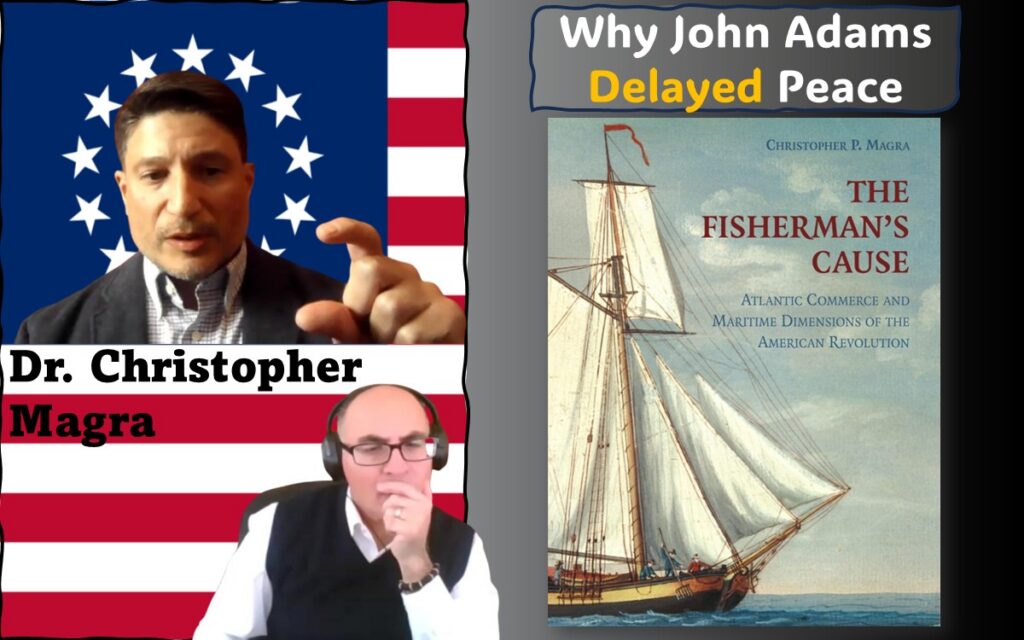
Image of Adel Aali (program host) and his guest, Dr. Christopher Magra, superimposed on the Betsy Ross flag, along with the cover image of Dr. Magra’s book The Fisherman’s Cause: Atlantic Commerce and Maritime Dimensions of the American Revolution.
Unless otherwise indicated, all images in AAR—including those in this post—are in the public domain.
AAR Essential Insights
Although the full video and transcript of my conversation with Dr. Magra are included in this post, I’ve selected and summarized several insights that I found particularly revealing and worth emphasizing. These moments — some surprising, others that challenge familiar assumptions — help us see British naval impressment, American fishing rights and the American Revolution in a different light.
By the way, these insights are my own takes and interpretations from the interview. For Dr. Magra’s perspective and exact framing, please watch the interview above and view the transcript below in the corresponding sections.
Impressment Was More Than Forced Naval Service
Most Americans probably imagine impressment as a sailor being dragged onto a British warship. That happened. But what surprised me in this interview is that impressment reached much further than that. The British Navy could take a man’s labor, separate him from his family for years, and in some cases force him to fight in imperial wars. Yet the system also extended to ships themselves. Vessels could be pulled out of commercial service, disrupting trade, delaying voyages, and imposing losses on their owners. The result was a grievance that touched workers and merchants alike.
What makes this important is that impressment was not a temporary inconvenience. As Dr. Magra explains, some men spent years in naval service. The British Navy faced chronic manpower shortages and repeatedly turned to impressment to fill its ranks. From the perspective of imperial officials, this was a practical solution to a military problem. From the perspective of many colonists, however, it looked very different. Families lost husbands, fathers, brothers, and sons. Merchants lost labor and property. Communities watched the state claim powers that many believed it should not possess.
That broader context helps explain why impressment eventually found its way into the Declaration of Independence. It was not merely a complaint about naval recruitment. It was part of a larger debate over liberty, property, and the limits of governmental authority. The British Navy needed men to sustain a global empire. Many Americans increasingly viewed the methods used to obtain them as evidence that imperial power had become a threat rather than a protection.
Watch this segment in the video above (00:05:25, 33:32)
How Press Gangs Really Worked
When we hear the phrase “press gang,” it’s easy to imagine a scene from a movie: sailors dragged kicking and screaming onto a warship. The reality was both more bureaucratic and, in some ways, more unsettling.
What struck me in this part of the interview is the difference between the official rules and practical reality. On paper, there were exemptions. Certain occupations could be protected against press gangs. Impressment procedures existed. Yet as Dr. Magra explains, a warship that needed men was expected to get men. If sickness, death, or desertion had reduced a crew below strength, the press gang’s mission was straightforward: fill the ranks.
The most revealing point, however, concerns the word “volunteer.” Historians naturally want numbers. How many men were impressed? How widespread was the practice? But the records themselves create a problem. A man could be presented with a choice between accepting service as a “volunteer” with better treatment or being formally listed as a pressed man and facing harsher conditions. Technically, a choice existed. Realistically, it was often no choice at all.
That observation changes how we think about the surviving historical evidence. A ship’s log might record six volunteers. Yet behind that neat administrative language may have been coercion, pressure, or fear. The result is that one of the Revolution’s grievances becomes difficult to measure precisely—not because it was insignificant, but because the system itself blurred the line between consent and compulsion.
Watch this segment in the video above (00:13:40)
Why Grievance No. 26 Matters
One word in the Declaration of Independence stood out to me during this interview: constraint. It appears in the grievance against impressment, yet most of us probably read past it without a second thought. Dr. Magra argues that eighteenth-century Americans would not have done so. To them, constraint was not merely an inconvenience. It described a loss of freedom that touched every aspect of life. Then again, most Americans never make it much beyond the Declaration’s now famous preamble.
What makes this especially interesting is that the grievance was not limited to elite political leaders. Maritime workers often defined freedom in practical terms. Could they leave one ship for another? Could they seek higher wages? Could they move between occupations? Their freedom was tied to mobility and choice. When the British Navy forced men into service, it constrained those choices. That is why many sailors described impressment in the language of slavery, even while recognizing that it was not literally the same institution.
The same idea extended beyond workers. Merchants spoke of constraints on their property, their ships, their labor force, and their ability to conduct business. Different groups experienced impressment differently, but many described it using the same vocabulary. The common thread was the belief that imperial power was restricting freedoms they believed were rightfully theirs.
I was also intrigued by Dr. Magra’s observation that the grievance appears in the Declaration of Independence for a reason. The document contains many complaints that were debated, revised, and approved. So grievance No. 26 was not an accidental inclusion in the Declaration. If the authors chose to include it, then impressment was important enough to be remembered among the Revolution’s defining complaints against British rule.
Watch this segment in the video above (00:27:37)
When Cod Was King
Many Americans associate colonial wealth with tobacco, rice, or later, cotton. But what about fish?
One of the most surprising points in this interview is that New England’s fishing industry was not some quaint coastal occupation. It was one of the largest economic engines in colonial America.
One revelation from this interview—the enormous scale of colonial America’s fishing industry—may shock even seasoned students of American history, just as it shocked me. As Dr. Magra explains, Marblehead, Massachusetts, was not merely a successful fishing port. It was the largest commercial fishing port in the Western Hemisphere. The industry employed working-class fishermen, generated enormous amounts of capital, and supported an entire network of related trades. Shipbuilders, barrel makers, blacksmiths, merchants, and countless others depended on the cod fishery in one way or another.
The discussion also challenges how we think about class in colonial America. These fishermen were not typically wealthy merchants. And there is an important reason for that. By the eighteenth century, many no longer owned the vessels on which they worked. As larger and more expensive schooners came to dominate the industry, ownership increasingly concentrated in the hands of merchant investors. The fishermen remained essential to the industry, but they did not control it.
Perhaps the most striking fact of all is that cod accounted for roughly 35 percent of New England’s export revenue on the eve of the Revolution. That figure is so large that it forces us to rethink the role of maritime commerce in colonial America. We often hear that New England lacked a staple commodity comparable to Virginia’s tobacco or South Carolina’s rice. Yet as Dr. Magra argues, Massachusetts had its own staple: cod.
Watch this segment in the video above (00:40:08)
When Parliament Went After Cod
One of the most common ways Americans think about the Revolution is through taxes. The Stamp Act. The Tea Act. Taxation without representation. Yet this interview highlights another grievance that receives far less attention today: Parliament’s attack on New England’s fishing industry.
What surprised me is not that Parliament regulated trade. Empires do that. What surprised me was the extent of the intervention. In 1775, Parliament effectively banned Americans from fishing in key Atlantic waters. For New England, this was not a minor commercial dispute. As I explain above, fishing was one of the region’s most important industries. Entire communities depended on it. Families depended on it. Remove access to those fisheries and thousands of livelihoods were suddenly threatened.
The timing is also difficult to ignore. Dr. Magra points to evidence from a French diplomat in London who reported that maritime laborers were laying down their fishing gear and taking up arms because of the Fisheries Act. Historians are always looking for a “smoking gun”—that elusive piece of evidence connecting cause and effect. For Dr. Magra, this report comes remarkably close.
What I find most compelling is that this argument shifts the Revolution from the realm of political theory to the realities of everyday life. The debate was not simply about constitutional principles or parliamentary authority. For many fishermen, the issue was immediate and personal. Their industry was under attack. Their livelihoods were at risk. And for some, that may have been reason enough to join the revolutionary cause.
Watch this segment in the video above (00:53:48)
The Issue That Delayed Peace
One of the most astonishing claims in this interview concerns the peace negotiations that ended the Revolutionary War. According to Dr. Magra, John Adams—who, of course, was from Massachusetts—spent years insisting that American fishing rights be included in the final settlement. In fact, Dr. Magra argues that the issue became one of the principal obstacles to concluding peace with Great Britain.
So, fishing rights delayed peace? Pause for a moment and consider that point against everything we learned about the American Revolution in school.
Generally, we were taught that the Treaty of Paris was the document that recognized American independence. From this perspective, we think of boundaries, sovereignty, and the birth of a new nation. Few Americans, however, associate the treaty with fishing rights. Yet Adams apparently did. If Dr. Magra is correct, Adams regarded access to the fisheries as so important that he was unwilling to settle for peace without it.
The obvious question is why. The answer takes us back to the enormous scale of the fishing industry itself, discussed above and throughout this interview. Fishing was not a marginal occupation practiced by a handful of coastal communities. It was one of the most important industries in British North America. Thousands of livelihoods depended on it. Entire communities depended on it. From that perspective, fishing rights were not a side issue. They were an economic necessity.
Perhaps the larger lesson is that the Founding generation often understood national interests differently than we do today. Modern Americans tend to separate diplomacy, economics, and national security into distinct categories. Adams appears to have viewed them as inseparable. A nation that could not sustain one of its most important industries was not truly secure, even if it had already won its independence.
Watch this segment in the video above (00:58:31)
Why Adams Delayed Peace with Britain
Continue watching at 58:31 in the video above
The Interview (S1E24): Adel Aali and Chris Magra
In our conversation, Dr. Magra addresses key questions about British naval impressment, American fishing industry, and the American Revolution. The detailed outline and full transcript below supplement the video above.
Podcast
Watch the full interview on this page with the outline and transcript below, or take the conversation with you on the go through our Spotify podcast.
Outline
Use the in-depth outline below, with its key moments and turning points, to follow the discussion and navigate the interview.
Click for Timestamped Outline
- Selected Highlights (00:00)
- Guest Introduction (01:42)
- Naval Impressment and the Road to Revolution (03:32)
- Poseidon’s Curse and the Declaration of Independence (03:41)
- Men, Ships, and Forced Service in the British Empire (05:35)
- Property Rights and the Costs of Empire (06:35)
- Merchants, Pressed Ships, and Financial Losses (07:23)
- Trade Restrictions and Colonial Grievances (11:31)
- How Press Gangs Operated (13:40)
- Impressment at Sea and on Land (13:52)
- “Volunteer” or Be Taken by Force? (18:17) – Key Moment (18:53)
- Impressment, Riots, and Resistance (21:05)
- The Cost of Empire and Anti-Impressment Protests (21:15)
- The Knowles Riot and Samuel Adams’s Radicalization (23:59) – Turning Point (24:15)
- Grievance No. 26 in the Declaration of Independence (27:37)
- Why “Constraint” Matters (29:25)
- Liberty, Labor, and the Language of Tyranny (31:38)
- Did Inland Americans Care About Impressment? (34:28)
- Atlantic Connections Beyond the Coast (35:34)
- Why Maritime Grievances Reached Ordinary Colonists (38:50)
- Fishermen and the Revolutionary Cause (40:08)
- Marblehead Mariners and George Washington’s Army (40:58)
- Fishermen, Labor, and Social Class (42:58)
- Cod, Commerce, and Atlantic Markets (47:23)
- Why Cod Became New England’s Staple Commodity (50:01)
- Fish, Slavery, and the Atlantic Economy (52:32) – Key Moment (52:50)
- Parliament Versus American Fisheries (53:42)
- The Fisheries Act and Colonial Resistance (54:50)
- Thousands of Fishermen Join the Revolution (55:54) – Turning Point (56:10)
- John Adams, Fishing Rights, and the Treaty of Paris (57:13)
- Defending Fishermen Before the Revolution (57:28)
- Why Peace Waited for Fishing Rights (58:42) – Key Moment (59:08)
- Just One Point (01:09:05)
- Fishermen Fought for Independence as Much as Farmers
Transcript
Note: This transcript was generated automatically and may contain minor errors. It is provided for reference and accessibility only.
Click to View Transcript
Adel:
Dr. Magra, it’s a pleasure to have you in our program special series. Thank you for taking the time for this conversation with me about the American Revolution. In the first segment of our talk, I want to speak with you about your book, which is titled Poseidon’s Curse, British Naval Impressment and Atlantic Origins of the American Revolution.
So let’s start with the title itself.
Dr. Magra:
Yeah. Yeah. Impressment.
Yeah, well, the title Poseidon’s Curse comes from Homer’s Odyssey. And that’s a story about someone trying to get home. Who’s prevented from getting home.
And any maritime laborer who was pressed into any Navy for any length of time, who was taken off of a commercial trade ship and forced on to a naval vessel into military service. Would have experienced some of those hardships. Of trying to get home and being unable to get home.
And interesting. And I was drawn to naval impressment because of the Declaration of Independence. And because of one of the grievances in the declaration that specifically mentions King George, the third constraining our fellow citizens and forcing them to fight against their neighbors, their families, their friends.
And I wanted to kind of explain why that’s in the Declaration of Independence.
Adel:
So was impressment only for men or did it include women or property like ships?
Dr. Magra:
Right. Yeah, it’s it’s it’s mostly men. I women get involved with impressment.
They will often petition. And in my case, we’re dealing with the British Empire. We’re dealing with the British Navy.
And Poseidon’s Curse is a book about British naval impressment. Of maritime laborers around the Atlantic world, but particularly in North America and wives, mothers, daughters will petition the British government whenever their sons, brothers, husbands, fathers get pressed into naval service. It’s not just manpower.
Although my book has chapters on the appropriation of free labor. It’s also property in the form of ships. Ships are pressed as well in the military service for various needs.
Adel:
And in that context, Dr. Magra, if ships are pressed into military service, this goes back to sort of my lawyerly background, you know, trying to split words here is pressing a ship into military service. Is that different than impoundment?
Dr. Magra:
That’s a good question. I don’t know the answer to that.
Adel:
I don’t know either, but it’s just something that occurred to me.
Dr. Magra:
I didn’t look into. Whether the Navy impounded any enemy vessels and kept them for a certain duration. My guess would be that there are a couple of key differences.
One, the. Private property of individual ship owners is recognized by the British Navy, and they are allowed to petition for financial recompense for the duration for which their vessel has been appropriated. And if that vessel is destroyed while it has been pressed in the military service, they are allowed to petition the British Admiralty Board for some sort of financial payment for that.
The. Owners of that of those vessels do petition, so they must have had some expectation that these petitions would get resolved. Not all of them did.
And I have evidence in my book of ship owners who never did receive financial payments for their vessels getting taken out of trade voyages. They experience multiple financial hardships. It’s not just losing their private property, which.
Is a very important principle. There’s a set of ideas around private property rights that merchants in the 18th century have, and this upsets them greatly, and they believe that they are living in a tyranny because of this. But it’s also a financial hardship and they will send they will break down the costs associated.
OK, this trade voyage was disrupted. You took my my ship and you took the commercial cargo off of it. Here are my financial losses from this broken voyage.
And then you appropriated my private property for X number of months or years and took it out of my service. Here is the the financial hardships. And they detailed all that and they would send it to the Admiralty Board.
And I’ve got cases where the Admiralty Board said, no, we’re not. We’re not giving you any money for this. And there is a process.
And I imagine that process is different than impounding, you know, and I’m unfamiliar of that. If if the British Navy impounded.
Adel:
Yeah.
Dr. Magra:
Yeah. They meet up with with their certainly prize. There’s certainly prizes and the British Navy is taking prizes.
And if it’s there’s a there’s a prize court, it’s a legal process that’s set up. And if your prize is deemed a legal prize, it was taken. It was an enemy vessel taken in war during a specific amount of time in a specific geographic area.
Then you could legally sell it as a prize of war.
Adel:
Yeah.
Dr. Magra:
And there was a legal process set up for that.
Adel:
And with respect to the financial hardship, I imagine it’s not just the property that’s taken. Many of these merchants, for example, if we talk about John Hancock or Robert Morris, they own many ships. So when they’re taking, they’re waiting for those ships to come so they can pay back some of the loans.
So this is like a cascade of events that could go down, go south, if you will. If the ship is pressed.
Dr. Magra:
For sure. Now, you as you mentioned, some very prominent merchants in Boston and Philadelphia there. If you’re one of these prominent men, the way you rise through the ranks in the merchant community is you mitigate those risks.
You take out maritime insurance. You take on partners on board all these these transatlantic trade voyages. And so you aren’t completely devastated by the loss of your vessel.
The same is present in a naval service the same way. You aren’t devastated if it’s lost due to shipwreck or natural disaster. But it is a financial hardship.
And it’s important to realize that it’s a financial hardship because there are scholars of the American Revolution who who Gordon Wood is one of them out there.
Adel:
Yeah, yeah.
Dr. Magra:
We will say that that that colonists had no financial chains to throw off. They’re thriving under the British Empire. In terms of their business, in terms of the economy of North America, there are no imperial chains, Gordon Wood says, to throw off.
Well, that’s not true. They have so many trade restrictions. For sure.
For sure. They’re for sure. There are trade restrictions.
OK, but if we look at individual individual merchants and. Their complaints, their petitions to the Admiralty Board based on just naval impressment, let alone those trade restrictions, let alone any form of taxes that come in the 1760s and early 1770s. On the eve and run up to the American Revolution, then just in these impressment cases of their private property, they are saying there is a financial hardship associated with it.
Despite the the the risk management strategies that they’ve pursued, despite the fact that they’ve taken on partners and maritime insurance over and above all of that, there’s still a financial cost associated with taking their trade ships out of commission and pressing them into military service for a certain duration.
Adel:
Yeah, this is a small point. I’m not asking for an in-depth discussion as I’m just curious. We’re talking about the British Empire and impressment of ships.
And and for our for our interview, American colonists. What I’m wondering, did other empires also engage in this impressment like the French and Spanish? Yeah.
Yeah. OK. Yes.
So how did. This is what I want to know, Dr. Maguire, what if? Yeah, that’s what I’m wondering.
Practically speaking, how did press gangs work? What was the mechanics? Did they like lurk in the dark by like, you know, by war and then all of a sudden swarm someone?
Dr. Magra:
Yeah. So it depends on if we’re talking about at sea or on land. And the British Navy pressed ships and men.
At sea and on land. In both cases. A lieutenant is put in charge of a number of ordinary seamen, and you would pick very large, imposing naval seamen to be in your press gang.
You would pick men who, if things went south, they could put up a fight. You would then take a small boat. It was called a tender, like tender, loving feelings tender from the main British warship at sea.
You take that tender with your lieutenant and his press gang over and they would board a vessel that had been stopped on the high seas. And that press gang then would search for. Maritime laborers who who could be pressed, and there are certain restrictions on that.
There there are always exemptions that powerful lobby groups in England have secured with the British Admiralty. OK, you know, we’re not going to press British whalers this year. The season has been very hard and you must encourage us.
And one encouragement the British government can give to the whaling fleets is an exemption exemption for this year. OK, just a hypothetical example of one possible exemption. Board this vessel.
Make sure none of the men are whalers. Now, this is and all this is pie in the sky. Idealistically, how it’s supposed to function.
In reality, in reality, what starts this this process. Is that that warship needs to fill a complement of men? For whatever reason, a certain portion of their crew has gotten sick.
A certain portion of their crew has died. A certain portion of the crew has run away at the last port they were in, and they must have X number of men on board. They’re going to take and make sure that they get X number of men come hell or high water when they board that vessel at sea, no matter whose exemptions are there or or or what what restrictions they have.
Adel:
So the ideals go out the door.
Dr. Magra:
They go out the window all the time. And and the interesting the interesting thing, what makes it very difficult. And that’s at sea inland.
Of course, this would be they would be going in the taverns at night and they would be in certain cases. And Nicholas Rogers has really demonstrated this for England. And these press gangs would get violent and would knock people out.
And you would wake up on a ship at that’s that’s at sea and you’d find out that you’ve been pressed into the Navy. Wow.
Adel:
You so you answered sort of a foundational question that I had about the mechanics of press gangs. It was the Navy didn’t go through like a contract private parties. They didn’t rely on them.
They did this themselves.
Dr. Magra:
Yes, that’s right. Now, I didn’t finish my thought, though, because what I was saying is. It’s very difficult.
A lot of historians want to know how often this happened. How many men were pressed into the Navy for certain scholars? You need to be able to quantify this in order to talk about how important it is.
And here’s the problem with that. And it gets into this nitty gritty of the actual process of impressment, because at the point at which the press gang has boarded this commercial vessel, at the point at which the press gang has gone into this tavern in this waterfront community around the Atlantic world anywhere. They will give you an option.
An option we can take you by force, in which case you will be listed on our ship’s books as a volunteer. When we pull in the port, you will be allowed to go on to shore leave. You will be given better rations.
Your life on board the ship will be much better. Or we can take you by force. We can list you officially in our books as a pressed man.
In which case you will be kept in shackles, you will be denied shore leave, and you may or may not get paid for your military service. What’s what’s what’s your choice? OK, it’s it’s kind of the equivalent of a pirate attack and the pirates offering you the choice of joining their crew or dying.
Now, when and when you and when historians like myself examine those naval ship logs and see these press cases, OK, Lieutenant so and so boarded the tender and and boarded this vessel with a press gang. And he took. Six volunteers.
You’re that’s it hard for you to make it hard. It makes it impossible to count. And we have we have a British naval officer and many naval officers throughout the 18th century are against impressment.
They hate it. They hate having to resort to this. And they’re constantly sending protests back to the admiralty board.
And they will explain. You know, this is not much of a choice. And and and we don’t really have volunteers in our service because of this.
And we should get rid of this, this process. And try to figure out a different way around this manpower crisis. And the British Navy always has a manpower crisis.
And the reason for that, as I explained in my book, is that for 150 years, they don’t increase wages. There are 150 years, 150 years now that that makes them completely. They cannot compete in the marketplace for labor, cannot compete.
Adel:
OK, well, let me before we go to the American Revolution. Let me ask this question. Did impressment hurt the British?
Empire and British economy itself.
Dr. Magra:
It’s it’s it’s certainly a cost of empire. And I try to make that case in my book. And what merchants want are the benefits of empire without those costs.
They want the naval protection. They want convoys. They may want markets opened by force.
But they don’t want merchants don’t want the disruption of losing their manpower or losing their private property. It is it is certainly a cost. Do the costs outweigh the benefits of having a navy?
That’s fiercely debated throughout the 18th century. And many people believed the costs did outweigh the benefits. But certainly you you.
You can’t have a seaborne empire without a navy, and you can’t have overseas trade without some measure of force.
Adel:
So, OK, did riots break out? We’re not even getting to the American Revolution yet.
Dr. Magra:
No, you know, there were there were riots. Nicholas Rogers has demonstrated and quantified this in England. He’s done the best job of counting the number of anti impressment riots in England.
And what I try to do in my book is to talk about this focus on the 1760s and the early 1770s. Some other histories of British naval impressment have tried to make the case that this wasn’t really an issue in North America. There weren’t many of impressment and there weren’t there weren’t many riots.
And I’ve tried to show, no, there there were. You’ve just overlooked them. And and and I think a lot of not many historians study naval history to begin with.
It’s only a handful. It’s only a handful. Most of the historians of the American Revolution look at farmers, look at look at frontier settlers, look at land speculation.
Not many are looking out towards the ocean to begin with, and not many scholars of the American Revolution focus specifically on the British Navy. Which is really surprising because it’s such a huge role. It’s in our Declaration of Independence for a reason.
It’s a it’s a grievance for a reason. And it and it plays a large role in the mobilization of coastal communities up and down the eastern seaboard. But the few historians who have looked at naval impressment in the origin of the revolution use as their standard, their baseline, the Knowles riot in Boston, which was a huge anti impressment riot in the 1740s.
Something that I talk about in my book that radicalized Sam Adams. It’s that Knowles riot in the 1740s that made Sam Adams, Sam Adams. Sam Adams wouldn’t have been the firebrand of the American Revolution, wouldn’t have been pushing Americans and the Sons of Liberty towards towards a war for independence if it wasn’t for that Knowles riot.
That’s really what triggers him into saying we’re living in a tyranny. And that Knowles riot is a huge riot involving thousands of people in the last three days in Boston. That that is not.
This the measuring stick we should use for anti impressment riots, anti impressment riots. Could be five guys in a small boat who row out into a harbor, board a British man of war and forcibly take back their friends who have been pressed. Yeah, yeah.
It’s hard to quantify a riot. It’s hard to say in order for it to meet the standard of a riot. It has to involve 100 people.
Yeah. All right. I talk about this with my students all the time.
I teach a course on the American Revolution at the University of Tennessee every spring semester, and I’ve done that for 20 years. And one of the things we talk about is the Boston Massacre in 1770 where five people died. OK, is that a massacre?
All right. Well, Paul Revere and the Sons of Liberty called it the bloody massacre. Yeah.
But five people died, and my students are always shocked at that. Like I thought it was I thought it was hundreds of Americans were brutally massacred by British soldiers like that’s that’s not it.
Adel:
That’s so interesting. You bring that up. We actually discussed that point in the program with Dr. Serena Zameen, and I say it. Yeah. Is it a massacre? Not to diminish one death is too many.
Not to diminish one death is too many. And her response to your point was that it was a political massacre. Yeah, that’s right.
Dr. Magra:
Well, it wasn’t. It wasn’t. Listen, with that and in anti-impressment.
Riots, there’s rhetoric, for sure, there’s rhetoric around this. Newspapers in in America make a lot of hay out of these anti-impressment riots, mob actions. OK, as we get closer to the American Revolution, the more and more of these happen, they’re they’re they’re Sons of Liberty who are defending liberty against tyranny.
That’s how it plays out in the press. Certainly there’s a degree of rhetoric around that, but there’s also reality baked into it, just like the Boston Massacre. I mean, there are innocents who die.
Adel:
Yeah, yeah.
Dr. Magra:
OK, there that with with an impressment, there is a degree of tyranny. There is a lot of free will. There is an appropriation of free labor in addition to the theft of family members.
So there’s a there’s a degree of rhetoric and reality. I would say in in both Boston Massacre and anti-impressment mob actions in colonial America.
Adel:
OK, use the word tyranny. And so far, you’ve mentioned the Declaration of Independence twice. I want to go to that now.
Twenty seven grievances against King George, the third are enumerated in the declaration. And number 26 is this, if I may read it for you, Dr. He has constrained our fellow citizens, taking taking captive on the high seas to bear arms against their country, to become the executioners of their friends and brethren or to follow themselves by their hands. Obviously, this grievance is about impressment, but it’s number 26.
I know of 27. Is that it’s not number two. It’s not number three.
Yes, I know. Is there a priority in these listing of grievances?
Dr. Magra:
Certain historians say yes. There’s a there’s a there’s a there’s a hierarchy here. I don’t think so.
OK. And certain historians will say this, too. There’s there’s 27 grievances.
Everything under the sun is listed. So what? Yeah.
Yeah. No. A lot of time and thought was put into the Declaration of Independence.
The five man committee that put this together put a lot of time and thought. And it wasn’t just Thomas Jefferson. People will say, well, Thomas Jefferson in Virginia didn’t write a lot about naval impressment.
Well, he did. You’re just not recognizing the language that he’s writing about when he’s talking about the restraining act, for example, and when he’s talking about the New England Fisheries Act. He is talking about impressment.
And that that the wording in that 26 grievance constraint. That’s a big word. Constraint does a lot of heavy lifting.
What we need is an entire framework for understanding what constraint meant.
Adel:
Does it have a more powerful meaning then than it does now?
Dr. Magra:
We’re not only not only the founders, but but also people from below in the nation. And does it have a more powerful meaning then than today? That’s a that’s a great question.
I mean, we could talk about people in Minneapolis today who feel constrained by ice. And we could we could talk about how they feel their lives being constrained by federal authorities. OK, in in the 18th century and why Jefferson and the the men who drafted the Declaration and then Congress, who debated all of this?
And this is for anyone who would who would say, you know, there’s so many grievances. They don’t matter or that this is number 26. So it’s so low on the poll that it doesn’t matter.
This is what I would say. The five men committee included it and they didn’t include other things. There were things that were left out of the Declaration of Independence.
Congress debated every item in the Declaration of Independence and ultimately approved what’s in there. So what’s in there matters, whether it’s 26 or one. There’s no there’s no numbers on the declaration.
It’s not like one, two, three, four, five, six. OK, it’s it’s he did. He did.
He did one thing after another. And if it’s in the Declaration of Independence, it’s in there for a reason. And this word constraint does a lot of heavy lifting.
It’s so powerful. It’s saying that. Your your livelihood, if you’re a worker, and I try to explain this in my book, that workers talk about their freedoms.
Even though they can’t vote, even though they can’t hold an elected office and other historians have said, look, there’s no labor unions. So these aren’t political beings. There there’s something else entirely.
Some historians call them mindless brutes. OK. They they they write about this and they say they associate their occupational mobility, their ability to move from one ship to another ship.
From one occupation to another occupation as their freedom and anything that constrains that they associate with tyranny and they associate with slavery. That’s why maritime workers will refer to naval impressment as slavery. Now, I talk about this in my book that there are there are there’s a degree of rhetoric there.
It’s not exactly reality because one key difference between being a pressed man and a slave is that your children can’t be sold. Yeah. OK.
They’re not. Literally slaves, but they are thinking about their constrained realities. In terms of slavery, they are liking it, likening their situation as pressed men to slavery and and for merchants, by the way, the constraints that they are talking about have to do with their private property and their manpower.
These naval impressment is constraining their worlds.
Adel:
Well, that word is getting bigger and bigger as the more we talk about it. That’s interesting.
Dr. Magra:
We need a book. We need a book on it.
Adel:
Yeah. Where people were men pressed for life or not. This is for like a specific mission or.
Yeah.
Dr. Magra:
No, it it it it completely depended. In many cases, we’re talking about years of military service because the men are pressed most often during wars, at which point. The the Navy’s expanding, the Navy has increased needs for manpower, is pressing men off commercial vessels, and those commercial vessels are offering higher wages.
To be even more competitive in the marketplace than they were previously. So there’s there’s less willingness to go in the British Navy at the same time that there’s a huge demand for it during wars.
Adel:
Yeah. Let me approach impressment from a different angle, and what inspires me to do this is a prior previous interview I had with another scholar, Dr. Robert Gross, about, you know, the backstory of Concord. Yeah.
Dr. Magra:
For a minute in the world is a is a great book.
Adel:
It’s a great book. So we talk about all the societal pressures conquered in crisis before. So how so what is my question?
You mentioned Sam Adams and how the Knowles riot, I think it was 1747, sometime in the 1740s, radicalized and turned him on to his turned on in his mind that the British Empire is a tyranny. OK, but Sam Adams was in Boston, was on the coast. Would did Americans again, my example of Concord that were far off the coast relative for that time, an hour, an hour, 45 minutes inland.
Would impressment have been just even in their minds? Did they care?
Dr. Magra:
Yeah, for sure they did. And here’s here’s what I would say. Look, Minute Men in the World was a great book for the 1970s when New England town studies were in vogue and in fashion.
It’s a great book today on understanding the revolution from the perspective of local histories. But what we’ve learned since the 1970s, particularly in the 1990s and early 2000s, is that New England was connected to the wider Atlantic world in a lot of really important ways, principally through the movement of people’s goods and ideas. Those goods, ideas and people are traveling back and forth across the Atlantic Ocean with increased regularity and frequency.
And. People like David Hancock and his book, Oceans of Wine, have looked far into the interior, far past inland places, farming communities like Lexington and Concord. And they found and Hancock and other historians who have linked the interior of North America to the wider Atlantic world have found in wills.
People leaving things like Madeira wine to their ancestors. How did that Madeira wine get from this small island? In the East Atlantic, 3,000 miles across the Atlantic Ocean and into wills and estates.
Of communities far in the interior in North America. All right. If you look at the list in Concord.
Once the British soldiers marched through in 1775 of items that British soldiers took. Just stole from people’s homes in Concord. We have these lists because the people of Concord petitioned for financial relief of the things that were taken.
There are items manufactured goods from England. I items like like sugar from the Caribbean. Yeah, yeah, yeah.
Concord is not an isolated rural farming community. Yeah, it is. It is tied to Boston in a lot of different commercial ways that the movement of peoples, the movement of ideas tied to Boston and through Boston.
One of the leading seat, one of the top five seaports in North with a lot to the wide to the wider Atlantic world.
Adel:
And Dr. Robert Gross makes that point clear that how Concord was really connected to both Western and Northwestern trade, as well as the Tantric trade. My question was more. I just brought that up as an example.
I just wanted to know whether or not further inland American colonists would know of impressment or would care much about it. That’s the instance I brought up. Yeah.
Dr. Magra:
And so so what I was going with that was you would care if if goods, the flow of goods was disrupted and you would and you would feel that you would also feel it. If your your sons who had traveled to Boston were pressed into military service, you would you would feel that.
Adel:
So then they knew about it. It’s something that was in their newspapers and drive them up.
Dr. Magra:
It is it is it is in it is enough of a grievance that it’s listed in the declaration.
Adel:
We call back to it.
Dr. Magra:
It mattered to enough Americans that the 56 members of Congress. Voted to approve that being included in this foundational document. If it didn’t matter to Americans, it would not have been included in the Declaration of Independence.
Full stop.
Adel:
But if you wanted our audience to remember just one point about impressment, what would it be?
Dr. Magra:
That it constrained American freedoms.
Adel:
Wonderful. Let’s take a break here in the next segment. I asked Dr. Magra about American fishermen, Atlantic commerce and how they relate and contribute to the American Revolution. We’ll be right back. Dr. Magra, in this segment, I want to speak with you about your book titled The Fisherman’s Cause, Atlantic Commerce and Maritime Dimensions of the American Revolution. So who are.
The American fishermen, ethnically, geographically, sort of. You know, background.
Dr. Magra:
Yeah, well, everyone else was interested in farmers who fought in the American Revolution, and I’m a little bit of a contrarian. And if everybody’s doing one thing, I got to do another. I was interested in fishermen and I got into fishermen through a book written in around 1960 by George Dathan Billius on General John Glover and his Marblehead Mariners.
And the Marblehead Mariners were involved in lots of key battles in the American Revolution, including Saratoga. And this one particular regiment is involved in carrying the American army across the Delaware River in the Battle of Trenton. They they help Washington and the army escape from Long Island.
And that got me curious about who these mariners were. What kind of place was Marblehead, Massachusetts? And so I went there and I did an internship at the Historical Society in Marblehead, and I found out that Marblehead, Massachusetts, was the principal commercial fishing port in the entire Western Hemisphere, not just North America.
Wow. Entire Western Hemisphere. More commercial fishermen in Marblehead than any other single port anywhere in the Western Hemisphere.
And they they come from England. They come from a a small island off the coast of France. Some of them.
Some of them come from Portugal and Spain, but most of most of them, the bulk of the Marblehead fishermen are English.
Adel:
OK, so. Based on this, they weren’t all. English-American colonists, there were also some what I guess in today’s parlance we would call immigrants.
Did they belong? To lower classes. I know I’m not articulating this question well, because because I don’t know enough to ask you the proper question.
Dr. Magra:
No, I think I think not enough people think about this.
Adel:
Yeah.
Dr. Magra:
For anyone listening. We historians used to debate the social pyramid in early America. OK, who constitutes the working class?
Who constitutes the was there a middle class? And was there an upper upper class? Because it’s not traditional European society.
We don’t really have a clergy. We don’t really have an aristocracy. I mean, there are some royal governors who are aristocrats in early America, but we don’t really have that.
So what who falls into the upper levels of society, who falls into the middle and who falls into the lower? We’re we don’t really talk about that enough anymore. I’m not really sure why labor history class analysis of early America is kind of gone by the wayside is not really in vogue right now.
The the farmers that I looked at all can fall into the working class category of social of of the social hierarchy in early America. They they are not middle class. They, first of all, do not own the means of production by the American Revolution.
Danny Vickers has gone into depth on this in his book, Farmers and Fishermen. Danny was was one of my scholarly heroes. And I mourn his passing.
But he did a lot to show that in the 1600s, fishermen in Essex County in Massachusetts typically did own at least a share of their vessel. But around 1713 and the invention of the schooner, a large deep sea fishing vessel, that these were out of the reach of commercial fishermen. And over the course of the 18th century, they increasingly became members of a working class without access to because the schooner was the capital cost of it was way too high.
Exactly. Exactly. And that became the defining feature of the New England fishing fleet, the schooner.
Adel:
So let me let me come back to the question in a different way that I asked you about fishermen. So were they part of fishing industry slash companies, organizations and their bosses were like well-off merchants or well-off? You know, I don’t know, fishing moguls.
How would you define that?
Dr. Magra:
Yeah. So we we can’t talk about fishing corporations in early America, but we can talk about wealthy merchants like Elbridge Gary from Massachusetts, who eventually becomes a founding father, will eventually become vice president under James Madison, famous for Gary Vandering.
Adel:
Yeah.
Dr. Magra:
Even though his last name is Jerry, it looks like Jerry. If you’re in Marblehead, it’s pronounced Gary. Yeah.
Or I learned that through my internship. And I’ve carried that with me through most of my adult life. But and so now now you will, too.
You will never forget that. The these are wealthy individuals who will take on partners and create merchant partnerships to engage in the commercial fishing industry in order to mitigate risk, as we talked about with my previous book. Those those employers.
Will employ fishing vessels and fishermen to go on fishing expeditions to the Grand Banks off the coast of Newfoundland.
Adel:
Hmm. Wow. Wow.
That’s pretty that’s pretty far. Hence the schooner and the capital costs out of reach. Was.
Was the colonies fishing industry big business?
Dr. Magra:
It was. Yeah, it’s the driving force behind the industrial revolution in New England. Wow.
It’s it’s it’s the reason for all that capital accumulation that allowed entrepreneurs to industrialize in the 1790s. And that’s one of that’s one of Danny Vickers main points in farmers and fishermen is that this capital is significant. The labor involved in commercial in the commercial fishing industry in New England is significant.
It’s the number one most valuable export in all of New England. Saltfish, 35% of annual revenue on the eve of the American Revolution is drawn from the exports of saltfish. The next highest is 20% is lumber.
Adel:
OK, 5% is huge.
Dr. Magra:
35% is huge. The 15% gap between number one and number two is huge. People will say New England didn’t have a staple commodity.
They’re not like these agricultural colonies towards the south. You know, we can’t talk about New England having a staple like like South Carolina had rice and tobacco had Virginia, but New England, especially Massachusetts, had cod. And I would argue cod was a staple for Massachusetts with with backward linkages to into industries, secondary and tertiary industries that fed into the like barrel makers and and and shipbuilders, blacksmiths.
OK. Yeah. And then also had had forward leverages, the capital that’s generated from the overseas trade of saltfish to Europe and to the Caribbean.
That that capital is invested in other industries like rum distilleries.
Adel:
Yeah, yeah. It generates this cycle of trade and finance. Now, let me just share some personal background and we’ll go to to to a specific question here.
A vacation in Cape Cod several times in Massachusetts and know a bit background about this business. But it wasn’t until I actually visited Nova Scotia and in Nova Scotia and Cape Breton, there’s a fort called Louisbourg and and they had this whole thing about cod. Finally, my daughter said, Dad, why is fishing important?
I’m like, oh, you don’t know. So let me let me pose the question to you, Dr. Magra. Yeah.
Why cod? Why not? Why not another fish?
Dr. Magra:
Why not? Not not. Listen, viewers out there.
Ask the same question. Why cod? Yeah.
Why is. Why are the cod fisheries part of every peace treaty that European powers sign in the 18th century? Name a war.
Name a war in the 18th century. Look at the peace treaty that was signed. There’s a provision pertaining to the cod fisheries.
Why? Why is that? OK, read chapter one of my book and you’ll find out the answer to that.
The it has to do with the biological properties of codfish. 80 percent pure protein. 80 percent pure protein.
You take a pound of cod and 80 percent of that is pure protein. If you’re out there and you’re in the nutrition and you’re you’re you’re buying these protein shakes from Costco, stop doing that and go get some cod. And and not only is it 80 percent pure protein, but it is a lean fish without a lot of fat on it.
And that is key for preservation techniques. That is key for curing. That is key for long distance shipping to distant markets.
It is one of the first mass produced foods in the world. 12th century Europeans are are catching and salting fish. 12th century.
And it is one of the first foods in the world that is shipped long distance because it can be heavily salted. It can be preserved for upwards. Get this, viewers.
Five years.
Adel:
I’m sorry, you said five years, five years.
Dr. Magra:
I’ve never tested the outer limits on that. Let’s never, never. Wow.
A wow. I’ve never kept saltfish, which you can you can still get saltfish in ethnic markets around the world. You can still get saltfish.
I’ve never gotten in there. They’re hard as a rock. I mean, you can pound nails with these things.
I’ve never kept one on the shelf in my basement for five years and then boiled it multiple times to get the salt off. I’ve never tested that, but that’s.
Adel:
Wow. OK, so you said, you know, that’s why cod.
Dr. Magra:
Yeah, that’s why cod. It is extremely valuable as a commodity for sale in the 18th century to Catholic portions of Europe, for whom three quarters of the year are meatless holy days and for sale to slave plantations, for which it is a cheap source of protein. It is called in the 18th century in islands like Jamaica and Barbados, the meat.
Of all slaves. The source of protein, not just a source or one source, but the source.
Adel:
Wow. OK, this is this this is obviously humongous business. And vital to empires if they’re using it for their population, if for their enslaved people, they included, as you said, pick any war treaty and 17 or 18th century, they include cod in it.
Which brings me to this question. Did Parliament get involved? Did Parliament regulate this?
Dr. Magra:
Hundred percent. Hundred percent. And the members of Parliament include fish merchants.
Include fish merchants from a very particular place in England, the West, the West country. OK, the West country. Fish merchants are also members of Parliament.
They’re lobbying for protection and encouragement of their industry throughout the 1700s, throughout the 18th century. And one of the things that they resent. One of the things that they want protection from is New England fish merchants who are going to Newfoundland and taking, in their words, their fish.
Adel:
From their ocean, they’re all the way in England, and they’re upset about what we’re doing in North America. Oh, wow.
Dr. Magra:
Absolutely.
Adel:
So did these regulations, and I’m sure to a great extent, Parliament obliged to just protect its own members and constituents. Yeah.
Dr. Magra:
And to the extent that in 1775, they banned Americans from fishing in those waters.
Adel:
Banned Americans from fishing in those waters.
Dr. Magra:
Yeah. And that’s my first book. My first book argues that helps us to understand the timing of the American Revolution.
That 1775 Restraining Act. Fisheries Act, whatever you call it. That banned commercial fishing in these Atlantic waters.
Helps to explain why in 1775, Americans are up in arms.
Adel:
Did this Restraining Act, Fisheries Act, did this come before Bunker Hill and the battles of the Dead? So early in 1775.
Dr. Magra:
And Americans have news of it before it even goes into effect. And I found a French. Diplomat stationed in London, and he’s getting news from America and he’s transmitting it to France in 1775, and he says this Restraining Act has motivated thousands of maritime laborers.
To go and lay siege to Boston, they have they have they have put down their fishing implements and picked up weapons of war because of this this act. That’s my that’s my smoking gun. That’s my smoking gun.
Would it be so? I was so proud about finding that piece of evidence.
Adel:
No, it makes sense. All of a sudden they’re out of job, out of work, ticked off. And this this doesn’t come out of the blue.
It comes there’s so many other things going on. On top of that, you have press gangs that that history are feeling constrained in a lot of different ways. There you go.
We go back to that word constrained. So this is this could be for them the straw that broke the camel’s back. They’re like, you know, heck with it.
We’re we’re joining it. Would it be too much to say that Parliament’s regulation of American colonists fishing rights helped ignite the revolution?
Dr. Magra:
I think that’s exactly right. And you know who agrees with me? John Adams.
John Adams is an interesting guy. He did a lot of cases. You know, you mentioned your interest in the law.
He mentioned he talks about defending a lot of different clients and his legal papers have all been published. So you all can read this and see for yourself. But he he defended commercial fishermen in legal cases.
And he says in his own words, no one was more knowledgeable of the commercial fishing industry than he was, than John Adams. Because of all of his experience defending commercial fishermen, he learned a lot about the industry. And I published an article on the Pit Packet Affair, in which commercial fishermen who also worked on a trade ship, the Pit Packet, killed a lieutenant who was in charge of a press gang who tried to impress them.
And John Adams defended them in a court of law, even though they killed a British officer. Wow. He defended them in the court of law and got them all acquitted on the basis of justifiable homicide and self-defense.
Adel:
Go John Adams.
Dr. Magra:
John Adams would, during the American Revolution, be involved in the in the negotiations for the peace, the peace treaty that ultimately ended the war. And John Adams got included in the piece of 1783 provision about American rights to fish. John Adams pushes the British government after Saratoga, 1778.
They begin the peace process. And the one thing that holds up the peace process is John Adams insisting on American rights to fish in the Atlantic Ocean. It holds up the peace process for five years.
It’s that important, John Adams feels to Americans.
Adel:
I know. Wait, wait, I want to repeat this.
Dr. Magra:
Wow.
Adel:
OK. OK. You’re speaking to someone who fairly knows about the American Revolution.
And this is just amazing. So we have the Battle of Saratoga. Yeah.
After which France joins at this point.
Dr. Magra:
Yeah. Britain is already talking, discussing peace. And John Adams is part of that, those negotiations.
And he is until 1783. And he’s hammering home the point that we will not sign the peace agreements until Americans get fishing rights.
Adel:
Wow. This is the sticking point. Otherwise, the Revolutionary War.
Dr. Magra:
Could have ended early. Yep. Yep.
Adel:
Is this a point much discussed? This is the first time I hear it.
Dr. Magra:
I know. I know. You’re hearing it here.
And listen, I published that. I mean, Fisherman’s Cause came out a while ago.
Adel:
Yeah.
Dr. Magra:
Go out and read it, people.
Adel:
Yeah. No, I love it. Let me, I want to go back to two points.
So this is clarification for me, Dr. Macra. First is when you think of the 18th century, maybe it’s just me because I’m vacation so much in the Northeast. But I’ve also vacation in the South and around the Chesapeake Bay.
Why is it that when we talk about the history of the 18th century, we always think of Northeast as like the fishing industry and fishermen, like the Chesapeake Bay itself had a huge fishing industry. But in the sort of the lore of American Revolution is always the Northeast, right?
Dr. Magra:
No. Yeah, for sure. But listen, we have tremendous access to primary sources, unprecedented access to the past.
And anything that you’re curious about, go to Founders Online, all of the Founding Fathers papers, Thomas Jefferson, John Adams. It’s a one-stop shop. And just go there and just put in fish.
All right. And see how many thousands of hits you get. If you look at George Washington and his papers, he’s concerned with river fisheries and having the enslaved peoples on his plantations catch fish on rivers around his plantations.
Thomas Jefferson is concerned with fishing ponds and starting farming fish farms on his plantations. There’s a really old book on the Chesapeake fisheries.
Adel:
Mm hmm.
Dr. Magra:
They tried a commercial fishing industry like New England and the warmer climate led to more spoilage and really upset the curing process for fish. And so it wasn’t as commercially viable as it was in New England.
Adel:
I see.
Dr. Magra:
Francis Wharton, I think, was a historian who did that book. And that’s a big pull that I pulled that author. If you’re out there, give me credit for that because that Chesapeake fisheries book is old.
It’s ancient.
Adel:
You touched on this and I want to go back as we close our interview and just ask about it again. Younger Americans in school, when you and I went to school, you know, we didn’t necessarily specialize in the American Revolution, but we did learn about it in middle school as well as in high school.
Dr. Magra:
Yep. We learned that a lot of people died at Boston Massacre.
Adel:
That’s what we learned. Exactly, exactly. It was an enormous tragedy.
So you come away, let’s ask a 20 year old, two years out of high school, and mention fishermen. This is not what we learned. I mean, you’re saying that fish was the number one export of the American colonies?
Holy moly.
Dr. Magra:
Yeah. For New England, it’s 35% of their annual revenue in New England. Now, no, we don’t learn about commercial fishermen.
No, heck no. We learn about farmers who put down pitchforks. You know, we watch movies like Mel Gibson’s Patriot.
Adel:
Yeah.
Dr. Magra:
All Americans were all agriculturalists. Yeah. They live off the land.
They’re subsistence family farmers, right? A lot of things throw wrenches in that quaint traditional narrative, right? The notion that Mel Gibson’s Patriot movie is supposed to be representative of South Carolina agriculturalists where there are rice plantations, all right, should give you pause.
The notion that it’s a small family farm without large numbers of enslaved people should give you pause. And the idea that Mel Gibson’s small family farm in South Carolina was not tied to the wider Atlantic world should give you pause because South Carolina was connected through rice to the wider world.
Adel:
Yeah, yeah.
Dr. Magra:
Is part of a much larger community, including maritime laborers in Charleston, South Carolina.
Adel:
So why do you think it is that when we learn about the history of the American Revolution, which is just fascinating? I’m doing this whole program on it. It’s really interesting.
We don’t really learn about the contribution, the financial contribution of fishermen and also their sort of involvement in the American Revolution. That narrative is like not part of the popular story.
Dr. Magra:
No, it’s not. Because we’ve lost our maritime history. We have ceased as a nation in promoting maritime trades, like shipbuilding, like overseas trade.
We have ceased doing that. And we rely more on other nations like China, for example. And that the maritime dimensions of our own nation today are often hidden.
The overseas nature of our nation is often hidden. Dan Imawar has written a book, How to Hide an Empire, that explains that phenomenon. And so we don’t think of ourselves today as even having a seaborne empire or even being a seaborne empire.
We think of ourselves as being a continental nation. It’s a North American thing. And we forget, I guess, about Hawaii.
We forget about Puerto Rico. We forget about Guam. And we forget about imports from overseas.
We forget about exports. And we forget about the ships and maritime laborers who are involved in that. And because of that, when we study the past, our minds naturally go towards agriculture and interior matters.
Now, another explanation for that is historians who have studied the ocean as a place in history have argued that oceans are seen as liminal places where history doesn’t matter. History unfolds on land, typically for most people.
Adel:
And have they been to Trafalgar Square?
Dr. Magra:
Oceans, if they’re thought about at all, are just these places, these spaces where goods, people, and ideas just they go from this point on land to this point on land magically. And we don’t need to know about what happened in between.
Adel:
So when you talk to your students about fishermen and the industry, do they have wow moments in the context of the American Revolution? Like, oh.
Dr. Magra:
Absolutely. Yeah. No, my students are blown away every time I give a lecture.
I would love to say that there are aha and light bulb moments every time I speak, but I would be lying. I mean, most of the time I struggle to get my students to read the syllabus. And no, I think the American Revolution is my favorite class to teach.
It’s the only class I’ve taught every spring semester for 20 years. And I like to think that I’ve inspired a few students over the years, if not to focus on the maritime history of the American Revolution, of which there are many, many maritime dimensions of the American Revolution. Many, many merchants involved, many ships.
There’s a whole naval side of the war. Oh, by the way. And if I haven’t inspired that, at least I hope I’ve inspired some students to study the American Revolution broadly.
Wonderful. And convince them it’s super important for us to study, especially today when we think about liberty and tyranny.
Adel:
If you wanted our audience to remember just one point about fishermen and the American Revolution, what would that be?
Dr. Magra:
Fishermen fought in the American Revolution for independence as much or more than farmers.
Adel:
And more. Dr. McGrath, thank you so much for educating me and our audience about the American Revolution. And to our audience, if you know of any history that could provide more perspective about the American Revolution, please share it with us and tell us what’s your perspective.
Thank you so much. This was wonderful.
Dr. Magra:
Thank you for having me. Thank you.
Related Interviews and Essays
The Boston Massacre
In this interview, Dr. Magra briefly discusses the Boston Massacre in the context of political rhetoric, propaganda, and historical memory. For a deeper look at the event itself, see my interview with Dr. Serena Zabin: “Boston Massacre Reconsidered: Was It a Massacre?”
Dr. Zabin’s major works include the following:
- Dangerous Economies: Status and Commerce in Imperial New York,
- The New York Conspiracy Trials of 1741: Daniel Horsmanden’s “Journal of the Proceedings” with Related Documents, and
- The Boston Massacre: A Family History, which received the 2024 George Washington Book Prize and is the focus of this interview.
 Propaganda and Politics: The Permanent Rupture with Britain
Concord in Crisis
Did British naval impressment and Parliament’s restrictions on American fisheries affect only coastal communities, or did their impact reach far into the colonial interior?
In this interview, Dr. Magra argues that maritime grievances resonated well beyond America’s ports and waterfronts. For a deeper look at how an inland community was connected to the wider Atlantic world long before the Revolution, see my interview with Dr. Robert Gross, whose work Dr. Magra discusses in this conversation: “Concord’s Crisis: A Town Pushed to the Edge Long Before the Revolution“.
Dr. Gross’s major works include:
- The Minutemen and Their World
- Transcendentalists and Their World
 Concord Before the Revolution: The Minutemen and a Town in Crisis
Gerrymandering
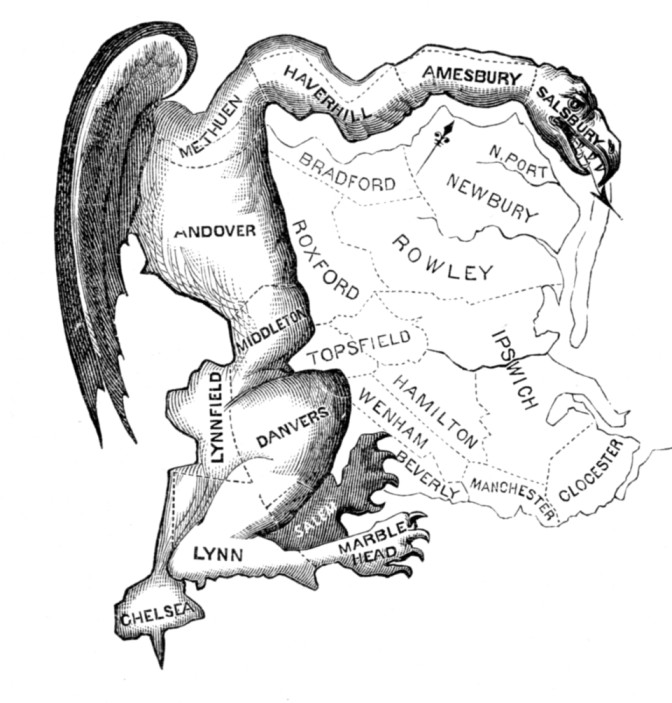
In this interview, Dr. Magra briefly mentions Elbridge Gerry, an American Founding Father who later became vice president of the United States and whose name gave rise to the term “gerrymandering.” If you are interested in the history of gerrymandering and how it relates to contemporary political developments, see my interview with Dr. Shawn J. Donahue: “Can Gerrymandering Backfire on the Party Pushing for It?”
Treaty of Paris
In this interview, Dr. Magra explains how fishing rights became one of the most important sticking points for American peace negotiators. To better understand the Treaty of Paris (1783), see my interview with Dr. Eliga Gould, who argues that the treaty was one of America’s founding documents.
 Why the Treaty of Paris Was More Than a Peace Agreement
No Legislation Without Representation
The rallying cry that most of us learned about the American Revolution is “no taxation without representation.” But as Dr. Harvey Kaye explained in another interview in this program, a better formulation of the colonial grievance is “no legislation without representation.”
That distinction fits well with Dr. Magra’s argument. The central issue for New England’s fishermen was not the Stamp Act or the Tea Act, both of which involved taxes imposed without representation. Rather, it was Parliament’s power to regulate and restrict their livelihoods. As Dr. Magra explains, the New England Restraining Act (also known as the New England Trade and Fisheries Act) directly targeted the fishing industry and helped mobilize maritime workers against British rule.
Here is my interview with Dr. Kaye: “How Thomas Paine Became Thomas Paine: The Origins of ‘Common Sense’“.
 From Rebellion to Revolution
About This Program
Analyzing American Revolution (AAR) is a special series podcast production of the History Behind News program. In this series, 33 professors (and counting) analyze the American Revolution from 33 different angles through in-depth interviews with host Adel Aali.
Meet Our Guest Scholars
A structured body of thought on the American Revolution—where leading scholars advancing distinct interpretations that give this program its depth.

Thematic Collection
Tap below for a closer look at the Revolutionary Era themes we examine—and to meet our guest scholars.

Library
- Interview Transcript Highlights
- Interview Image and Artist Highlights
- Quiz Answers and Backstories

Image Gallery
Explore the backstories and artist bios behind images of our Founding—before and after the American Revolution. These visuals shape how we remember—and reimagine—the Revolutionary Era.

Support AAR
AAR is an independent program built on sustained research, preparation, and production. Your support helps continue this series and expand our program.

Experienced Analysis of History
About HbN Program
The History Behind News program (HbN) is committed to making in-depth history researched and written by scholars enjoyable and accessible to everyone. Our motto is bridging scholarly works to everyday news.
The histories we’ve uncovered encompass an impressively wide range of subjects from ancient history to U.S. politics and economy to race, women’s rights, immigration, climate, science, military, war, China, Europe, Middle East, Russia & Ukraine, Africa and the Americas to many other issues in the news. We also receive advanced copies of scholarly books and discuss them in our program (in the context of current news).

Adel Aali, host. Snapshot from his introductory video to AAR podcast.
233 Scholars & Counting
Our guests are scholars at leading institutions. They are highly recognized, having received prestigious grants and fellowships as well as notable awards, including the Pulitzer Prize. They include celebrated documentary producers, former White House advisors and other high-ranking government officials, and current and former senior reporters of major national and international newspapers. Many have testified in Congressional hearings, and others frequently contribute to major media outlets and widely read publications.
Think You Know the American Revolution?