Updated: August 2, 2026
Introduction
In this interview: “The memory of the Revolution has often done more to divide Americans than to unite them.”
Watch this segment in the video below (00:27:30)
Most Americans think the meaning of the American Revolution has always been obvious.
But has it?
Did Americans always celebrate the Declaration of Independence the way we do today? Did the Founding generation even agree about what the Revolution meant?
If liberty and equality are America’s founding ideals… why have Americans spent more than two centuries arguing over what those words actually mean?
And who gets to define the Revolution? Can its meaning change over time?
In this interview, Dr. Michael Hattem argues that the American Revolution has never had a single, fixed meaning. Instead, every generation has reinterpreted it in light of its own political struggles, cultural priorities, and national challenges. From abolitionists and Civil War politicians to Cold War conservatives and modern Americans, the Revolution has remained one of the nation’s most powerful—and most contested—sources of political identity.
Video
Watch the full interview with Dr. Hattem (timestamped outline below)
Key Themes
- The Invention of the “Founding Fathers”
- The Declaration versus the Constitution
- Who Defines Liberty and Equality?
- From British History to American History
- History in the Service of Politics
Central Question
Is the meaning of the American Revolution fixed by 1776—or has every generation rewritten it to serve its own historical moment?

How to Use This Post
Use this post as reference guide to the American Revolution through the lens of this interview and the broader Analyzing American Revolution program (AARevolution). Navigate using the interactive table of contents above and the timestamps below (in gray) to discover how this interview deepens the story of the Revolution—and to explore how the program unfolds: its key themes, insights, image gallery, scholars list, history quizzes, and related interviews across the series.
The American Revolution Has Never Meant Just One Thing
The central argument of this interview is both simple and surprising: Americans have never agreed on what the American Revolution means. That disagreement did not begin in the twentieth century—or even after the Civil War. According to Dr. Michael Hattem, it began with the Founding generation itself. Federalists and Jeffersonians offered competing interpretations of the Revolution, and later generations continued that debate as new political, social, and cultural conflicts emerged.
Perhaps the clearest example is the changing meaning of the Declaration of Independence. Today, many Americans immediately think of its famous assertion that “all men are created equal.” Yet, as Dr. Hattem explains, early nineteenth-century Americans primarily valued the Declaration as the document that justified independence from Great Britain. It was abolitionists in the 1830s who first elevated the preamble—and its language of liberty and equality—to the center of American political thought. As sectional conflict intensified, many Southern writers responded by diminishing the Declaration while elevating the Constitution because they believed it protected slavery. By the time Abraham Lincoln delivered the Gettysburg Address, the Declaration had acquired an entirely new place in America’s understanding of its own founding.
This pattern extends well beyond the nineteenth century. Dr. Hattem argues that every generation has reinterpreted the Revolution according to its own circumstances. During the Cold War, for example, many Americans came to understand the Revolution through the language of individual liberty, limited government, and free-market capitalism—an interpretation shaped as much by the geopolitical struggle against the Soviet Union as by the events of 1776 themselves. The Revolution, therefore, is not simply a historical event. It is an ongoing conversation about the nation’s values, one that Americans continue to revisit and redefine.
About My 222nd Guest: Dr. Michael Hattem
Dr. Michael Hattem is the Associate Director of the Yale-New Haven Teachers Institute and a historian of the American Revolution and Popular Memory. He is one of the nation’s “leading scholars of the Revolution” and the foremost expert on how it has been remembered. Dr. Hattem has authored the following books:
- The Memory of ’76: The Revolution in American History, which won the 2025 George Washington Prize Finalist
- Past and Prologue: Politics and Memory in the American Revolution
- The Declaration of Independence – A Concise History
 Books by Dr. Hattem
About This Post’s Featured Image
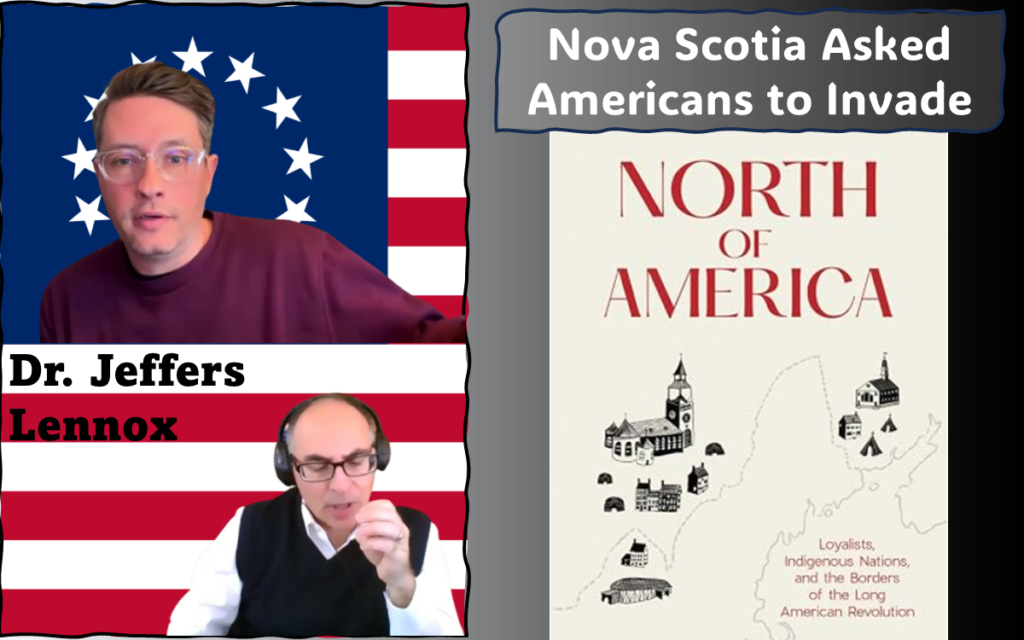
Image of Adel Aali (program host) and his guest, Dr. Michael Hattem, superimposed on the Betsy Ross flag, along with cover image of Dr. Hattem’s book, titled The Memory of ’76 – The Revolution in American History.
Unless otherwise indicated, all images in AAR—including those in this post—are in the public domain.
AAR Essential Insights
Although the full video and transcript of my conversation with Dr. Hattem are included in this post, I’ve selected and summarized several insights that I found particularly revealing and worth emphasizing. These moments — some surprising, others that challenge familiar assumptions — help us see how the American Revolution has been remembered throughout our history.
By the way, these insights are my own takes and interpretations from the interview. For Dr. Hattem’s perspective and exact framing, please watch the interview above and view the transcript below in the corresponding sections.
The “Founding Fathers” Were Invented in 1916
When I asked Dr. Hattem whether the phrase “Founding Fathers” was really a 20th-century invention, I expected a historical footnote. Instead, it opened a much larger conversation about how Americans remember their past.
Most of us assume the term dates back to the Revolution itself. It does not. Dr. Hattem explains that Warren G. Harding (who would become the 29th U.S. President in 1921) coined the phrase in 1916 as historians were beginning to challenge the traditional, almost heroic image of the nation’s founders. In other words, the label wasn’t inherited from the Revolution. It was created more than 140 years later, during a debate over how the Revolution should be understood.
That realization changed the way I think about the language of history. We often assume that words simply describe history. Sometimes they reshape it. Calling the founders our “Founding Fathers” does more than identify a generation. It suggests authority, reverence, even a parent-child relationship. If they are the fathers, what role does that leave for the rest of us?
Dr. Hattem also makes another subtle point that deserves attention. The phrase reflects the culture of 1916 at least as much as it reflects the culture of 1776. Ideas about parenthood, authority, citizenship, and even gender were woven into the language itself. Once the term became ubiquitous, Americans gradually forgot that it had ever been invented at all.
That may be one of the biggest lessons from this interview: even the words we use to describe the American Revolution have their own history.
Watch this segment in the video above (00:04:18)
The Revolution’s Symbols Weren’t Always Sacred
One of the biggest surprises for me in this interview was realizing that many of the Revolution’s most cherished symbols were not always treated with the reverence they command today. We often assume the Declaration of Independence, the Constitution, and the Liberty Bell have always occupied a sacred place in American life. Dr. Hattem shows that this was anything but inevitable.
For much of the nineteenth century, the Declaration of Independence received surprisingly little care. It spent years stored in a drawer at the State Department, was later housed in the Patent Office, and eventually made its way to the Library of Congress. Even preservation efforts sometimes caused more harm than good. It wasn’t until the twentieth century—after the Declaration had noticeably deteriorated, after it was safeguarded at Fort Knox during World War II, and finally transferred to the National Archives—that Americans began treating these documents as national treasures requiring extraordinary protection.
The Liberty Bell tells a similar story. After the Civil War, it was sent across the country as a gesture of national reconciliation, giving millions of Americans—especially those far from the original Revolutionary landscape—the opportunity to see, touch, and emotionally connect with the Revolution for the first time. For many people in the Midwest and the West, the Revolution had existed only in books and paintings. Suddenly, it rolled into town on a train.
What struck me is that neither story is really about a document or a bell. Both are about memory. As Americans changed the way they understood the Revolution, they also changed the way they cared for its symbols. Objects that had once been treated as historical artifacts gradually became national icons, helping each generation build its own connection to the nation’s founding.
Watch this segment in the video above (10:26, 35:22)

United States Declaration of Independence
Left: The signed Declaration, now badly faded because of poor preservation practices during the 19th century. In this interview, Dr. Hattem explains how this founding document eventually came to the National Archives in Washington, D.C., where it remains on display. Right: The 1823 facsimile of Timothy Matlack’s engrossed copy of the Declaration.
The Declaration and the Constitution Were Once Rivals
Growing up, I thought the ideals of liberty and equality had always gone hand in hand. They seemed inseparable—timeless principles that had defined the American Revolution from the very beginning. Dr. Hattem argues that the story is far more complicated.
He explains that the Declaration of Independence was not originally celebrated for its soaring language about equality. In the early nineteenth century, Americans focused primarily on its list of grievances against King George III because the document symbolized independence itself. According to Dr. Hattem, it was the abolitionist movement in the 1830s that elevated the Declaration’s famous preamble and transformed liberty and equality into the defining ideals of the Revolution.
That reinterpretation sparked a profound political divide. Abolitionists embraced the Declaration because its language supported their campaign against slavery, while many Southerners increasingly turned to the Constitution, which they believed protected the institution of slavery. As Dr. Hattem puts it, abolitionists hoped the Declaration would save the nation from slavery, while Southerners hoped the Constitution would save slavery from the Declaration. For many Americans before the Civil War, the nation’s two founding documents were not complementary—they stood in tension with one another.
The story did not end with the Civil War. Abraham Lincoln helped redefine the Declaration during the Civil War by placing liberty and equality at the center of the nation’s identity, but Americans still disagreed over what those ideals actually meant. During the Cold War, another reinterpretation emerged, one that emphasized individual liberty, limited government, and free markets as the defining principles of the American founding. In that framework, the Declaration and the Constitution were finally reconciled into a single narrative—a view that still shapes how many Americans understand the Revolution today.
Perhaps the most important lesson is that America’s founding ideals have never been static. Every generation has inherited the same words, but not necessarily the same meanings.
Watch this segment in the video above (17:25)
 Page one of Jacob Shallus’ officially engrossed copy of the Constitution signed in Philadelphia by delegates of the Constitutional Convention in 1787. Shallus was was an American calligrapher who was the engrosser or penman of the original copy of the United States Constitution. The handwritten document that Shallus engrossed is on display in the Rotunda of the Charters of Freedom at the National Archives Building in Washington, D.C.
The Revolution Has Always Been Contested
One of the most thought-provoking moments in my conversation with Dr. Hattem came when I asked whether Americans have ever agreed on what the Revolution actually meant. His answer was immediate: absolutely not.
At first, that sounds surprising. We often think of the American Revolution as the nation’s shared origin story—a source of unity that all Americans understand in roughly the same way. Dr. Hattem argues the opposite. From the very beginning, Americans have debated its meaning. Jefferson and Hamilton disagreed about what the Revolution represented, and those disagreements continued long after the founding generation was gone.
What surprised me even more was Dr. Hattem’s suggestion that this persistent disagreement is actually healthy. Americans may disagree over what liberty means, what equality requires, or how the nation’s founding principles should be applied, but they continue to return to the Revolution because they believe those questions matter. The debate itself reflects a shared conviction that the Revolution remains central to the American experiment.
Dr. Hattem even makes the striking observation that the memory of the Revolution has often divided Americans more than it has united them. Yet that division should not necessarily be viewed as a weakness. If anything, it demonstrates that the Revolution has never become a relic of the past. Its ideas remain alive because every generation feels compelled to reinterpret them in light of its own challenges.
Perhaps that is the enduring lesson. Americans have never reached a final agreement about what the Revolution means—and maybe they were never supposed to.
Watch this segment in the video above (27:27)
 The Liberty Bell at Seattle’s King Street Station on July 14, 1915, en route to the Panama-Pacific International Exposition in San Francisco. According to Dr. Hattem, the “Liberty Bell Special” was the name of the open train car that carried the Bell across the country. In this interview, he recounts the fascinating story of how the Liberty Bell came to San Francisco, including domestic political machinations, the backdrop of World War I, remarkable crowd reactions along the route and even a foiled terrorist plot.
America’s Origin Story Was Carefully Constructed
One of the most fascinating ideas in my conversation with Dr. Hattem was that national identity is not simply inherited—it is constructed. Every nation develops stories about its origins, but those stories are often shaped as much by the needs of later generations as by the events themselves.
To illustrate this, Dr. Hattem points to an unexpected example. In the 1790s, Americans had won their political independence from Britain but, in many ways, still thought of themselves through a British lens. A group of writers and historians deliberately promoted Christopher Columbus as America’s national origin figure during the 300th anniversary of his voyage. Their goal was not historical precision. It was to give the young Republic an origin story that predated British colonization and helped establish a distinct American identity.
What makes this story even more remarkable is that the Columbus narrative did not remain fixed. Over the next two centuries, it took on entirely different meanings. It became associated with Manifest Destiny, later helped many Italian immigrants identify with their adopted country, and more recently has been challenged through a renewed focus on Indigenous peoples and the consequences of European colonization.
That broader point extends well beyond Columbus. As Dr. Hattem explains, historical memory evolves because societies continually reinterpret the past in light of present needs. The American Revolution is no exception. Its meaning has never been frozen in time, and perhaps that is one reason it remains so central to the nation’s identity.
In the end, I found Dr. Hattem’s conclusion especially compelling. Americans continue to argue about the Revolution not because it has lost its importance, but because it remains our shared origin story. The debate itself reflects a common belief that the nation’s founding still matters.
Watch this segment in the video above (1:00:11)
The Interview (S1E28): Adel Aali and Michael Hattem
In our conversation, Dr. Hattem addresses key questions about the memory of the American Revolution throughout U.S. history. The detailed outline and full transcript below supplement the video above.
Podcast
Watch the full interview on this page with the outline and transcript below, or take the conversation with you on the go through our Spotify podcast.
Outline
Click for Timestamped Outline
- Selected Highlights (00:00)
- Guest Introduction (02:36)
- The Surprising Origins of the “Founding Fathers” (03:52)
- Warren G. Harding Coins a National Phrase (04:32)
- Why Progressives Challenged the Founders (05:11) – Turning Point (06:10)
- How America’s Founding Documents Became Sacred (10:25)
- The Declaration of Independence in a State Department Drawer (11:15)
- From the Library of Congress to Fort Knox (12:47) – Key Moment (15:54)
- Who Changed the Meaning of the Declaration of Independence? (16:27)
- Why Abolitionists Reclaimed the Declaration (18:00)
- Why Many Southerners Elevated the Constitution Instead (19:08) – Turning Point (19:43)
- Liberty, Equality, and the Battle over America’s Founding Ideals (20:30)
- Abraham Lincoln and the Gettysburg Address (20:48)
- The Cold War Reinvents the American Revolution (24:23) – Key Moment (25:48)
- Have Americans Ever Agreed on What the Revolution Means? (27:25)
- Why Historical Memory Divides as Well as Unites (27:43)
- The Revolution as America’s Continuing Political Debate (28:55)
- Remembering the Revolution Beyond the Fourth of July (29:15)
- Patriotism, Public Celebrations, and Commercial America (29:44)
- Why Historical Memory Becomes More Contentious (33:27) – Turning Point (34:05)
- The Liberty Bell’s Journey Across America (35:37)
- Reuniting the Nation after the Civil War (36:54)
- The 1915 National Tour and an Assassination Plot (39:56) – Key Moment (41:22)
- When the American Revolution Became Treason (44:24)
- The Spirit of ’76 and World War I (45:55)
- Robert Goldstein’s Conviction and the Lost Film (50:43)
- How Americans Created Their Own National History (55:12)
- From British History to American History (55:57)
- Constructing a Shared National Past (58:39)
- Nation-Building, Columbus, and the Revolution’s Changing Memory (01:00:26)
- Why Americans Chose Christopher Columbus as an Origin Story (01:00:26)
- Why Every Generation Redefines the Revolution (01:07:54)
- Just One Point (01:10:14)
Transcript
Note: This transcript was generated automatically and may contain minor errors. It is provided for reference and accessibility only.
Click to View Transcript
Adel:
Dr. Hattem:, it’s a pleasure to have you on our program’s special series. Thank you for taking the time for this conversation with me about the American Revolution. Before we dig deep into the meaning and memory of the American Revolution, for which I invited you to our program, I want to start with two points about our nation’s founding, two points that surprised me.
The first is this. Is it true that the phrase founding fathers is a 20th century creation? I feel weird even asking that question.
Like founding fathers?
Dr. Hattem:
Yeah, it’s funny. The fact that you have that feeling is actually part of the story of it. It is a 20th century creation.
It was created in 1916 by Warren Harding at the Republican National Convention that year.
Adel:
Oh, before he was president.
Dr. Hattem:
Before he was president, that’s right. Part of the reason for that is there had been a couple of high-profile books published in the years before that by so-called progressives, by historians of the progressive era. These were historians who were interested in demythologizing the revolution and in thinking more about the role of class conflict in the revolution and in American history.
Adel:
Oh, wow. That is progressive.
Dr. Hattem:
Charles Beard is the most famous of those. His book is The Economic Interpretation of the Constitution of the United States. Basically, he argued in the book that the founders at the Constitutional Convention voted according to the type of wealth that they had.
They voted according to their own self-interests, basically. Like the South versus the North.
Adel:
Yeah, yeah.
Dr. Hattem:
The landowners voted for different things while the more commercial people, the delegates who had more commercial wealth that was bound up in trade and things like that, they voted differently. It was subsequently disproved, but at the time, it was hugely controversial because of the way that it brought the founders down to earth with quite a thud. There were stories in newspapers across the country about this scandalous book.
So Warren G. Harding is essentially … He coins this phrase in response to these …
These are the first challenges or the first efforts to demythologize the founders. The term Founding Fathers is coined in response to that specifically. Wow.
Then it caught on and- It catches on, of course. It becomes ubiquitous. It’s one of the most ubiquitous phrases, I think, relative to American history in the entire 20th century, and so much to the point that it becomes so popular and so just widely accepted that its origins get forgotten.
It just feels like it’s always been there.
Adel:
Were you surprised or shocked when you learned this? I know quite a bit about American history, and when I learned it, I’m like, wait, I literally read it again.
Dr. Hattem:
Well, I knew that fact before I worked on the book, so I knew that it had those earlier origins, and I think I probably was shocked the first time that I heard specifically when it came. The thing is, though, that it has origins, right? People in the 19th century, they might refer to the people, certain figures of the founding generation as fathers.
Jefferson was called the father of American independence, right? Lincoln would talk a lot about the fathers, the fathers of independence, the fathers of the nation, things like that, but that specific term, founding fathers, is very much a 20th century invention. In a lot of ways, it had all the connotations that go along with this idea of parenthood, right?
There’s a parentalness that’s implied in that term. If you think about what were gender roles like in 1916, right? Those kinds of ideas are embedded in that term, founding fathers, which is the idea that, to draw on a 1950s TV show, the founding fathers knew best, right?
The idea was that to be patriotic citizens was, in some sense, to be the well-behaved and obedient children to the founding fathers, right? People like Beard and those others who criticized them were, in some sense, they were the prodigal sons in that sort of analogy.
Adel:
This almost sounds similar to the concept of, I don’t know, parenthood, sort of how Europeans in the 17th century and early 18th century sort of kings and elites and aristocrats and nobles said, we essentially, we are your betters and we are your, but this is, this doesn’t go that far.
Dr. Hattem:
Yeah. Well, it’s not class-based. Not explicitly.
Of course, it implicitly is because all those founders were wealthy elites, right? So that’s kind of embedded in there. But because the United States had a long culture, if not reality, of social mobility, right?
Class is not a thing that Americans have routinely talked about, right? It’s one of the unspoken things that Americans don’t talk about because it doesn’t conform to the national narrative or the national myth, right? And so that’s not embedded in that term, founding fathers, though, of course, the implication is there for anybody who starts to actually think about it, right?
Adel:
Yeah. The second point that surprised me is this, as I understand it, in 1952, the National Archives convinced President Truman that the original copies of the Declaration of Independence and the Constitution should be housed in a more sort of secure, permanent place, i.e. the National Archives. At first I sort of read it and I didn’t think much about it.
But then I reflected on this, like the Constitution, the Declaration of Independence, these are like growing up, you know, go back to school, these are like sacred objects to us. How were they cared for before 1952 then? Who was in charge?
Dr. Hattem:
I don’t think you’re going to like this very much. Oh boy. Okay.
So for much of the 19th century, they were barely cared for. So for example, the Declaration of Independence, for decades, sat in a drawer in the State Department. Wow.
Yes. And actually for a while, it was actually also housed in the Patent Office.
Adel:
Wow, wow, wow. I used to practice patent law, so I like that part.
Dr. Hattem:
But still, that’s not the right place for it. Well, because the documents did not have the connotation that you just described, that they’re almost sacred documents, right? One historian called the American Scripture, right?
And it is, that’s true. That’s how a lot of Americans have thought about it. I thought of it that way, yeah.
In the 20th century, but before the 20th century, that’s not really the case. And I think you’re going to find that, like, we talk about these weird episodes from my book, you know, the 20th century is very different from the 19th century and how we remember the revolution. Before 1952, for about 20 or 30 years before that, the documents had finally made their way to the Library of Congress, at least, where they were held.
And there was an effort during the Roosevelt administration to move these documents to the National Archives, which Roosevelt established in the early 30s. But the librarian at the Library of Congress was a guy named Herbert Putnam. And he was very proud of the fact that the Library of Congress had these documents.
And he was the one who had gone to the State Department, picked up the documents, put them in a mail sack, and then drove them over to the Library of Congress, you know. And so he was very possessive of these documents, and so much so, and he was also such an ordinary character, that when the head of the National Archives, the new National Archives, went to President Roosevelt and said, look, we’ve got to get the Declaration of the Constitution over here, Roosevelt said, look, we basically, we have to wait for Putnam to die before we can do that. Which they did, which they did.
He died in the 40s, and that’s when it… But also, it’s partly, it does have to do with what you said, which was this idea of needing to protect and preserve these documents. So the Declaration, for example, went on display in Philadelphia in 1876 for the big centennial.
And it was so faded that almost everyone who viewed it was almost struck with despair at the condition of the Declaration, that it was basically unreadable 150 years ago. And so, as a result of that, money was appropriated by the Congress for preservation efforts, right? But the…
Adel:
Well, thank God they did that.
Dr. Hattem:
The buy-in for preservation was not good in the late 19th century, and they ended up doing lots of stuff to it that actually did more harm than good.
Adel:
Oh, boy.
Dr. Hattem:
And so then, after that is sort of when it finally makes its way to the Library of Congress. But when it goes, during World War II, after the attack on Pearl Harbor, there was a real concern about an attack on the mainland United States. And so they moved the Declaration and the Constitution from the Library of Congress to Fort Knox.
Oh, wow. Yeah. And for a couple of years, the documents sat there in a vault, basically waiting for the war to be over, because there was a real concern about if there was an attack on Washington, D.C., what could be more symbolic for the Axis forces than to destroy the Declaration of Independence or the U.S. Constitution? Exactly. So when they came back is when the real plan started to be made to move them to the National Archives. And that’s where they built a special encasement for them.
And at the end of each night, the documents could then be lowered into a vault underneath the ground that was supposedly able to withstand an atomic bomb.
Adel:
Oh, wow.
Dr. Hattem:
And— And so it’s the Cold War that promotes those efforts to— Oh, wow.
Adel:
And then, I guess, thanks to Nicolas Cage from the movie National Treasure, we all know that.
Dr. Hattem:
If you find that 18th century document, do not put lemon juice on it.
Adel:
My advice as a historian. That’s so—Dr. Hattem:, I want to—I told you before we get deep into this conversation, I had two points. We shared that.
I asked you about those two points. Now, I’m going to get deep about your book. And I’m going to start with two specific words.
I want to go back to my school years, our collective school years. We learned that liberty and equality were two fundamental ideals of our founding. In fact, it’s not something that I practiced, but if you ask anyone, they’d probably say liberty and inequality in the same breath.
It sort of just rolls off your tongue. But as I understand it in your book, which is titled The Memory of 76, The Revolution in American History, you make the case that these ideals of the revolution diverged and they were sort of appropriated by opposing cultural or political factions, groups. Am I close to the mark here?
Dr. Hattem:
The thing you have to understand first about the Declaration of Independence is that the Declaration of Independence was not initially celebrated for the preamble, the part that we celebrate, the part that people from the 20th century until now have thought is the most important. Instead, in the early 19th century, the part that was most important was the grievances because it was the justification for independence. The document symbolized independence and union, the union of the states.
It’s not until the 1830s and with the rise of the abolitionist movement that that starts to change. The modern memory of the Declaration of Independence as being defined by the ideas of liberty and equality and by that rousing preamble with this universal statement of human rights, the abolitionists are the first ones to talk about the Declaration in that way. Abolitionist orders drew on the Declaration all the time.
It was the thing that connected their movement to the founding. And so, it was an important part of abolitionist rhetoric. What happens after that, of course, is that in the 1850s, as the Civil War is approaching, Southerners have this interesting moment where they start to reject the Declaration of Independence because it’s got these statements of equality in it.
And that is not working for Southerners.
Adel:
Reject? You mean they outright reject?
Dr. Hattem:
Yes, or at the very least, they diminish it. They see all these abolitionists running around quoting the Declaration of Independence, and so they try to diminish it. They say, oh, that statement, all men are created equal, that one Southern writer called it a rhetorical flourish.
It was just a rhetorical flourish. It didn’t really have any meaning.
Adel:
We think of that as the most important line.
Dr. Hattem:
Of course. But for them, what was the most important revolutionary document was the Constitution because it was protecting slavery. And for the abolitionists, they saw the Declaration as the fundamental document of the revolution and the Constitution, they criticized because it was protecting slavery.
So I write in the book that essentially what happened was you have abolitionists who were hoping that the Declaration would save the nation from slavery. But then you have Southerners who are hoping that the Constitution would save slavery from the Declaration. So you have these two sides in American politics, and each has adopted one of the nation’s two founding documents as their own and see them as mutually opposing.
The Declaration and the Constitution are not reconcilable to many people in the 19th century. They are fundamentally different documents. Wow.
So then if we continue this story, the most famous moment and probably why we all learned in school these terms of liberty and equality is really not necessarily because of the Declaration, but because of Abraham Lincoln and the Gettysburg Address. In the Gettysburg Address in November of 1863, Lincoln, in this short address, basically makes this argument that the abolitionists had been making for 20, 30 years, which is that the Declaration is the document that defines the revolution and the nation, and the Declaration is defined by these two ideals of liberty and equality, and that liberty and equality are what gave birth to this new birth of freedom, this nation conceived in liberty and dedicated to the proposition that all men are created equal. Of course, generations of American students grew up having to memorize the Gettysburg Address. But the interesting thing about it is that the Gettysburg Address did not create some kind of consensus amongst Americans.
It’s not so much about the importance of liberty and equality, but about what they meant. We have never agreed about what liberty or equality means. Is liberty of the society as a whole, or is it individual liberty?
That’s an idea that is going to crop up in the late 19th and early 20th centuries and really complicate how people think about the Declaration. Is equality—what does that mean? Does that mean racial equality?
Does it mean gender equality? Does it just mean equality before the law? We have always debated what these two terms have meant.
Their definitions have never been fixed. But after the Civil War and after emancipation specifically, some Americans, Southern Americans especially, they have to readopt the Declaration, which they have essentially rejected to declare their independence or to secede. They have to readopt it.
One of the ways that they do this to make themselves able to do that is that they reinterpret the idea of liberty as individual liberty, liberty of the individual, and that any attempts to legislate, to address inequality, are infringements of their individual liberties. This is an idea that grows out of reconstruction. This is an idea that they came up with in the late 19th century that really catches on in the early to mid-20th century.
Lots of Americans still subscribe to that view. It’s a valid interpretation. Whether you think it’s correct or not, it’s a valid interpretation.
The point that I want to make is that thinking of the liberty that Jefferson talks about in the Declaration as the liberty of the individual was not something that Jefferson himself intended. That’s a meaning that has been attached to it in the 200 years since. But once you do that, it changes the meaning of the Declaration, I think, quite significantly.
And to finish the story, to take it up to why we learned these things in school, is that during the Cold War, in the 1950s especially, this idea of individual liberty and the Declaration caught on so widely for various reasons. The Cold War conservatives in the 1950s were able to create this memory of the revolution that was based on three principles, individual liberty from the Declaration, the limited government, which is the principle at the heart of the Constitution, they argued, and free trade or capitalism. And think about all three of those.
Each of those three is in direct contrast to the Soviet Union. The Soviet Union is collectivist, not individualist. The Soviet Union has a large bureaucracy, not a limited government.
And the Soviet Union has a socialist and centrally planned economy, not free trade or capitalism. So they defined the revolution in the 1950s in a way that would help us distinguish ourselves from this new Cold War enemy of the Soviet Union. But the great genius of what they did was that they found a way to reconcile the Declaration and the Constitution, which had really never been done before.
Even all the way up until the 50s, many Americans saw those two documents as fundamentally opposing documents. But in this new interpretation, the individual liberty proclaimed by the Declaration is protected by the Constitution limiting government. And if you have those two things, then free trade can flourish and the pursuit of happiness can happen.
But they reconciled the Declaration and the Constitution really for the first time in a rather logical way, so much so that that Cold War memory, many Americans still, 50 years after the Cold War has ended, still think about the American Revolution in those terms, individual liberty, limited government, free trade, right?
Adel:
And I said that’s a torturous sort of interpretation because that’s based on my reading of history. That’s not how I understood Jefferson wrote the Declaration and meant that. You know, you said we Americans have never agreed on what equality and liberty, those specific terms, meant and mean.
Arguably, we still disagree about them. So are we Americans in agreement or have we been in agreement over the centuries on what the Revolution meant? Yeah, absolutely not.
Dr. Hattem:
And that’s fundamentally what the book is about. The book is about the different and especially conflicting ways during each period of American history that I structure the book by, the different ways that we’ve remembered the Revolution and fought over what it meant. The founding generation did not agree about what the American Revolution meant, right?
That’s why we get the first party system because Jefferson and Hamilton think the Revolution are two very different things, right? So it’s natural that we should not agree about what the American Revolution meant. It’s natural, and I would argue a good thing, that we don’t agree on what liberty and equality mean.
If we agree on one thing, I think that the book shows, and I write in the book that the memory of the Revolution has often done more to divide Americans than to unite them. But I do think that that’s a good thing. And the reason why is that there is a consensus there, at the very least, that we all agree that the Revolution was important and that the ideas of liberty and equality are important, are foundational to the United States, right?
We don’t agree about what those terms mean or what the Revolution means writ large, but we agree that those things are so important that they are worth fighting over. And that’s not nothing.
Adel:
ED HARRISON Yeah, yeah. And we do things now to remember the American Revolution and celebrate it. I don’t mean celebrate like every 4th of July.
These are programs, projects, institutions, museums, and even merchandising that just are all year long. I’m familiar with that, obviously. How was the memory of the American Revolution—not the 4th of July, that’s not what I’m talking about—celebrated or observed, let’s say, in the early 1900s, late 1800s, whenever, in the past?
STEPHEN ROSE Yeah.
Dr. Hattem:
Well, in the late 1800s, it’s primarily celebrated by the 4th of July. And everywhere would have fireworks and they would have orations by some local figure. There would be a public reading of the Declaration of Independence.
That was common in the 1780s, 1790s, 1800s. And in fact, when the first two parties, political parties emerged, the Democrats and the Republicans, they fight over who’s going to have control over those 4th of July celebrations. We see that in lots and lots of places.
I want to say the commercial aspect that you mentioned is kind of interesting and something I didn’t know about much before the book. But the origins of all those things that you mentioned are addressed in the book. But the commercial stuff, after George Washington’s death in 1799, there was widespread interest in purchasing things that had his name or image on them, you know, handkerchiefs, things like that, you know, prints of a portrait or whatnot.
And we see that again in the 1820s during the Jubilee, the 50th anniversary and Lafayette’s visit right before that. So you see, I mean, I found like things like snuff boxes with Lafayette’s face on them, all kinds of weird things, you know. But it really accelerates after the Civil War in the late 19th and early 20th centuries when the founders, especially, they start to become really commercialized.
It’s like I found like an old catalog from 1910 from some furniture company, like a mail order catalog from a furniture company in North Carolina. And every one of their dressers that they had, you know, each one was named after a founder. So there was the Washington model, which was the biggest, right?
There was the Jefferson high boy, the Franklin chest, you know. And it’s just emblematic of the ways that you would start to see, you know, their images and their memories being commodified, right, in the early 20th century as everything else is becoming commodified. And I mean, you know, Washington’s face used to be on a cereal that was called Washington’s crisps, which is basically like cornflakes, like 1910’s cornflakes, you know.
But so, you know, the founding fathers, I wrote in the book that commercial people in the early 20th century realized that the founding fathers did not just inspire patriotism, they could also inspire Americans to part with their money. That’s funny.
Adel:
And it’s true. As I was preparing for our conversation, in a review, I read this about your book. And it says that remembering the revolution at some point started to become more vehement and consequential.
I use those in quotation marks, more vehement and consequential. What does that mean?
Dr. Hattem:
Well, I think, you know, it is the case that at times our fights, our public disagreements or conflicts over what the revolution meant, you know, has had times when it’s been more vehement and more consequential. And what I found in the book is basically that that happens. It’s basically like when moments where what is perceived to be at stake in these conflicts over what the revolution means, that those stakes are raised by certain conditions.
And what I found was that some of those conditions are in moments of unusually high political partisanship. That’s one. A second is during an economic downturn.
A third is at in times of high immigration or perceived high immigration for that matter. And another is when a major anniversary is approaching. And so if you look at that list, I think you realize it right now, which is that we are heading into a sort of perfect storm for raising the stakes.
Adel:
Yeah. Wow. A period of high political partisanship, economic downturn, high immigration and major anniversary, like the 250th anniversary of the Declaration of Independence.
Let’s take a break here. In the next segment, I asked Dr. Adam, when and why Americans set aside British history and embrace their own colonial history instead. We’ll be right back.
Dr. Adam, before we get on with this segment, I just want to mention one of my favorite stories about your book was the Liberty Bell tour. And I’d love for you to share that with the audience, please.
Dr. Hattem:
Yeah. So this was interesting to me. This is something that I didn’t know beforehand before working on the book.
So after the Civil War, there’s a real sense of, you know, that the nation needs to be knit back together. North and South needs to be knit back together. And, you know, the South, as we kind of alluded to before, really kind of had to reject the Declaration and the Constitution to secede.
Right. And so part of the South and the North coming back together was going to involve the memory of the revolution in some way. Right.
And so the centennial anniversary in 1876, just before Reconstruction ends, is supposed to do some of that work, you know, of bringing the nation back together. There’s still a lot of suspicion on both sides. But one of the other things that happens is that the Liberty Bell, which, of course, is in Philadelphia at the State House or the Independence Hall, which becomes in the 1830s or 40s or so, the Liberty Bell is sent on tours outside of Philadelphia.
It’s basically sent to different major events in the South, like, you know, like World’s Fairs or state fairs or things like that, like big expositions. And it’s sort of an expression of, you know, of the desire by Philadelphia and the state of Pennsylvania, you know, it’s a sign of goodwill towards the southern state. So it goes to Louisiana, it goes to North Carolina, it goes to St. Louis. And it usually just goes for a couple of days for whatever event, and then it comes home. So this is going on all through the late 19th century. And it’s a meaningful thing for people to come out and see the Liberty Bell.
Of course, what a lot of Southerners didn’t know at the time was that the name Liberty Bell was coined by abolitionists in the 1840s. But nobody needed to talk about that. But so this is happening for some decades, and it’s doing some work in that regard.
And then in the 1910s, Philadelphia had basically decided, look, this thing is fragile, and we need to stop sending it out to different places. So they were basically going to retire the Liberty Bell from traveling. And they did all kinds of structural scientific tests on it, you know.
And then World War I is approaching. And in 1915, the mayor of San Francisco was going to host the Panama Pacific International Exposition, like a West Coast version of the World’s Fair. And the mayor of San Francisco desperately wanted the Liberty Bell to be on display at this exposition.
And so he started a sort of national write-in campaign, getting schoolchildren to write in letters to the White House, asking that the Liberty Bell be sent to California. Of course, the White House does not control the Liberty Bell. It’s owned by the city and the state.
But Wilson eventually felt like, okay, I think this should happen. And he cajoled the officials in Philadelphia and Pennsylvania to go along with this one last trip to the Liberty Bell. And so the Liberty Bell was put on a train car called the Liberty Bell Special, that was just an open train car, right?
So you could just see it as it’s going by. It was illuminated. It had lights on it.
So all night long, it would be illuminated.
Adel:
Was it exposed to the elements or did it have a glass on it?
Dr. Hattem:
It was, though they would cover it if it started raining or something like that, but otherwise, yeah, it was just out there, right? And the train charted a route that went west from Philadelphia, all through the Midwest, up to Washington State, down the coast, all the way to San Francisco. And it’s fascinating.
We have newspaper accounts. We have photographs from historical societies all through the Midwest and the Northwest of the day that the Liberty Bell passed through their town. And people would come out, and in bigger towns or cities, it might stop for 20 minutes, right?
And the whole town would turn out, waiting to see the Liberty Bell. And then it would stop and people would go up and they would touch it. Old people would kiss the bell, right?
And it was this real emotional experience. And we have newspaper accounts from Lake Montana, where it’s a newspaper account of an old woman who walked 20 miles to be able to just to see the Liberty Bell pass by, not even stop. So we have all these emotional stories of people connecting to seeing the Liberty Bell in person.
And eventually, it goes to San Francisco. It’s there for months. It’s the most photographed object.
And in fact, I found silent film footage of the bell in San Francisco from 1915, which is really, really cool, like silent newsreel footage. While it’s there, it is the subject of a plot. So there was a conspiracy hatched by people who wanted the US to get involved in World War I, to blow up the Liberty Bell.
And it’s only averted when one of the workers at the fair that they paid to make sure it was unguarded or whatever, decided not to do it and turn them in. But otherwise, the Liberty Bell came that close to being blown up in San Francisco. On its way back, it goes through the Southwest and through the South.
And in Texas, some town in Texas, I forget which one, there’s a large crowd that turns out to see the Liberty Bell, white and black. And a young African American girl goes up to the bell and kisses the bell and nearly sets off a race riot. Wow.
Yeah. And that’s reported in the Chicago African American newspapers in Chicago. Eventually, the bell comes back to Philadelphia, and then it is declared in retirement.
It’s never leaving the State House again. But the thing that’s interesting about this, for me as a historian, is one of the questions I had in coming into this book is, I grew up in the Northeast. I grew up in New Jersey, New York.
So I grew up in places where the revolution happened. But I always wondered, how if you live in the Midwest?
Adel:
Or California, like me.
Dr. Hattem:
California, like you. How did those people develop an emotional connection to the memory of the revolution if you’re so geographically removed from it? And the Liberty Bell is part of that story.
These are people out West who had no physical connection to the memory of the revolution. They’d seen all the paintings. They’d seen the prints.
They’d read the history books when they were kids and everything. But they never had a chance to touch the revolution until the Liberty Bell came through their town in 1915. Countless historical societies throughout the Midwest and the West have photographs or postcards made of when the bell was in their town.
It was a huge event for these small towns that the Liberty Bell came through. And people wrote about it. And what it meant to them to get to see and touch this part of the revolution.
Adel:
This is such a wonderful and big story. I knew a little bit about it. I’m so glad I asked that.
It was one of the favorite things as I was preparing for this conversation. Do you have a favorite story? That was my favorite story.
Do you have a favorite story from your book?
Dr. Hattem:
Well, I do. And it’s right around the same time. Okay, so it’s a story of how the first man to produce a full-length movie about the American Revolution ended up- Same time you’re talking what?
Adel:
Like 1915?
Dr. Hattem:
We’re talking 1917 to 1919. Robert Goldstein was this Jewish-German-American costumer in Los Angeles. And he had actually done some work and was a small investor on D.W. Griffith’s Birth of a Nation, which was one of the first big blockbuster films in Hollywood. It was a silent film. But if you don’t know it, it’s a very racist account of the Civil War and what happened after, which accounts for a lot of its popularity at the time. So Goldstein thought, well, if this big drama, this big historical epic film about the Civil War did so well, what about an epic film about the American Revolution?
So he sets out to raise money to write, produce, and direct the film himself, even though he really had no experience doing any of those things. But he raised enough money to make this movie. And he wrote a script, and it was called The Spirit of 76.
And just from what we know, it’s a crazy story about King George having an Indian mistress who’s scheming to be the queen of America. But it incorporates all these famous revolutionary moments, like Paul Revere’s ride, you know, the Lexington and Concord, the signing of the Declaration, all these historical events. And so once the movie is done, Goldstein takes it to Chicago to do a preview.
This is in 1918. And at the preview were some critics and the city’s police censor board. And the reason that they’re there is that a few months earlier, the federal government had passed the Espionage Act, which was passed to crack down on dissent against the war, right?
Crack down on anti-war speech. So the movie goes to Chicago, the censor board is there for a preview. The critics who previewed it ended up writing that it was a patriotic film, you know, and people would enjoy it.
But the police censor board did not agree. And I have to tell you that the head of the censor board, his name was Major Metallus Lucullus Cicero Funkhouser.
Adel:
I won’t attempt to repeat that, Dr. Hatton.
Dr. Hattem:
Yeah. So he seizes the film. And the reason why is there are a couple scenes in the film that depict British atrocities during the revolution.
One of them is a scene where a bunch of British soldiers sort of ransack an American house. And they go into this room, and there’s like a baby’s crib there. And a soldier drives his sword through the baby’s crib, implying that there’s a baby in there, right?
But obviously, you don’t see that. Another is like other soldiers ransacking a home and sort of accosting a young American woman, you know. And these scenes, Funkhouser said, you know, these scenes are going to make Americans suspicious of England, who are the new allies in the war, right?
All the 19th century, the US and England are not allies, the US and Britain are not allies. That only starts to change around the turn of the 20th century, right? And now with World War One coming, this new allied, this new relationship with Britain as allies is becoming that much more important.
And Funkhouser thinks that if Americans saw these scenes, that it would cause them to question, you know, whether Great Britain was their ally by reminding them of these bad things from the revolution. All through the 19th century, kids learned that England was the evil empire in the nation’s origin story, right? But that was changing in the early 20th century.
So the censor board sends the film to the Justice Department. And this Justice Department says, look, you can show the film, but you got to remove these scenes. So Goldstein agrees, and the scenes are removed, and it’s shown in Chicago, like a preview.
Then he goes back to Los Angeles in the fall for the big premiere of this film that he’s been working for years on. And we don’t know why, we just do not know why. But for some reason, he put the scenes back in.
And it’s not clear if he did it because of his artistic integrity or what.
Adel:
Maybe he thought they were dramatic. Maybe he thought, I don’t know, controversy, hence fame.
Dr. Hattem:
I mean, Goldstein grew up in the late 19th century when what he would have learned at school was the narrative that, you know, Great Britain was the evil empire, the tyrannical empire that we had to declare independence from, right? And so the film is shown with the deleted scenes in its premiere in November.
Adel:
And he is- With the deleted scenes reinserted.
Dr. Hattem:
Yes.
Adel:
Yeah. Okay.
Dr. Hattem:
Yeah. And he is arrested immediately after the showing. And he is, you know, put in prison.
He awaits trial. During this time while he’s awaiting trial, the LA newspapers are on a feeding frenzy over this story. And the idea is that he’s a German agent who is making this movie to make Americans suspicious of England, or that he’s just the dupe of German agents, you know, like a sort of useful idiot kind of thing.
The LA Times is particularly egregious. They would do these stories, like there was a story about some German spy who was caught in LA doing something and arrested. And then the last paragraph of the story would then mention Goldstein and the film, even though they had no connection to that story.
But so anyway- I was like, here’s a link.
Adel:
Yeah.
Dr. Hattem:
Yeah. So a couple months later, he’s put on trial and he’s found guilty of treason under the Espionage Act for giving aid and comfort to the enemy by making the first ever full-length feature film about the American Revolution.
Adel:
That is such a wild story.
Dr. Hattem:
Now, it gets worse, if you can imagine, because after the war ends, he is released early because of a review of the Espionage Act cases after the war is over. And he got an early release, and this is in the early 20s, and he takes the film and he goes to New York and he tries to get it shown. He’s going to revive the film.
But it gets shown once in New York City, from what I can tell, and that’s it. And the reviews were kind of tepid. And so now he is a convicted felon for treason, and he can’t get work in the United States.
So he eventually leaves the United States, where he was born, to go to Europe to look for work in the late 20s, early 30s. Not a great time for a Jewish-German-American to be going to Europe. And he last turns up in the historical record in Berlin in 35, where he is arrested for being unable to afford to renew his passport.
Adel:
Oh.
Dr. Hattem:
And that is the last that we know about Robert Goldstein, the man who was imprisoned for treason for making the first full-length feature film about the American Revolution. And the second part is…
Adel:
Go ahead.
Dr. Hattem:
No, that turns out so badly, so sad. The sad part is, the tragic part is, is that if he’d made the movie like two years earlier, or even two years later, everything would have been different. But he was at the wrong place at the wrong time.
He did not realize that the geopolitical events that were occurring were having a real impact on the memory of the American Revolution. So this memory that he had learned about Britain in the late 19th century, by 1918, that memory was not just outdated, it had become legally treasonous.
Adel:
Yeah, wow, wow.
Dr. Hattem:
So it’s an example of how external international politics can affect how we remember the revolution.
Adel:
The story of the first major film about the American Revolution.
Dr. Hattem:
First full-length feature film, because there had been shorts, many shorts, 10 short movies, but there’d never been a full-length feature film. And the most sad part, perhaps, is that no copy of that film has ever been found. So The Spirit of 76, the first movie about the American Revolution, is lost to time.
Adel:
Wow. What a shame. What a shame.
It is a shame. For looking into history and research, this is truly a shame. I’m sorry to hear that.
Dr. Hattem:, you have a few more moments for me? Wonderful. I want to ask you about another book of yours.
Its title is Past and Prologue, Politics and Memory in the American Revolution. And your book raises the following fascinating point. I mentioned it at the closing of the prior segment in our conversation.
And it’s this. So the Seven Years’ War, which we call the Indian and the French War here in our country, ends in 1763. Right.
What happens after that to how Americans read history? What were they reading before? And what do they start reading afterwards?
This is a big sort of transformation here.
Dr. Hattem:
So this is the book that was my first book. And it came from my dissertation as a graduate student. But the question at the heart of it was, historians will often tell you that after the Seven Years’ War in 1763, Americans had never been prouder to be British subjects.
And then, of course, but then the question that you have to answer if you’re a historian of the revolution is, how do you go from that in 1763 to independence just 13 years later? How do you explain that? But one of the interesting parts about it that I came across that sort of inspired the book and the dissertation and then the book was the fact that American colonists in the 1760s and before, they thought of British history and English history as their history.
So the Glorious Revolution of 1688 was our glorious revolution of 1688, our ancient constitution. They really thought of the British past as their history. And but, of course, by the time that you get to 1800 and the revolution is over and it’s settled, that’s not the case anymore.
And so I wondered, well, how does that happen? How do some people go from thinking something is part of their past to not thinking and thinking totally different? And what I found was this fascinating process by which Americans stopped thinking of the British past as their history and then effectively go on to create what we think of as American history to replace it.
And that’s a process that occurs over the long course of the revolutionary era.
Adel:
So they start reading more colonial history.
Dr. Hattem:
Well, it’s not just about reading. It is partly. All the colonial histories before the revolution are individual colonial history of Virginia, history of New Hampshire, New York, right?
And they all stress the colonies’ connections to England and to Britain, certainly in their origins, but even elsewhere. And it’s not until after the revolution that we start to see combined histories of the colonies, right? And that’s an example because it’s a sense that the colonies have a shared history together.
And part of the reason for that, that they start to think that, is because in the 1760s, they realized that they have a shared political interests in the 1760s once the parliament starts to do all these reforms to them, right? So how they’re thinking about politics in the present is changing how they think about the past. And so we get the, you might think that the idea that the history of the United States begins with the colonial histories of all the colonies, right?
In a sort of an aggregate, combined. That seems like an obvious thing, right?
Adel:
Yeah.
Dr. Hattem:
But it’s not, but it wasn’t. It was, that’s a decision, that’s a product of decisions that were made by historians in the 18th century, right? And the idea is of the whole book is about having an awareness that American history is something that was constructed, right?
That was constructed in a specific time for a specific purpose. And of course, we’ve done many different things with it over the course of 250 years. But it is the idea that how American history was constructed was through choices made by people, and often not super elite, well-known people.
Adel:
Yeah, yeah. So this raises an interesting question, and it’s something that you and I discussed during a break. And I want to talk about nation building.
It’s something I’m familiar with, and many scholars in my other program, History Behind News, have talked about nation building in the Middle East, in China, in Europe in the 19th century. You just mentioned, these are your words, American history was constructed. Is there, do you see any issues or dangers in glorifying the history of the American Revolution?
I happen to love it. Hey, I’m doing this program. Isn’t that part of nation building?
All these other nations do it. They glorify, like, go to China, go to Russia, anywhere. We were just in Scotland this year, and talk about glorifying your past.
So, yeah. Do you see any issues there?
Dr. Hattem:
I mean, I have a lot of historian friends who I think would agree with that idea, you know, that glorifying the revolution, you know, is dangerous or has dangerous consequences. Why? Yeah, go ahead, please.
I don’t think, I don’t agree with that. On the one hand, it can have dangerous consequences in some instances, but that’s not, but that’s more a function of, you know, certain people that are receiving it. So, for example, I talk about in the book about how in the 1990s, you know, the memory of the revolution was very important to the revival of the right-wing militia movement.
You know, if you think about the bombing of the Oklahoma City Federal Building, you know, and, you know, the perpetrator of the bombing, Timothy McVeigh, when he was arrested, was wearing a t-shirt with a Thomas Jefferson quote on it, you know. Now, you know, is some people who celebrate the revolution or glorify, whatever that means, are they responsible for what Timothy McVeigh did? You know, like, it’s more, I mean, it can be a consequence, but, you know, there can be, there can be dangerous and negative consequences to de-glorify the revolution, or de-mythologizing the revolution, right?
Those, but those consequences are not inherent in the memory of the revolution. I want to give you an example of what I had talked about before. And this is, has a direct relevance to the idea of the nation building.
In the 1790s, the revolution is over. There is a sense, you know, that Americans, they have political independence from Britain, but they don’t yet have a real sense of cultural independence. They’re still very British culturally, right?
And so one of the things that they do is, in the 1790s, a group of men who I called cultural nationalists, right, were, they were writers and, you know, historians and antiquarians and things like that. They decided that they were going to use the 300th anniversary of Columbus in 1792 to really promote the story that Columbus was the discoverer of the United States.
Adel:
Wait, the United States? Yes. Huh.
Yes.
Dr. Hattem:
Now, of course, Columbus never stepped foot on the North American continent, right? He was in the Caribbean. But that’s, as you will see from reading any of my books, facts are not the most important thing.
Accuracy is not the most important thing when it comes to a successful historical memory. And so they devise a whole series of events throughout the country in 1792. Monuments are erected to Christopher Columbus.
All kinds of events are held throughout the country. And they basically effectively create the modern memory of Christopher Columbus as the origin story of the United States. And the reason that they did this is because he is not British.
He did not sail for England.
Adel:
Oh, wow. Are you saying Columbus in contrast to Mayflower?
Dr. Hattem:
Henry Hudson, John Cabot, Henry Hudson. These are the kinds of people, if you asked Americans in the 1760s, when they were still British, who discovered America, they would mention some English sailor like Hudson or Cabot, right? And people still thought that after the revolution.
And these men were like, we need to change that. We can’t get cultural independence from Britain if our origin story is still rooted in them, right? So we need an origin story that takes us beyond British colonialism entirely, right?
Because Columbus predates British colonialism by 150 years. So they create this new national origin story that transcends Britain, that transcends British colonialism, and goes all the way back to Christopher Columbus. And then the Columbus myth then takes on a life of its own.
Because in the 19th century, it’s used to justify the westward movement of people across the continent. So it’s like Columbus becomes the originator of manifest destiny, right? And then in the late 19th century, as immigration from Southern Europe is growing in huge numbers, the memory of Columbus as an Italian, even though Italy did not exist in 1492, but Italian Americans adopted Columbus as a symbol, as a way of making themselves feel more part of this new nation that they had immigrated to, right?
To assimilate into the United States, these new immigrant populations use the symbol of Columbus. That’s why every Italian community has a Knights of Columbus, you know, watch, right?
Adel:
Yeah, yeah.
Dr. Hattem:
So and then, of course, in the late 20th century, the memory of Columbus is used as a way of raising awareness about the effects of colonization on indigenous people. And in many places, Columbus Day is now called Indigenous People’s Day. So, you know, this myth that they created for a specific purpose in 1792 has had all these subsequent lives, you know, it changes according to the political circumstances and the political needs.
And that’s how historical memory works generally. And the revolution is no exception.
Adel:
Yeah, if I may just share my own take on all of this is we can dissect the American Revolution and analyze it. And that’s a wonderful thing. Many, many nations don’t get to do that.
You don’t get to even question the past, because this is what your government tells you is the history. Here, we have the privilege, we have the freedom to do it. Having said all of that, you may, I think you agree with this.
I think it’s really important to glorify a nation’s history. And in that there’s so many details, and you can talk about it. Generally, to celebrate and to have some sort of common past is really good for a nation.
Otherwise, especially with a nation like ours, that’s full of immigrants, including my own past. Otherwise, it just becomes a mixed salad. There’s no cohesion.
And there’s a lot of sort of dilemmas and dichotomies in there, right?
Dr. Hattem:
Of course. And that’s the case with anything, right? But I do think that the book shows, you know, that it reinforces the idea that history is an important part of what makes people feel like they are part of a nation.
Adel:
Yeah, exactly.
Dr. Hattem:
And in my case, I think the fact that people, again, that we fight over what the revolution means, I think that’s fine. Because I think it shows that we all agree, to some extent, that the revolution is important and that it’s foundational to the United States, right? And in the book, I call it the memory of the revolution, the American origin myth.
It’s our origin story. And origin stories are always contested. And people always want to have the meanings attributed to them that are important to them.
And that’s a good thing. So I think, you know, the fact that we fight over the revolution is actually a good thing, because there’s an underlying assumption of a shared assumption of importance.
Adel:
So you’re all part of a family.
Dr. Hattem:
Of national identity.
Adel:
Yeah. Yeah. It’s like you’re all part of a family and you squabble about something and that’s a good thing.
That means you value it. If you wanted our audience to remember just one point about the memory of the American Revolution, after everything we’ve talked about, what would that be?
Dr. Hattem:
I mean, besides for the last thing, I would say is that you should come away from the book understanding that the meaning of the revolution and the meaning of the ideals that we attach to the revolution, like liberty and equality, that the meaning of these things has been, you know, redefined and changed over time according to, you know, whatever the contexts were at the time. And that that is a good thing. And that means that it is up to us today, especially as the 250th anniversary approaches, to rethink what the revolution means to us as the current American generation, right?
To rethink what does liberty, what does liberty mean to me in 2025 or 2026? What does equality mean to me in 2026? That’s what abolitionists did in the 1830s.
That’s what Frederick Douglass did in the 1850s. It’s what, you know, Susan B. Anthony and the suffragists did in the late 19th and early 20th centuries.
It’s what Martin Luther King Jr. did in the 1950s and 1960s, right, when he talks about the Declaration of Independence as a promissory note, right? But the memory of the revolution is there to be defined and redefined. And so we should take this coming anniversary as a real civic opportunity, even more than a historical opportunity, a civic opportunity to rethink what our most fundamental values are and what they mean to us in the present.
Adel:
That’s a wonderful closing, Dr. Adam. Thank you for sharing that. Dr. Adam, thank you so much for educating me and our audience about the American Revolution. And to our audience, if you know of any history that could provide more perspective about the American Revolution, please share it with us and tell us what’s your perspective. Thank you so very much. This was wonderful.
Dr. Hattem:
Thanks for having me.
Related Interviews and Essays
7 Months in ’76
►My interview with Dr. Edward Larson – “1776: Seven Months That Changed America”
 1776 Was More Than a Year of Independence
About This Program
Analyzing American Revolution (AAR) is a special series podcast production of the History Behind News program. In this series, 33 professors (and counting) analyze the American Revolution from 33 different angles through in-depth interviews with host Adel Aali.
Meet Our Guest Scholars
A structured body of thought on the American Revolution—where leading scholars advancing distinct interpretations that give this program its depth.

Thematic Collection
Tap below for a closer look at the Revolutionary Era themes we examine—and to meet our guest scholars.

Library
- Interview Transcript Highlights
- Interview Image and Artist Highlights
- Quiz Answers and Backstories

Image Gallery
Explore the backstories and artist bios behind images of our Founding—before and after the American Revolution. These visuals shape how we remember—and reimagine—the Revolutionary Era.

Support AAR
AAR is an independent program built on sustained research, preparation, and production. Your support helps continue this series and expand our program.

Experienced Analysis of History
About HbN Program
The History Behind News program (HbN) is committed to making in-depth history researched and written by scholars enjoyable and accessible to everyone. Our motto is bridging scholarly works to everyday news.
The histories we’ve uncovered encompass an impressively wide range of subjects from ancient history to U.S. politics and economy to race, women’s rights, immigration, climate, science, military, war, China, Europe, Middle East, Russia & Ukraine, Africa and the Americas to many other issues in the news. We also receive advanced copies of scholarly books and discuss them in our program (in the context of current news).

Adel Aali, host. Snapshot from his introductory video to AAR podcast.
232 Scholars & Counting
Our guests are scholars at leading institutions. They are highly recognized, having received prestigious grants and fellowships as well as notable awards, including the Pulitzer Prize. They include celebrated documentary producers, former White House advisors and other high-ranking government officials, and current and former senior reporters of major national and international newspapers. Many have testified in Congressional hearings, and others frequently contribute to major media outlets and widely read publications.
Think You Know the American Revolution?