Updated: April 20, 2026
Intellectual Foundations of the American Revolution — Part II
The Enlightenment is often called the “Age of Reason,” but that label only tells part of the story.
While thinkers emphasized logic and skepticism—building on earlier figures like René Descartes—they also recognized that reason alone could be misleading if it wasn’t grounded in real-world observation. Unlike earlier scholastic traditions, Enlightenment thinkers increasingly insisted on starting with experience and evidence, then reasoning from there.
This approach reflected the growing influence of the Scientific Revolution, as its methods were applied beyond science to questions about society, politics, and human behavior. In that sense, the Enlightenment was not just about reasoning more—but about reasoning differently, rooted in evidence and lived experience.
Age of Enlightenment and Age of Revolution
The “Age of Enlightenment” and the “Age of Revolution” overlap in time, but their relationship is more complex than simple cause and effect. Major upheavals like the American Revolution and the French Revolution drew on Enlightenment ideas, but were also driven by social tensions, financial crises, and imperial pressures.
How Enlightenment Ideas Shaped Revolutionary Thought
Rather than directly causing revolutions, the Enlightenment provided a powerful vocabulary—concepts like liberty, rights, and popular sovereignty—that shaped how revolutionaries understood and justified their actions. These ideas influenced not just revolutionaries, but also their opponents, showing how widely they had spread.
In that sense, the Enlightenment helped define the language and framework of revolutionary change, even if it did not determine when or why revolutions occurred.
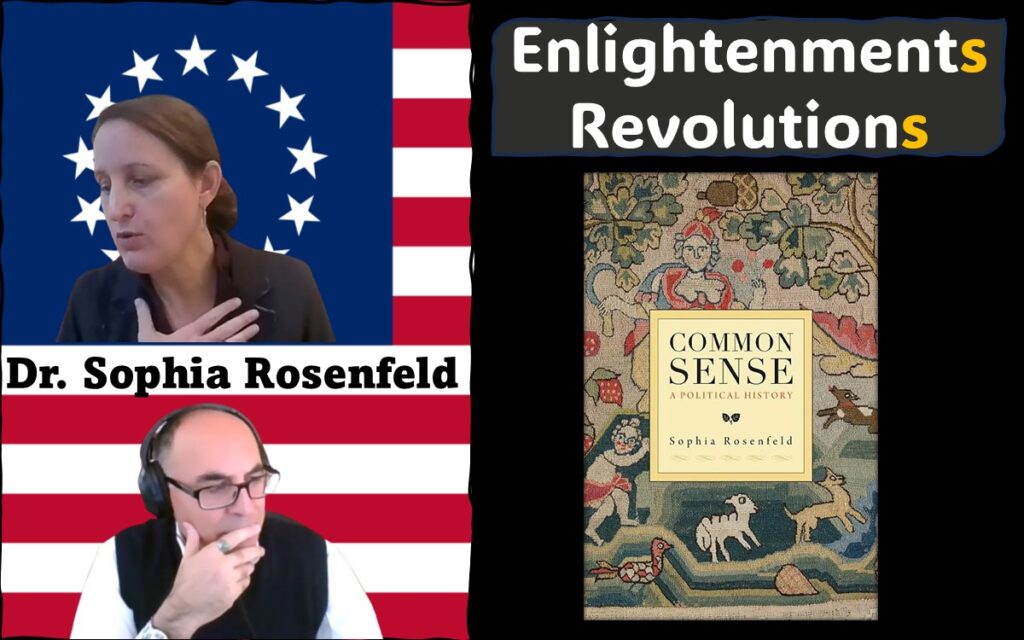
Here is the portion of my interview with Dr. Sophia Rosenfeld that speaks directly to these points.
About Featured Images
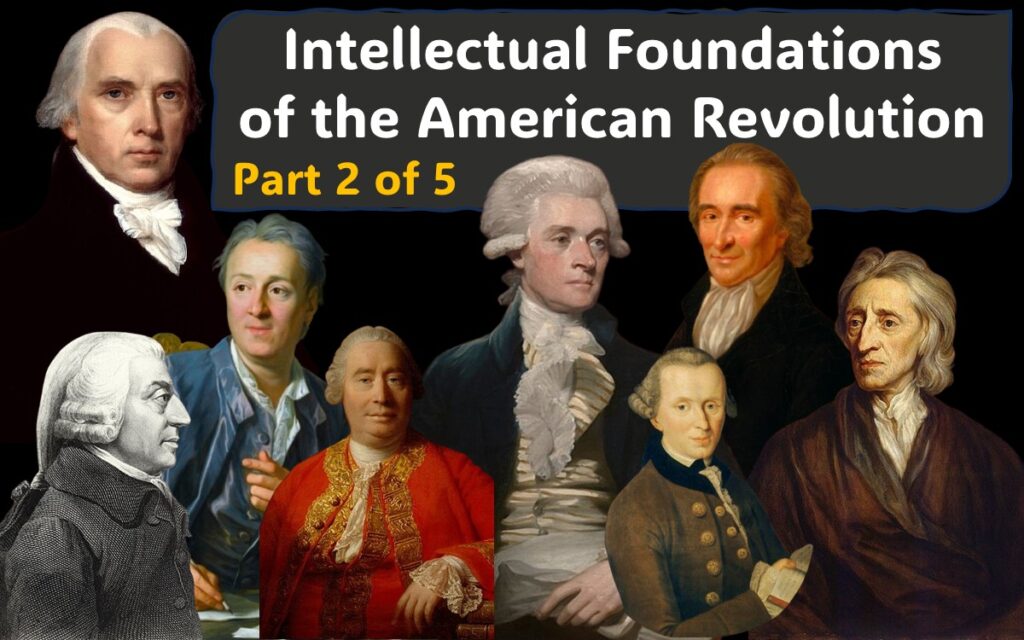
Left to right: Adam Smith, James Madison (above Smith), Denis Diderot, David Hume, Thomas Jefferson, Immanuel Kant, Thomas Paine (above Kant), and John Locke.
Unless otherwise indicated, all images in AARevolution—including those in this post—are in the public domain.
Related Interviews and Essays
For more on the subject on the impact of the Age of Enlightenment on the American Revolution and our Founding Fathers, see my full conversation with Dr. Sophia Rosenfeld—including our interview’s video, timestamps for key sections, and my takeaways.
 The Enlightenment and Intellectual Foundations of the American Revolution
Dr. Rosenfeld’s major works include the following:
- The Age of Choice: A History of Freedom in the Modern World
- Common Sense: A Political History
- A Revolution in Language: The Problem of Signs in Late Eighteenth-Century France
- Democracy and Truth: A Short History”
This 5-Part Series
- Part I: The Enlightenment Is Hard to Define
- Part II: Age of Enlightenment, Reason, and Revolution (this essay)
- Part III: The Enlightenment’s Impact on the American Revolution
- Part IV: Common Sense and Reason in the American Revolution
- Part V: The Enlightenment and the Power of Reflection
About This Program
Analyzing American Revolution (AAR) is a special series podcast production of the History Behind News program. In this series, 33 professors (and counting) analyze the American Revolution from 33 different angles through in-depth interviews with host Adel Aali.
Thematic Collection
Tap below for a closer look at the Revolutionary Era themes we examine—and to meet our guest scholars.

Library
- Interview Transcript Highlights
- Interview Image and Artist Highlights
- Quiz Answers and Backstories

Image Gallery
Explore the backstories and artist bios behind images of our Founding—before and after the American Revolution. These visuals shape how we remember—and reimagine—the Revolutionary Era.

Experienced Analysis of History
About HbN Program
The History Behind News program (HbN) is committed to making in-depth history researched and written by scholars enjoyable and accessible to everyone. Our motto is bridging scholarly works to everyday news.
The histories we’ve uncovered encompass an impressively wide range of subjects from ancient history to U.S. politics and economy to race, women’s rights, immigration, climate, science, military, war, China, Europe, Middle East, Russia & Ukraine, Africa and the Americas to many other issues in the news. We also receive advanced copies of scholarly books and discuss them in our program (in the context of current news).

Adel Aali, host. Snapshot from his introductory video to AAR podcast.
232 Scholars & Counting
Our guests are scholars at leading institutions. They are highly recognized, having received prestigious grants and fellowships as well as notable awards, including the Pulitzer Prize. They include celebrated documentary producers, former White House advisors and other high-ranking government officials, and current and former senior reporters of major national and international newspapers. Many have testified in Congressional hearings, and others frequently contribute to major media outlets and widely read publications.
Think You Know the American Revolution?