Updated: August 9, 2026
Introduction
In this interview: “I should also say that part of what’s going on in the colonies, and part of what, you know, intersects with the revolution is that colonists are inveterate smugglers…”
Watch this section in the video below (00:11:37).
Most Americans don’t immediately link China to the Revolution—but trade with East Asia was intimately woven into colonial life in the eighteenth century. Chinese tea, silk, and other luxury goods weren’t just consumables; they were status symbols that helped define social identity and economic aspiration in the British Atlantic world. Colonial access to these goods was structured through imperial trade networks, monopolies like the East India Company, and widespread smuggling that shaped both consumption and resentment.
As historian Dr. Dael Norwood explains in this interview, understanding how Chinese goods entered colonial markets, how colonists perceived those goods, and how debates over who controlled that trade helps us see the American Revolution not as a purely local struggle against taxation, but as part of a broader global trade system. From Guangzhou and London to Boston, from porcelain teapots to tea taxes, the connections between China and colonial America matter more than most textbooks let on.
This interview with Dr. Dael Norwood about colonial trade and consumer culture contributes to AARevolution program by showing how global connections, economic choices, and material culture shaped political and social life in the American colonies.

How to Use This Post
Use this post as reference guide to the American Revolution through the lens of this interview and the broader Analyzing American Revolution program (AARevolution). Navigate using the interactive table of contents above and the timestamps below (in gray) to discover how this interview deepens the story of the Revolution—and to explore how the program unfolds: its key themes, insights, image gallery, scholars list, history quizzes, and related interviews across the series.
Video
Watch the full interview (timestamps below)
China, Trade, and Consumer Goods in Colonial America
Long before the American Revolution ignited a global conflict, colonial Americans were already deeply enmeshed in a global web of trade. Goods from across the world—tea, silk, porcelain, and exotic spices—shaped daily life, social status, and even political debates. Among these imports, Chinese and Chinese-inspired products held a special place, not just for their rarity or beauty, but also as status symbols and tokens of connecting ordinary colonists to a larger, interconnected world.
Historian Dr. Dael Norwood emphasizes that understanding these trade patterns is crucial to understanding the Revolution itself. The importation of Chinese and Chinese-inspired goods through British merchants (and “inveterate” colonial smugglers) influenced not only consumption habits but also the ways Americans imagined their economic and political relationships with Britain. Tea, for example, was far more than a beverage—it symbolized imperial connections to Britain, status, and, eventually, defiance.
In this interview series, we explore how global trade networks, consumer culture, and perceptions of China influenced the political and social landscape of the colonies. From the merchant ships docking in Boston Harbor to the parlors and dining rooms of colonial homes, these connections help us see the American Revolution as part of a broader, international story—one that linked empire, economy, and everyday life across continents.
Central Question
This conversation raises a central question:
If China entered colonial life through empire and consumer desire, how did that connection shape both the American Revolution and the national state that followed?
About My 201st Guest: Dr. Dael Norwood
Dr. Dael Norwood is a professor in the History Department of the University of Delaware, a historian of nineteenth-century America specializing on the global dimensions of U.S. politics and economics. He is particularly interested in the political economy of commerce: how the ideas and practices of international exchange have affected Americans’ relations with other powers, as well as their dealings with each other.
He has published extensively on these subjects, including the following book, which we discuss in this interview: Trading in Freedom: How Trade with China Defined Early America. You can learn more about him by visiting his academic homepage and personal website.

About Featured Image
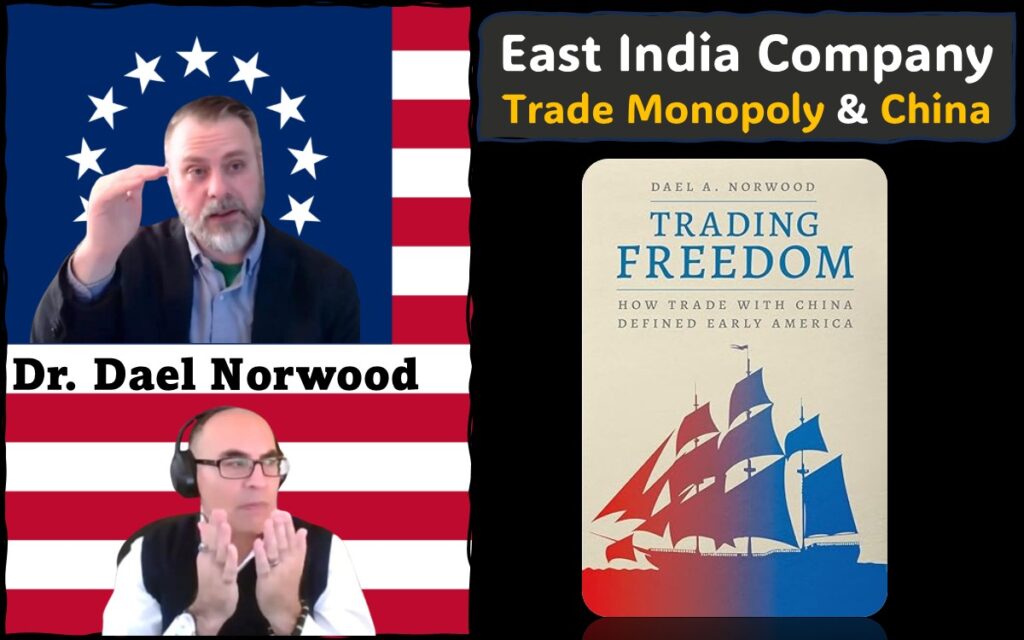
he featured image combines photos of Dr. Norwood and Adel Aali from the interview, set against the Betsy Ross flag, alongside the cover of his book, Trading Freedom: How Trade with China Defined Early America, which we discuss in this interview.
Unless otherwise indicated, all images in AAR—including those in this post—are in the public domain.
AAR Essential Insights
Although the full video and transcript of my conversation with Dr. Norwood are included in this post, I’ve selected and summarized several insights that I found particularly revealing and worth emphasizing. These moments — some surprising, others that challenge familiar assumptions — help us see the Boston Tea Party, the China trade and the American Revolution in a different light.
By the way, these insights are my own takes and interpretations from the interview. For Dr. Norwood’s perspective and exact framing, please watch the interview above and view the transcript below in the corresponding sections.
American Colonists Thought About China
Colonists thought of China not as a distant curiosity, but as a source of luxury goods that shaped status, taste, and social identity.
Tea, porcelain, and lacquerware were tied to British culture and elite aspiration, even inspiring local artisans to imitate East Asian styles. Access was limited by the East India Company’s trade monopoly, linking daily consumption to imperial control.
Britain and the American colonies experience a significant consumer revolution in the 1760s and 1770s. Although this made some goods more available, they remained markers of wealth and refinement. Tea, in particular, became both a status symbol and a political flashpoint, connecting China, commerce, and colonial resistance.
Watch this section in the video above (00:03:51).
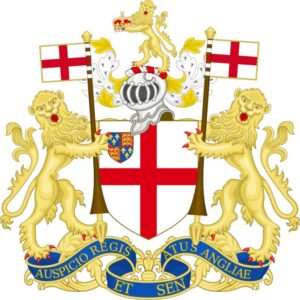 Coat of arms of the East India Company circa 1700s. (Public Domain).
Smuggling Was Big Business in the American Colonies
Smuggling was a cornerstone of colonial commerce, letting Americans access goods that the East India Company’s monopoly otherwise restricted.
Tea dominated both volume and value, followed by silk, cotton textiles like Nankeens, and porcelain, while lacquerware was often imitated locally.
Enforcement of trade restrictions was weak, and colonists—from merchants to adventurous privateers—regularly bypassed tariffs, sometimes through daring piracy in distant waters. This widespread evasion not only fueled consumer demand but also connected everyday commerce to broader imperial politics.
Smuggling helped colonists participate in global trade, shaping tastes, status, and economic independence in ways that fed revolutionary sentiment.
Watch this section in the video above (00:11:44).
Franklin’s Experiments with Tea and Silk
Some colonists, like Benjamin Franklin, looked at China and its products as business opportunities shaped by environmental circumstances, noting that Philadelphia shares a climate similar to Guangzhou, where tea is grown. They imagined growing tea or silk locally, hoping to replicate East Asian agricultural goods in the colonies.
While these efforts never fully succeeded, they show how colonists, thinking as British subjects, tried to match China’s productivity in practical ways. This curiosity highlights the global mindset behind colonial commerce—even if manufacturing or luxury production remained out of reach for the American colonies.
Watch this section in the video above (00:21:28).
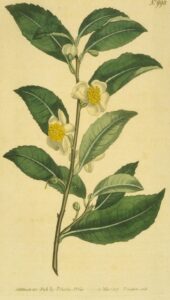 Bohea Tea tree. (Public Domain)
Bohea tea dominated tea consumption in the eighteenth-century Atlantic world. Bohea tea imported by Dutch merchants fueled widespread smuggling in the American colonies because it was cheaper than tea sold by the British East India Company. As colonists bypassed British tea monopolies, imperial efforts to reassert control—most notably the Tea Act of 1773—only intensified resistance, eventually leading to the Boston Tea Party and the other Tea Parties across the colonie
China Indirectly Affected British Trade and Tariff Enforcement
China didn’t directly spark the American Revolution, but trade with it shaped the context in which imperial policies and enforcement mattered.
British taxes, especially on tea, became flashpoints because they were visible, enforceable, and tied to trade the colonists valued. The Tea Act and other trade regulations highlighted a deeper struggle over authority—who controlled taxation, courts, and local enforcement. Smuggling and evasion further complicated matters, making trade both a practical and symbolic site of resistance.
In this way, China’s goods indirectly influenced colonial perceptions of imperial control and helped set the stage for wider debates over governance and rights.
Watch this section in the video above (00:25:08).
The East India Company’s Role in Colonial Unrest
The East India Company played a central role in colonial unrest by exposing how distant corporate and imperial interests could directly affect daily life in the colonies.
Its mismanagement in Bengal caused famine and millions of deaths, while its tea market failures threatened both its solvency and British investors in Parliament. To protect their interests, Parliament bailed out the Company through the Tea Act, giving it the power to sell tea directly in the colonies and bypass local merchants. This cut out smuggling, undermined local governance, and angered colonial elites who relied on trade for income and status.
The Act made imperial authority tangible and intrusive, turning a distant corporate crisis into a local flashpoint that helped ignite revolutionary sentiment. In short, the East India Company’s actions tied global commerce, corruption, and colonial resistance together in a way the colonists could see and feel.
Watch this section in the video above (00:28:05).
Who Controlled China Trade?
Continue watching at 32:05 in the video above.
Why the Boston Tea Party Became a Revolutionary Flashpoint
The Boston Tea Party became a revolutionary flashpoint because colonists saw the Tea Act as more than a tax—it symbolized corruption, tyranny, and the intrusion of imperial power into their daily lives.
They were aware of the famine caused by the East India Company in India and knew that British investors, including members of Parliament, profited from it. Radical colonists interpreted these moves through a lens of Whig political philosophy, seeing Parliament and the king as seeking to control property, commerce, and personal freedom. Leaders like Samuel Adams framed the Tea Act as “a new kind of slavery,” warning that allowing it would strip colonists of power and leave them politically degraded.
By resisting the landing of tea, the colonists were asserting control and challenging what they saw as an overreaching central government. The Boston Tea Party, therefore, wasn’t just about tea—it was a visible stand against corruption, imperial overreach, and threats to liberty, echoed in multiple ports beyond Boston.
Watch this section in the video above (00:31:58).
Beyond Boston: Other Colonial Tea Parties
Colonial resistance to the Tea Act wasn’t limited to Boston—other ports had their own responses, ranging from denying tea ships permission to dock to violent acts like Rhode Island’s burning of the Gaspee.
In Boston, Governor Hutchinson’s refusal to block the tea ships escalated tensions, leading radicals to act directly, though the Sons of Liberty relied on skilled workers to carry out the Tea Party efficiently and without murder. Boston became the focal point because Parliament’s harsh response—the Intolerable Acts—targeted the city, turning it into a symbol of imperial overreach and rallying other colonies to solidarity. Even moderates like George Washington recognized the extremity of the Boston protest but saw the need to support Boston against what they perceived as tyranny.
Overall, the varied colonial reactions to the Tea Act and Britain’s overreaction helped unify resistance and escalate the revolutionary movement.
Watch this section in the video above (00:34:16).
China Trade After Independence: American Strategies to Out-Compete British Trade in China
After independence, the United States moved quickly to enter the China trade, both to generate profits and to challenge British commercial dominance. John Adams and other nationalists argued that sending American ships directly to China could create leverage against Britain by threatening their trade monopoly.
The first ship, the Empress of China, sailed from New York Harbor in early 1784—ironically on George Washington’s birthday—carrying Spanish silver dollars (the global trade currency) and Appalachian ginseng, which Chinese markets demanded due to a temporary shortage of local supply.
The fledgling U.S. faced challenges: a weak, fragmented currency system and no formal treaties with other powers meant that financing these voyages required complex networks of stops, exchanges, and bartering to obtain silver for trade in China. Merchants developed a global “cabotage” system—moving goods like wheat, sugar, and luxury items through multiple ports in the Americas and Europe to convert them into silver or credit, which they could then use to buy Chinese tea, silks, and other goods.
Over time, Americans expanded the trade into luxury and specialty markets, sourcing sandalwood from Hawaii, sea slugs and bird’s nests in the Pacific, and furs from the Pacific Northwest and southern South America. These ventures often involved negotiating with or exploiting local populations to gather valuable goods. While the trade was profitable, it highlighted the limitations of the U.S.’s early financial and diplomatic systems and gave American merchants a far more realistic, global perspective on commerce than many politicians in Washington, who often imagined simpler, direct exchanges.
In short, independence allowed Americans to trade directly with China, but “direct” actually meant navigating a web of global intermediaries, complex financing, and intricate logistics—a far cry from the straightforward bilateral trade envisioned by policymakers.
Watch this section in the video above (00:40:22).
 American Ships in Guangzhou. The Thirteen Factories, the area of Guangzhou to which China’s Western trade was restricted from 1757 to 1842. (Public Domain).
How Drugs Shaped Early U.S.-China Trade
Early U.S.-China trade in the late 18th and early 19th centuries relied heavily on a mix of credit and opium, with American merchants depending on their connections with British traders in India to substitute for silver, while American politicians—mostly local gentry and slave owners—naively imagined that trade could be conducted directly from New York to China.
Watch this section in the video above (00:58:26).
The Interview (S1E3): Adel Aali and Dael Norwood
In our conversation, Dr. Norwood addressed important topics relating to the American Revolution. The detailed outline and transcript below supplement the video above.
Podcast
Watch the full interview on this page with the outline and transcript below, or take the conversation with you on the go through our Spotify podcast.

Outlline
Use the in-depth outline below to follow the discussion and navigate key moments in the interview.
Click for Timestamped Outline
- China Trade Before the Revolution
- Colonial Views of China within the British Empire (04:10)
- The East India Company Monopoly and Colonial Trade Limits (04:53)
- Tea, Porcelain, and Consumer Culture (06:00)
- The Consumer Revolution (08:31)
- Tea and Expanding Access Across Classes (09:38)
- Smuggling and Alternative Trade Networks (11:45)
- Dutch, Portuguese, and Pirate Trade (12:20)
- The “Red Sea Men” (12:36)
- Key Imports from China: Tea, Silk, and Textiles (13:45)
- Shopping, Social Networks, and Access to Goods (15:49)
- Correspondents and Ordering from London (16:35)
- Port Cities and Advertised Goods (17:33)
- Consumer Goods Beyond the Coast (19:39)
- Peddlers and Backcountry Trade (20:36)
- Imitation and Adaptation of Asian Goods (22:32)
- Porcelain and Textile Imitation in Europe (23:42)
- No Direct Trade with China Before the Revolution (24:53)
- Indirect China Effect – Revolutionary Era
- The American Revolution and Trade with China (25:15)
- Taxation, Enforcement, and Imperial Authority (26:01)
- The Tea Act and East India Company Crisis (28:03)
- Corruption, Tyranny, and Colonial Interpretation (31:44)
- Country Whig Ideology (32:06)
- Samuel Adams and “A New Kind of Slavery” (33:20)
- The Boston Tea Party in Broader Context (33:53)
- Multiple “Tea Parties” Across the Colonies (34:18)
- The Gaspee Affair (34:29)
- Governor Thomas Hutchinson (36:13)
- British Response and the Intolerable Acts (36:38)
- Colonial Solidarity and Resistance (37:20)
- George Washington’s Reaction (37:54)
- China’s Limited Role During the Revolution (39:40)
- The American Revolution and Trade with China (25:15)
- After the Revolution
- Independence and the Opening of Direct Trade (40:35)
- Treaty of Paris (40:26)
- John Adams and Trade Strategy (41:23)
- The First Voyage to China (42:58)
- The Empress of China (44:33)
- Silver and Ginseng Exports (44:33)
- Early Trade Challenges: Currency and Credit (48:32)
- Global Trade Networks and “Cabotage” (53:40)
- Multi-Stop Trade Routes (54:05)
- Fur, Sandalwood, and Pacific Trade (55:53)
- Merchants vs. Politicians: Competing Visions of Trade (57:47)
- Trade, Weak Government, and the Push for the Constitution (1:03:37)
- John Jay and the Federalist Argument (1:05:04)
- Trade Policy and Early U.S. Tariffs (1:05:46)
- Independence and the Opening of Direct Trade (40:35)
- Just One Point (1:05:54)
Transcript
Note: This transcript was generated automatically and may contain minor errors. It is provided for reference and accessibility only.
Click to View Transcript
Adel:
Dr. Norwood, it’s a pleasure to have you in our program’s special series. Thank you for taking the time for this conversation with me about the American Revolution. Before we talk about trade with China, the subject for which I invited you to our program, can you please paint a picture of how the American colonists thought about China?And I think you may appreciate why I’m asking that question, because for most of us Americans, when we think about the American Revolution, perhaps with the exception of the Boston Tea Party, we don’t really think about China, right? That’s not something that’s in the forefront of our mind.
Dr. Norwood:
Yeah, yeah. Well, thanks so much for having me. I mean, great question.So pre-revolution American colonists, meaning people in the British colonies, thought about China in… British subjects, essentially. Yeah, yeah, British subjects, right?
Adel:
Yeah.
Dr. Norwood:
…thought about China primarily in the context of their relationship to Great Britain, and that actually is something that continues post-revolution as well. But, you know, they’re British subjects. They are part of a very large empire that has placed a lot of focus on Asian trade, right?So legally, Americans, people living in North America and the Caribbean, cannot trade directly with China. That is a privilege reserved to the East India Company as a joint stock company and as a royal and then parliamentary monopoly company. So, and their monopoly is over a geographic region of trade.They’re the only ones who are allowed to mount voyages to South Asia, East Asia. In the lead-up to the American Revolution, the East India Company becomes a problem for American colonists. That enters their consciousness, and specifically what they’re doing in India, but also specifically what they’re doing with their tea trade.And that connects back up to the tea party. But kind of more generally, you know, Americans think about China as a very distant place that they sometimes get luxury goods from, and that the luxury goods from that area are, or the consumable goods, particularly tea, are part of the broader European and particularly British culture of gentility, of performing gentry status. So you see a lot of high-ranking colonist homes, and of course, you know, high-ranking colonists are kind of mid-level in the hierarchy back in Britain, right?There’s the kind of top is cut off. The aristocrats really don’t come to the colonies, but, you know, they’re drinking tea. They’re adding sugar to the tea, right?So there’s that Caribbean and this Chinese tea kind of situation. They’re drinking, they’re using porcelain vessels. For the most part of the Americas, those vessels are, you know, cups and saucers and stuff are coming from European imitations of Chinese porcelainware, chinaware, right?So that’s even the name of it. But we, you know, beginning in the middle of the 18th century or the first third of the 18th century, or second third of the 18th century, I should say, there’s increasing amounts of these kinds of goods in the colonies. The 18th century goes through what some historians call a consumer revolution, where there’s a lot more access to all kinds of trade goods.And a lot of those trade goods that are particularly important to the performance of elite status are trade goods that are from very far away, and specifically from East and South Asia. So, you know, tea, lacquerware cabinets. So there’s also a development within the colonies of artisanal and craft practices that mirror or imitate products that are coming from East Asia, lacquerware cabinets, Japanware, that kind of stuff.So that’s colonists trying to imitate or create a similar aesthetic in their homes, that they are, that they, you know, for the goods that they can’t afford, or maybe can’t as readily have. But so China is there is that kind of like, this is a high level consumer goods. And it’s deeply connected into their understanding of what the British Empire is offering them access to, which is a world of trade goods.And, and as the 1760s and 1770s heat up politically, the East India Company as the giant conglomerate that is doing terrible things. Yeah, doing terrible things. That is in leading to decisions in Parliament that are making colonists lives worse.
That is all tied up together.
Adel:
Um, you use the word consumer in two different phrases, that could mean separate things. You refer to the consumer revolution. Remind me again, what era did that start 1740s, 1750s?
Dr. Norwood:
Depends on where you’re talking about. In Europe, it’s a little bit in the it’s in the late 17th century. And actually, for Native American societies, they the the introduction of new kinds of consumer goods that change the way people perform status and perform social bonds with each other.
So in Europe, access to these things comes a little bit earlier than it does among white populations or enslaved populations in the colonies. But so we’re talking early 18th century and kind of continuing into the middle of the 18th century has a shift in culture, shift in culture, so consumer revolution.
Adel:
And that’s the phrase. That’s the term you use. Then you said, this is another phrase, you said high level consumer goods.
Arguably, those are two different things that consumer revolution is not. So when you say consumer revolution, we’re not talking about the entirety of the public. They’re not going to their to their Walmarts and Targets buying Chinese goods at that time, right?
This is for upper class. That’s what you mean by consumer.
Dr. Norwood:
As with a lot of luxuries, I mean, luxury start off the top of the chain and then they move down, right, in terms of what people desire. And also in this period, the way that global trade networks start to expand, start to tighten, starting to make more things more accessible to more people. So we find, you know, by the middle of the 18th century, there are some colonial elites, a guy by the name of Alexander Hamilton, no relation to the other one, is traveling up and down.
He keeps a diary of his travels up and down the East Coast, and he encounters what he considers to be, you know, rude and ungentile, meaning poor people drinking tea, but they’re drinking it the wrong way, right, for him. But that’s a, you know, they’re there, you know, he claims he finds a guy who’s just like eating it, you know, eating a brick of tea. And you’re like, that’s not how you’re supposed to do it.
That’s the case of priest just being a snob. But so by the middle of the 18th century, you know, tea is not necessarily an everyday thing for everybody, but it’s a widely established taste that like, you know, in the same way that, oh, you know, we’ve both lived through things that were once, you know, luxuries becoming more readily available. And we often attribute that to, oh, there’s better production processes or technology.
Yeah, sometimes. And sometimes it’s, you know, better trade access, more efficiencies in terms of travel, lower shipping costs.
Adel:
Yeah. Well, when I was growing up, cell phones were a luxury, right? But now everybody has a cell phone.
Dr. Norwood:
Yeah, right. Yeah. And that’s partly a story of technology.
And that’s partly a story of mass production. But it’s also a story of the production got moved to a place where it’s very cheap, and shipping across large distances became more readily available. So for things like tea, right, that’s a consumable, it’s really only grown in a couple of places in in the 18th century, it’s really just China and Japan, Indian tea takes longer.
So more access and more shipping coming back and forth to these, I should also say that part of what’s going on in the colonies, and part of what, you know, intersects with the revolution is that colonists are inveterate smugglers, right? That’s the great American tradition is doing crime about taxes. You know, today, it’s kind of the high level doing crime about taxes.
But back in the in the 18th century, it’s more of kind of an everyday crime. But there’s a lot of evasion of tariffs, there’s a lot of really ineffective enforcement. And so the access to these goods comes through not just East India Company supplies it to London, and then you know, colonial merchants ship it to the Americas, but also the Dutch, you know, some Portuguese, sometimes, and in more rare instances, French.
And there are some Americans who, particularly in the early 18th century, late 17th century are, you know, have gone pirate, and go and raid other places. And part of what they’re bringing back and selling are East Asian goods. For a little while, they’re notorious enough that they become known as the Red Sea men, there’s a there’s a band of them that hang out in the Red Sea and attack shipping there.
Adel:
Is there American colonists?
Dr. Norwood:
Well, yeah, yeah, people from North America. But I mean, you know, it’s part of the British Empire. So like, maybe they’re from Rhode Island, maybe they’re from, you know, Bermuda, but like, they end up on a pirate ship, you know, or a privateer or something like that.
So there’s widespread, there’s widespread, you know, access might be more widespread on these things than you might expect, in part, because there’s a very lively smuggling trade.
Adel:
So let’s go back, we identified two items, those were the top two that Americans imported via the East India Company or through smuggling from China, one was porcelain, the other one was tea. And the third one, you said lacquer, but it seemed like you were attributing that to import from Japan.
Dr. Norwood:
Well, there’s a there’s a form of lacquer kind of varnish that’s, that’s gets imitated, that’s known as Japanware. But yeah, in terms of the things, if we’re ranking, in terms of volume and value, the things that Americans are consuming from China are pretty steady. It’s tea overwhelmingly, like that’s the bulk, and that’s the total value is always tea.
Then things like silks, or Americans for a very long time are buying cotton textiles known as nankeens. That’s a certain cotton weave. China has a very large cotton textile manufacturing center, as does India.
So those textiles, but silk, both in raw form and in finished form, and then kind of lower down or kind of heavier manufactured goods, and that would include furniture, or porcelain and things like that. The really nice stuff never really gets to North America, either because it’s consumed in the East Asian markets, or it’s very expensive, so it ends up in Europe. Often those luxury items get imitated, and so that’s how Americans are participating in that.
But some do end up in the colonies early on as imports, and it’s always the East India Company is importing to the British Isles, and then that’s where their monopoly ends. They don’t, until the 1770s, they don’t get a franchise in North America, so then it’s an auction market there, and there’s importers that bring it across the Atlantic. So there’s a divide in London, basically.
The East India Company brings stuff to London, and then London exporters export it to the colonies. So that’s where the monopoly sphere ends. But yeah, those are the products.
Adel:
I wasn’t planning to ask this question, Dr. Norwood, but now I’m curious. Were there catalogs in the colonies of what things are available or a list of things? Did the middle class or higher class colonies in Rhode Island or, say, whatever, South Carolina, did they order things from Britain, Chinese products, to be brought from Britain?
Or would a ship show up, let’s say, in Charleston or Savannah, and then say, these are what we’ve brought, and people would go purchase it?
Dr. Norwood:
A little column A, a little column B. There’s not really catalogs. That’s a little bit of later development.
That’s like a 19th century development in the United States. But yeah, shopping is a major social network phenomenon, right? And this is true for all kinds of things.
There’s a great book called The Ties That Buy. I mean, it’s a fun title, first of all. But it’s all about looking at two different port cities across that revolutionary period and how women’s social networks are really forming these shopping networks.
But so yeah, people kind of shop in a couple of different ways. And that’s by Ellen Hardigan O’Connor. But people shop.
If you had business with London merchants, if you were a planter or a Boston merchant or a shipbuilder, if you’re a wealthy person, you had contacts, they would have called them correspondents, people you regularly wrote to about business affairs or about political affairs, you could ask them, you could write them and say like, oh, you know, what I really want is, you know, a chest of drawers for my daughter’s dowry with, you know, red lacquer and get me the nice, you know, fragrant green teas and, you know, get that the next kind of auction you go to in London. Or if you’ve got correspondents in London, get me a pattern like this, right? It’s a little bit less common in the colonial period.
But that continues into the post-revolutionary period when Americans have more direct trade. But yeah, you can see if you look at any kind of newspaper, colonial newspaper or post-revolutionary newspaper, it is a pretty regular phenomenon for a ship to show up and advertise all the kinds of goods it’s got. It basically shows up in port and lists and advertises all the lots it’s got for sale if it doesn’t already have a regular buyer.
And if it does have a regular buyer, if merchants have, you know, got cargos consigned or they want to buy direct from the ship or they made those arrangements, then they at their establishments, kind of general stores, right? It’s kind of, they will take out ads that list just an insane number of goods. I do this with my students, actually.
I show them, they write, they do a little analytic piece where we analyze like what is this listing of 100 to 200 categories of item at these 10 retail shops in Pennsylvania, in Philadelphia.
Adel:
Wait, wait, these are not 100 to 200 items, they are categories in which there are multiple items.
Dr. Norwood:
Wow. So it’ll say like, you know, McClintock and Sons, we have Haysha, Cassia root, we have ginseng, we have sugar, we have brown sugar, we have, and then especially with textiles, there’s a bazillion different kinds of textiles at the list, right? Because that is a consumer product that is a high value, but also it matters a lot with the weave and the knit is, or the kind of fabric.
And then it’ll say, you know, and then furnitures of diverse kinds and metalwares and da, da, da. And sometimes they will say the ship it came off of, and sometimes they’ll say where the ship comes from. But often they’ll just say, we regularly have all this in stock and it’ll have teas as part of that, or it’ll have lacquerware as part of that, or porcelains as part of that.
So yeah, shopping is kind of an aggressive, but you can get this stuff. Yeah, this stuff is at the store or you can ask your friends to buy it for you, but there’s not really catalogs.
Adel:
So examples I use and the ones you responded to had to do with a seaport, sort of coastal. So, well, I guess my question also ties into different class hierarchies, but let’s say someone living out in the Appalachia, like would they have access to this if they had the money?
Dr. Norwood:
Yeah, sometimes. Yeah, I mean, none of these people are living, I mean, very rarely are these, is anybody a hermit, right? They’re out there claiming land to grow commercial crops to sell to the Atlantic market.
And actually, this is part of why the term consumer revolution is useful to historians, because what we see over the course of the late 17th and early 18th century is people orienting themselves to these global markets and rearranging their households to produce goods that can be sold on these global markets because they want to generate cash or at least credits with their merchants to be able to buy global trade goods.
So they want the ribbons from Italy, they want the silk thread from China, they want tea, they want sugar, they want chocolate, all that kinds of stuff. So yeah, I mean, into the countryside, there are general stores. It’s not quite a thick network, it depends on, in a general store, it’s like a guy’s house where there’s also goods, but there’s also, and there’s a network of people who peddle goods.
So peddlers who go from town to town with packs or a cart, and they have a million different things. A lot of that really focuses on, again, textiles, but sometimes it’s consumables like tea, and sometimes it’s things like metalware and things like that. You wouldn’t see necessarily furniture or porcelains moving on a peddler’s pack, that’s a little bit too breakable.
But the backcountry is definitely a part of that, and an important part because a lot of what is flowing out of these colonies is backcountry products. So, I mean, furs in particular become really important to later considerations. I should also say that there’s some people, and this is not only Ben Franklin, but Ben Franklin is one of the people you think about here, who are thinking about China and the kinds of products that come out of China in ways that map, they have an environmental imagination about weather patterns and climates.
And they look at Philadelphia, which is pretty close to the cities, Guangzhou particularly, and they say, well, okay, if tea’s coming out of there and silk’s coming out of there, we can grow tea and silk here, which is not in fact true. But there is this kind of, in the same way that the British Empire redistributes breadfruit trees and sugar, and lots of different kinds of agricultural items are taken from point A to point B in an attempt to establish new kinds of plantation agricultures and new kinds of commercially viable agricultural regimes, there is an effort to replicate East Asian goods and particularly agricultural goods in the colonies.
It never really comes to much, but there’s an effort to grow silk in Pennsylvania and that kind of thing, or at least plans to. So, that’s another way that colonists, at least in that colonial mode, and really they’re thinking as British imperial subjects, right? How can the British Empire in its growing territories match the empire of China in its productivity?
Adel:
They’re mostly thinking based on what you said, how to grow things like silk or other agricultural products. They’re not, since the American colonies don’t really have a manufacturing base, they’re not thinking how they’re going to make Chinese furniture or porcelain into that.
Dr. Norwood:
Right. Although individual craftsmen are, again, like they’re painting or using varnishes to give the appearance of lacquer, right? They don’t have the trees that produce the kind of varnish there, but they will paint things red.
There’s a school of scholarship that looks at porcelain production in the Netherlands and in England in particular, and has traced how the kind of patterns and some of the inspirations for, and some of the practices for the porcelain production process that becomes a big booming industry in both those places are deliberate attempts to replicate Chinese porcelain manufacturing. That’s also true in textiles. A lot of the early textile manufacturing that’s not wool in those Northern European places are directly trying to create imitations of East Asian products and South Asian products, and then those take off on their own, right?
So that is, that’s an important part of the story of industrialization is it’s initially an import imitation or import substitution entrepreneurship.
Adel:
Yeah, yeah. The imitation industry becomes an industry on its own, and it’s true now in, well, now it’s mostly in the Far East. I have a conclusion.
I reached a conclusion based on what you shared with us. I’m going to share with you, Dr. Norwood, and you tell me whether or not I got this correct. So you said there was no direct trade between the colonies and China, and we also talked about sort of the back country when I asked you about whether or not consumer goods were available there.
You said they grow crops to sell to the Atlantic market. What I put together based on all of this is that the American colonies didn’t export to China. I mean, yeah, okay, yeah.
I just wanted to confirm that. So let’s move on to the American Revolution, and I’ll open it with this. Did the colonies trade with China play any role in the American Revolution?
Dr. Norwood:
Not directly, although in the aftermath of the revolution, China becomes a component, and I argue in my book of an important component, not a determinative one, but an important component of their geopolitical thinking. But during the revolution, you know, the basic set of grievances or the dynamic of the imperial policy changes and colonial protests that spins up the American Revolution is really about what role does the government have in setting taxation policies in the colonies, and what role does the imperial government have to set and staff policing agencies, right? That’s maybe if we want to translate it into other terms.
Adel:
Enforcement.
Dr. Norwood:
Enforcement, yeah, but specifically setting up courts and enforcement officers, appointing officers. Who gets to control, who has the of the taxation that early modern regimes are able to do primarily is on trade, right? That’s the place that the taxman can see most easy or can see easiest.
You know, there are other kinds of wealth taxes, window taxes, real estate taxes, all kinds of other stuff, taxes on currencies and things like that. But you can see a boat on the river, you know, in the harbor, right? You can count them.
It’s not innumerable, right? And smuggling exists, but that raises the cost of shipping quite a bit if you have to go to a nowhere port without a dock and stuff like that. So a lot of what the British government does is to, or what the, you know, King and Parliament government does, the Westminster governments do, is try to impose taxes on stuff flowing across the Atlantic.
And some of those items are things like tea, right? The tea tax, the Tea Act, the various taxes on tea and the enforcement arms of it come to play an important role. And they come to play an important role because these taxation and these enforcement mechanisms are not only a protest about rich people not wanting to pay taxes, although also that, like, I don’t want to underplay that, like that is important, but it becomes a societal-wide crisis because it is a crisis of constitutional governments, right?
Do these local governments have, have the ability to set their own policies as they imagine that they did in the past? Or does the central government have the right to set, to reach all the way down as far as the local level and install local officers in the way that they imagine that they have always had? And neither side is exactly true, but those are the imaginaries.
And this comes to a head around tea because the East India Company does a couple of things in the 1770s that catch colonists’ attention. One is that after winning control of Bengal and inserting itself into the actual governance of the Mughal Empire, the East India Company immediately causes a famine through mismanagement. Millions of people die because they’re focused on extracting rents rather than stockpiling food.
And that’s a major scandal. And then even worse than that, from the British parliamentary perspective and from the colonists’ perspective, is that they also mismanage their tea markets. They see a boom in tea prices and they stockpile huge amounts and they overdo it and they’re unable to sell things.
So they cause a crisis of governance resulting in millions of deaths. And they also cause a, in South Asia, and they also cause a crisis of solvency for the East India Company, which is a problem because in Parliament and aristocrats more generally in England are deeply invested in it. Members of Parliament are also investors in the East India Company.
And in some places, former officers and servants. That was the title for someone who served in an executive capacity was a servant. So they’re known locally in London at this period as nabobs, which is a kind of corruption of a Hindi term for kind of aristo.
So they’ve come back and they’ve corrupted Parliament. And what Parliament decides to do is bail out the East India Company, so their East Asian empire that is controlled through this corporation, at the expense of their Atlantic colonies, which are really also a set of corporations. Corporation now primarily means business corporation, but that’s not actually what it is.
It’s a division of the sovereign authority of a government with monopoly rights over a territory in this period. So Mass Bay is a corporation, right? In the same way that a city is a corporation.
That’s the legal structure. So these colonies, so the way they do that is with the Tea Act, which raises taxes on tea, creates an enforcement mechanism that is staffed by the central government to collect those taxes. And then they give the East India Company the ability and the right to appoint direct vendors of their tea and to ship directly to the colonies.
So they’re cutting out a smuggling trade of a good that everybody likes and thinks is important for elite presentation and gentry status, but also, you know, is a nice warm thing to drink in the winter, right? In the morning. And they’re doing it in a way that eliminates local governance, cuts out lucrative side gigs, and cuts out the players in colonial governments, which are the import export merchants.
So it seems like a massive intrusion of governmental authority. And it’s on the basis of, it’s in benefit of this corporation that just killed millions of people through its corruption. And so that’s why you get the Tea Party.
It’s like the reaction to the Tea Act is to try and prevent the landing of the tea, so as to stave off a further constitutional crisis by not letting the tea land at all, and thus making the act unenforceable.
Adel:
Two follow-up questions. Yeah. One, do the American colonists, A, know of the famine in India?
And B, the answer is yes. Okay. And B, are they aware that members of the British Parliament are also investors in the East India Company?
Because if they’re aware of that, that’s got to take them off.
Dr. Norwood:
Yeah. I mean, it’s all very, yeah. I mean, they interpret all these things through a particular, or at least the radicals around them, interpret a lot of these moves that, you know, if you describe them in a different way, seem a little bit more anodyne.
Oh, the government needs money, so we need to raise taxes. Okay. But they’re interpreting all this through, their keywords are corruption and tyranny, because they’re interpreting all these events.
They’re getting this news through the London Papers, which is a lively debate, and through other kinds of sources. They have their own newspapers. They’re interpreting all this through the lens of political philosophy of the country Whigs, which is a school of thought that regards tyranny as always ascendant, and always rising that you need to fight off, and specifically tyranny through what we would say today is financial corruption.
So the king gets rich buys off parliament, and then you’re screwed, is the general idea. And then the government’s coming for your property and your life. And so they look at what’s happening with parliament making decisions to protect their investments, and they look at what parliament’s doing, and what the king is doing, and to assign individual enforcement officers in their homes, and say, well, here it is.
This is it. This is what we always were afraid of, was that a central government, greedy after its own ends, is going to install local controls and deny us our control over our property and our lives. And so they interpret it in kind of apocalyptic forms, or at least the radicals among them.
So you get folks like Sam Adams in the Massachusetts General Assembly saying things like, this is a new kind of slavery.
Adel:
New kind of slavery.
Dr. Norwood:
Yeah, which like, you know, for a place where there are enslaved people in Massachusetts, like that is an institution in Massachusetts, as it is everywhere around the colonies, that is, you know, it’s not that they didn’t know what they were saying. They thought this was a political slavery of taking away their own power, but also that this would leave them with no recourse if they let it continue, right? So, and so they would be as degraded as the people that they are enslaving.
Adel:
Wow, suddenly the Boston Tea Party represents a much bigger sort of resistance to British tyranny. Now, I told you I had two follow-up questions. The second one is that, just confirm for me, please, Dr. Norwood, we all grew up in school, Boston Tea Party, Boston Tea Party, we all know that. But there were multiple tea parties in other ports as well?
Dr. Norwood:
Yeah, yeah. Boston’s not actually even the violent one.
Adel:
Okay.
Dr. Norwood:
In Rhode Island, there’s the Gaspé incident where they burn a British Navy ship to the waterline. Wow. Yeah.
So, but in other ports, there is a little bit more kind of finessing on the part of the royal governors or the local governors, who in some cases deny the East Indy Company’s tea ships the right to dock and land the tea. And so they refuse to issue them passes, basically, in the same way that if you were bringing a ship into port now, you need to get your checks and all that stuff. And they say, no, we’re going to deny you these, you have to turn around and go home.
And that’s what the Sons of Liberty or the group, the radical group that’s calling themselves the Sons of Liberty in Boston demands. And that’s what the kind of, you know, the tea party is this linking up of elite radicals and working class people. Like it’s not Sam Adams throwing the tea off the ship.
It’s a bunch of people who know how to load ships and unload ships who are going out there and doing that. And they do it very quickly without any murders. But in other places, it’s more violent and where there’s mobs that form to protest against this and threaten violence.
And in other places, you know, those mobs are successful in destroying the products through other means. And in other ports, they just deny, they deny permission to land. And so it’s a way of, you know, obeying but not enforcing.
Adel:
So why didn’t they, you know, take that route in Boston, just deny the ships from coming to port? Well, the governor wasn’t on the same page. There you go.
You answered my question. Yeah.
Dr. Norwood:
He was, he was, he thought what the, he thought the protests were incorrect and that, you know, you need to bring these people to heel.
Adel:
So was that Hutchinson or was that someone before Hutchinson?
Dr. Norwood:
I believe that is Hutchinson. I believe that is Hutchinson.
Adel:
Um, so, um, governor Hutchinson. So, um, and another just follow up to this tea party story. In Rhode Island, they burned a ship, a British ship.
Um, why is it that we know all about the Boston tea party versus the one in Rhode Island?
Dr. Norwood:
I mean, it causes a much bigger, um, blowback, um, Massachusetts is much more radical. Yeah, no. Well, I mean, it’s a more radical, uh, movement.
They, um, you know, Boston’s entire, you know, uh, legislature is basically in, in active rebellion, um, for a while. Um, and, and parliament decides to make Boston an example. So they levy, um, a set of acts that the columnists call the intolerable acts that basically try to kill Boston as a, as a city.
Uh, they ban trade. They, they start loading even more soldiers there than were there before. Um, they, um, so it’s an occupied town or an even more occupied town.
They ban trade, um, and, um, that signals to everyone else that, okay, well, you know, we all kind of protested this thing and then here they’re trying to, you know, hang, hang a prisoner as a, as an example. And so that sets off, um, the exact opposite of what parliament had hoped. It sets off a wave of solidarity.
Yeah. Right. Not among everybody, not everywhere, but like you get, you get folks who are, you know, pretty, um, pretty on the fence about all this stuff, like George Washington writing to his friends, um, saying now, listen, would I protested that way?
Absolutely not. That kind of protest is too rude for a guy like me, but they did. And this is how they responded and that’s tyranny and we can’t be doing that.
And so you start to see, uh, you know, it, it, it provides a lot of fuel, um, for, um, consolidation and cooperation among other revolutionaries.
Adel:
I’m sorry. I just want to rephrase, review what you just said. So George Washington is saying that I would not have done what the Boston Tea Party did, but now that has happened, we got to help him and resist tyranny.
Is that, is that, is that.
Dr. Norwood:
Yeah. I mean, he’s, he’s a kind of a classic, um, uh, moderate who says, well, you know, that kind of protest was rude and impolite. Yeah.
My kind of protest was more polite. You know, like I, I, I back channels are the right way to do it boys. But now that like, you know, it’s, it’s, this is the dynamic familiar to our time, right?
Everyone’s always got a critic about, of, of how someone else protests, right. Or critique. Um, but yeah, but his reaction to this in particular is, you know, now that parliament has reacted so extra with such extreme measures, um, now we have to act and, you know, and consolidate and, and, and, you know, start sending supplies to Boston, start raising an army, you know, we need to move on this because otherwise this, this noose is coming for us all.
Adel:
I see. And I want to cap off this segment with something that I’m curious about. I just want to confirm it.
Um, you know, how we went out to France and then later Spain and the Netherlands to rally support for the American cause for the American revolution. Was there ever talk of going to China to rally support for the American revolution?
Dr. Norwood:
Uh, not in, not, not in the same way. No, um, again, there’s, there’s post once major hostilities are over, there’s, uh, the geopolitics that some American revolutionaries imagine may play in their favor have to do with, um, uh, out competing, uh, British or in some other way, damaging British trade with China as a way of cutting off support to the empire. Um, but they’re not really thinking that in the revolution itself.
Interesting. As far as I know.
Adel:
I understand. Let’s take a break here. In the next segment, I asked Dr. Norwood about America’s trade with China after America gains its independence. We’ll be right back.
Adel:
Dr. Norwood, so the Treaty of Paris is signed in 1783. How does this affect the American state’s relations and trade with China? And we’re not a country yet, we’re sort of a coalition.
This is the Confederation period, the period in which we’re under the Articles of Confederation, right?
Dr. Norwood:
Yeah, they thought they were a country, they thought they were a nation. Not a consolidated one with a particularly strong central government, but they considered themselves a nation.
Adel:
Okay.
Dr. Norwood:
Yeah, so the Treaty of Paris does a couple of different things. Even in the lead up to the Treaty of Paris, as he’s getting frustrated with how the Brits are dragging their feet on recognizing American independence, John Adams, who’s one of these negotiators, argues that what Americans should do, some American merchants should do is send ships to China, this is his language in a letter, in order to start that direct trade with China and put a little bit of fear into the British merchant class that they might get out-competed for these things. So he’s looking to use private economic activity to create geopolitical bargaining power, right?
Adel:
Build leverage in this negotiation.
Dr. Norwood:
Yeah. Yeah. And, you know, Adams’s perspective is shared by other kind of nationalists and diplomats and, you know, the Continental Congress kind of folks, people who have a kind of a vision of independence that is national in scope.
And they’re thinking about what are the sources of British power? And for them, the sources of British power are primarily trade, and specifically Britain’s massive share of European and Atlantic world trade with Asia. And the most lucrative part of that trade is trade with China.
So, there are a number of efforts among that, or a number of ideas among that set to kind of, you know, celebrate, encourage, advocate for American merchants to start trading directly with China. And some American merchants take them up on that pretty directly. So the Treaty of Paris is signed in 1783.
It’s ratified by the Continental Congress and loaded on a ship to be sent back. The treaty is coming into New York court to be ratified on the same day that the first American trading vessel that is going out to China is going out on the same day. They’re both going through New York Harbor in early 1784.
It’s also George Washington’s birthday. So it’s just a very, it’s a very, I’m sorry, I got that backwards. The ratified treaty is also leaving, sorry, I want to make sure I get that detail right.
So both boats are leaving, both ships are leaving New York Harbor at the same time, one to go to China, one to go to London, and it’s George Washington’s birthday. So it’s a very, you know, sometimes history is like thuddingly hitting you over the head with a stick of symbolism, right?
Adel:
Yeah, yeah, yeah, yeah.
Dr. Norwood:
So, oh, yeah, please go ahead.
Adel:
Let’s pause there for a moment. This ship is leaving New York Harbor for China. What is it taking to China?
And I want to be even more specific, Dr. Norwood, and if my, you have to pardon me, if my understanding of this trade is limited. As I understand it, China wanted silver. That’s what they wanted.
They even, I’ve read many different places that China was saying, we don’t need anything from the West. They didn’t need anything. They would kick out Russians and English and Dutch and all of that.
So if, when this ship leaves New York Harbor, and many ships that follow over the years, what are they taking to China?
Dr. Norwood:
So the Empress of China, that’s that first ship that’s leaving, is loaded up primarily with silver. And specifically, there’s a specific kind of silver that is acceptable in Guangzhou and Canton, the only market that Americans are able to, and other Westerners are able to access in China directly at this period. What those, what that market wants is Spanish silver dollars, which since the 15th century had been a, or 16th century, I suppose, had been kind of a global currency, not unlike how the dollar is now, right?
There’s lots of people who use the dollar in trades that never touched the United States, right? And that is, that’s the dollar, the dollar as a global trading currency predates and almost certainly will post-date the United States as a global power. Because the first dollar is the Spanish dollar, and which is what the US dollar is pegged to and named after.
And that is, that dominates global trade from the beginnings of the Spanish empire in Mexico and in South America. And specifically, what the Chinese markets like about the Spanish dollar is that in this period, it has an assured quality, it has assured percentage of silver in it. And so, the careless dollars, in particular dollars, dollar coins that have the King Charles’s face stamped on them, are what Chinese merchants will exchange goods and services for.
So, that is also the circulate, that’s the high value money that circulates all over the Americas. If you want to do long distance trade, and you don’t have credit arrangements with the people that you’re doing long distance trade with, then you send a keg, so a barrel, small barrel of, filled with Spanish silver dollars. But they also send ginseng, that is also packed down to the Empress of China.
It’s a different kind of ginseng than is what is grown in East Asia, but it’s a similar plant that is collected in Appalachia. And since the 17th century, Americans and colonists, both in the British Isles and British territories and in French territories, had recognized that there’s a plant in North America that looks a lot like, and has some of the same chemical properties as ginseng, which is used in Chinese medicine, and particularly in medicine around male potency, per se.
Adel:
Yeah, male potency. I love it. Yeah.
So, if the Chinese have their own ginseng, why would they need American ginseng? Is it a different variety that is just- It’s a lesser variety.
Dr. Norwood:
It’s not really in demand in the market. Americans note that it is in demand and commands high prices, or they have heard that. There’s a moment in the late 18th century where the ginseng, it’s not something that’s a plant that’s cultivated, it’s kind of gathered, it’s a little bit like truffles.
So there’s an interruption in the supply of ginseng coming from Manchuria in the middle of the Qing Dynasty, and that is the market opportunity that Americans hear about, and then keep trying to fill with very mixed success.
Adel:
Okay. So the ship Empress of China sails out of New York Harbor in 1874 on- 1784. I’m sorry.
Thank you. 1784. I jumped a century.
1784, to be precise, on George Washington’s birthday in 1784. Takes silver, takes ginseng. But we are a highly indebted nation.
Our currency is virtually worthless, the continental dollars. Can we continue to do this and send silver over there? At some point, we got to start trading like normal countries with credits, right?
Dr. Norwood:
Well, the way that this industry evolves is kind of interesting, right? So yeah, I mean, there’s no one American currency, there’s currencies.
Adel:
Currencies. Okay.
Dr. Norwood:
Yeah. And that situation persists all the way to the end of the Civil War, really. So in the 1780s, the United States is in a bad economic place, but it’s got really high hopes.
So part of what the China trade plays into, or what I argue in the book is the China trade, because they have such high hopes for it, and those hopes are to some degree dashed by the realities of global trade, that that is part of the impetus or part of the argument that people make for the constitution is we need a stronger central state so that we can have improved trade outcomes. And the China trade’s not failure, but the issues that Americans run into is part of that. So part of what happens with the China trade is that people go hard and they invest too much and that blows up in their face in a way that sometimes happens.
But part of what they learn is that China doesn’t recognize any other European powers as treaty. There’s no treaties between the Qing Dynasty and England or France or anywhere else. American traders then show up and actually are integrated into a system that is much more friendly than other places than they might expect.
In the Mediterranean, for example, they’re immediately victims of privateers because they’re not part of the treaties that they would have been part of while British subjects. They have no treaties with the Ottomans or Ottoman sub-provinces, and so they’re fair game for privateering. And that is the US Navy compiles a series of really extraordinary losses for the first 15 years or so in the Mediterranean because they just get smoked by various Ottoman privateering fleets.
But that’s not true in China. Privateering is a problem as you go along. But they show up in China and the Chinese authorities are great, great.
Here’s another bunch of people who want to trade with us. Here’s the rules. Here’s how you do it.
We have a very specific system of taxes and regulation. And you show up with silver, you can buy tea and silks, and then you’re on your way. We are limited to a specific season.
You can only stay here during specific months and you go home. So in some ways, they’re annoyed that they can’t do all the smuggling things that they want to do. But it’s a better system, but it shows them that the weakness of their geopolitics is a problem.
They can’t. So yeah, I don’t know if that gets to your question. I could talk about the structure of the trade a lot more.
But the early 1780s is part of this kind of, the United States can’t make treaties with other powers, and specifically other Atlantic powers, and that is costing them the ability to finance the China trade. They don’t have good relations that generate supplies of silver dollars, and that leaves them at a disadvantage in the China trade.
Adel:
And okay, that sort of answered my question, because you confirmed that the American colonies and later, well, in the 1780s and later when the United States forms in the 1790s, they don’t have enough Spanish silver dollars or any hard currency to constantly do this. At some point, they need to have credit systems, and it’s difficult for them to establish that because of their- Well, it’s not exactly credit systems they establish.
Dr. Norwood:
So okay, so the 1780s happened, there are some experiments in trade. There’s a lot of firms that go into it. There’s ports up and down the East Coast get involved.
Salem is a big East Asia or in South Asia trade port, and particularly in Sumatra. Boston tends to specialize a little bit more in China, New York. So there’s, through the 1780s, really into the 1810s, there’s a lot of different diverse merchant firms getting into it, and they’re all pretty small scale.
No one, there’s an early suggestion that the Continental Congress should grant a monopoly to form an American East India Company, and it gets immediately shot down, because of the revolutionary experience. Like, hey, we fought a revolution to get away from that kind of imperial consolidation, and the sovereign playing favorites with a corporate company, or something with a corporate situation. So there’s a lot of small merchant firms, they’re almost all organized as one-off partnerships.
But over time, what happens is that a lot of them fail when they hit choppy waters. But then there’s also Americans develop the China trade into a global version of what they’ve already been doing up and down the East Coast in their colonial trade with the Caribbean, which is to say, they’re doing arbitrage at a global scale. So the term for this among merchants is cabotage, where you’re going from a voyage, and you’re making lots of stops, and turning over a part of your cargo, or all of your cargo at each stop, until so that you have the cargo that’s appropriate for the next stop.
So what American China traders do is, yeah, so they’ll export something, they’ll export, you know, you build the ship in Massachusetts, you send it with Pennsylvania wheat to some Caribbean port, where you pick up sugar, you bring the sugar to Hamburg, in Hamburg, you exchange for silver dollars, then you go to Mauritius with, you know, you exchange for silver dollars and like candles or something, then you go to Mauritius, sell the candles, get more silver dollars, you end up in China, where you exchange the silver dollars and maybe some ginseng, or maybe some, you know, beef tallow, or something like, for the local merchant community, you’re selling it there. And then you exchange that for silks and for tea, and then you ship that back to Europe and to the Americas, right?
So it’s a bouncing, it’s a big ding, ding, ding, ding, ding, ding, ding, bouncing around, right?
Adel:
That ship has gone for a long time.
Dr. Norwood:
Yeah, yeah, it is. Yeah. And the crew’s turnover and the captain’s turnover, I mean, it’s not, you know, it’s a couple of years, usually, or a year at least, to go there and back, not because you can’t make it in shorter times, but I mean, it does take about a year and back to go back and forth.
But it’s because you’re bouncing around all these places, because you don’t have financing and you don’t have credit relationships. Some firms start to figure out that they can set up regular cabotage routes and use multiple links of the chain, and they’re managing it from Boston or New York, but they’ve got offices in Izmir or Smyrna. They’ve got offices in Hamburg and London.
They’ve got offices, you know, various different places. And they’re also financing voyages to, they’re always chasing what you kind of pointed to in the beginning. They’re always chasing, what’s the product that’s cheaper than silver, right?
Because silver is a high-value money. You want to save it for only the things you really think will pay out, right? So you want something that’s cheaper than silver to exchange instead.
So they choose ginseng. In the Pacific, they find any number of goods that are, and try to corner the market on luxury goods that are viable in East Asia that have short-term market booms. So Americans get into trading with the Sandwich Islands, with Hawaii, for sandalwood.
They bargain for and hire and exploit native peoples to gather pêche de mer, which is a kind of sea slug that is a delicacy in East Asia at some points. They gather bird’s nests. And a particularly successful China firm sets up a network where they conduct trade with Latin America and European goods to generate silver.
But then they also send out voyages to what is now the Pacific Northwest and the tip of South America for hunting parties in the Pacific Northwest. They are paying native peoples to gather sea otter skins, and in the tip of South America, it’s just kind of hunting parties that are clubbing seals. And they’re gathering that stuff and selling that in the Russian and the Chinese market for furs, which are booming because, you know, northern China’s cold, so is Russia.
So you’re selling these furs to these markets, but they’re doing the gathering. And that’s to generate either direct trade, furs actually have a ready market in Guangzhou for a while. But it’s to generate credits to be able to buy tea.
Adel:
This is the funny thing about this is that after the success of the American Revolution, we are directly trading with China. Yes, immediately. Immediately.
Dr. Norwood:
Immediately.
Adel:
But that direct trade is actually not direct. We have to go through multiple stops before we finally reach China. That’s fascinating.
Dr. Norwood:
And it generates a particular, if I may, it generates a particular vision of what the China trade is. So among politicians, you know, your Thomas Jeffersons or something, they imagine that there can be a direct, we’ll exchange American agricultural goods, and the Chinese will love our ginseng or our wheat or whatever. And the merchant class always knows it’s bouncing through 10 different things.
And so they have a global vision of what the world economy is that is out of sync with what politicians in Washington think. And that causes some friction at various points.
Adel:
Were politicians just naive or did they, on purpose, just ignore this reality?
Dr. Norwood:
You know, that’s not their business. That’s not their business. They have different visions of it.
They also, you know, until way late, even if they understand a version of the China trade by the 1820s or so, the trade is very different, is formed on a credit basis, it’s a credit and opium, it’s a credit and a narcotic business, where American traders are deeply dependent on their connections with British traders in India to buy drugs and also to leverage credit, which they’re all doing to substitute for silver. So in that, that vision of what the China trade is, does not catch up to American politicians, because they’re primarily, you know, local gentry, slave owners, their business is a very different kind of thing.
They are in the make your money by lending money to people who grow agricultural goods using slave labor, or directly enslave people themselves, like that’s the American political class by and large. And they don’t have this vision. So they imagine trade with China can just be direct.
Adel:
Yeah, it goes from New York and directly goes to China, but that’s not how it works. As I was reviewing your book, Trading Freedom, How Trade with China Define Early America, I thought of this question, how did you get into this? How did you pick this field for your research and scholarship?
Dr. Norwood:
Yeah, I came to it in a way that a lot of people come to their subjects. I was puzzled by some things I found in the archives. And I was frustrated by what the scholarship was when I started the project.
So as an undergrad, I interned at a house museum in Middletown, Connecticut, which as the name implies, is in the middle of the state, it’s not on the coast. And the house museum had the papers of a guy who was active in the opium trade with China. And that was just kind of a factoid that lived in the back of my brain that here’s this guy in Connecticut who made his money and one of his mansion was a building on the college and all the kinds of the Greek Revival, like beautiful building.
I was like, huh, well, here’s this guy in the middle of nowhere, Connecticut, who then turns his fortune and invests in industry. He builds a rubber plant in a textile factory. But he earned his money by trading drugs in East Asia.
That’s weird. Okay. I don’t really hear, but you don’t really hear about that.
And so that was in the back of my mind. And then I did some other things and eventually I ended up in grad school and I did my exams in grad school. And I read a lot of early American history and it’s different now.
I mean, it takes a long time to do the scholarship. So I’m part of a wave of people who’ve written about both the US-China trade, but also kind of the US and the world more generally. But when I started this project, there was a lot of scholarship that really internationalized and saw the American Revolution and the colonial period in a wide perspective, in the Atlantic world, but even beyond that, seeing it in the context of the British Empire.
You can’t understand the Boston Tea Party in the way that I’ve just explained without knowing about India, that kind of thing. And then there’s a wave, there was a very well established scholarship on US history that saw the Gilded Age and the beginning of the 20th century as fundamentally US in the world, the Spanish-American War, the colonies in the Philippines, America as an industrial power that is looking for markets abroad. And then there’s this middle period where the literature was like, and all that mattered was Missouri.
And you’re like, I don’t think that only Missouri, did people stop knowing the rest of the world? And Missouri’s important. I don’t want to say Missouri’s not important.
So my question when I started this project was like, well, I know there’s an opium trader living in Connecticut in the 1830s and he knew about China. So where else, who else did? And I was writing this in this kind of early, the first and second Obama administrations where it was kind of like, for a very long time, US relations with China have been really at the center of a lot of politics and a lot of geopolitics.
And so I was like, okay, so how far back does this go? What does it look like? And what does it mean for either Americans to have ignored the rest of the world or to have only looked at the Atlantic world or to only have been a continental vision?
And what I discovered in getting into this stuff is that China is always there. China is there from the beginning. It’s part of trade policy.
The first tariffs that the United States puts in place privilege American trade with China, direct trade. You pay cheaper tariffs if you were an American and you went direct to China and brought stuff back as opposed to if you bounce through Europe. So that was an industry subsidy for the shipping industry primarily.
And it becomes, the way that Americans think about China and their relationship to China and the goods of the China trade play into how they think about citizenship, how they think about slavery. It’s there all the way throughout. So it was kind of like discovering, oh, the reason that the, not discovering, but recognizing that, oh, the reason that the orbit of this planet kind of does this little wiggle over here is because there’s another star, right?
And that was kind of, that’s how I would, that’s how I think about like, China always exists for Americans. They’re always aware of it. They’re not always accurate about what’s happening there or what their relationship to it is in the trade level, but it’s always a component of their thinking and that affects their politics and that affects their sense of self and it affects their decisions.
And the way- So that’s how I got into it. Yeah.
Adel:
And thank you for sharing that. And the way that impacts American national identity, again, based on, I deduce based on everything you shared is that now we can trade directly with China.
Dr. Norwood:
Yeah, that is a big deal, right? It’s a big deal at first and it’s crowed about. It gets written up in the newspapers.
You have the, you know, when the Empress of China leaves New York, it gets a salute or I’m sorry, when it comes back, it gets a salute from the fort and the harbor. It’s a big deal, but it also exposes problems, right? So it exposes that, you know, hey, because we, because no European powers will enter into treaty agreements with us because we don’t have a consolidated national government that they recognize as able to control trade, right?
There’s a national government, but it’s like Rhode Island can still do what it wants trade wise, because we don’t have that. We should have a consolidated national government that can make treaties and that will improve our ability to engage in trade more generally.
Adel:
And that leads to the constitution.
Dr. Norwood:
Yeah. So, and you see this in the actually in the Federalist Papers, John Jay, who’s not the most famous of the Federalist Papers authors, but he writes a pamphlet for the Federalist Papers that makes this argument pretty explicitly is that we have a problem where our flag is not being respected. It is subject to more attacks and we’re not getting the trade deals we should have.
And so our business is frustrated and our economies in the toilet. So we need a stronger national government to secure those things. And then once that constitution is in place, the first thing that the U.S. Congress does is set up a regulatory trade regime that lays tariffs to fund the national government, both for terms of revenue, but also to encourage trade in specific areas that they think will be geopolitically beneficial. And the first and only place they do that in that first tariff is to privilege trade with Asia and specifically China.
Adel:
Wow. That’s fascinating. Dr. Norwood, we talked about a lot of stuff. So if you wanted our audience to remember just one point about America’s trade with China and during the American Revolutionary Era, what would that one point be?
Dr. Norwood:
I think that when U.S.-China relations have been at their most successful, it’s when Americans have regarded their trade with China as a way to improve and expand the circle of freedom for all parties involved. There are moments, and this is kind of where my book ends in the 1870s, there are moments where Americans have decided that Chinese people are a problem and that China as a market is a problem for them in terms of competition or limits on liberty and things like that. And so the response is to clamp down and impose restrictions on Americans and Chinese.
And that is, I think, a tragedy because there is another history that you can pull on where Americans have looked to China and their relationship to China as a mutually beneficial one that can expand the capacities of both places and do so in partnership to some degree. But that starts with the recognition of the sovereignty of each place and starts from the recognition that it’s better to freely trade and respect each other’s human and civil rights than it is to clamp things down. And there have been moments of revolution, both in the American Revolution, where that’s true, in the Civil War, where American policy reorients around fixing freedom as part of the relationship between the US and China, rather than trying to control, narrow, restrict, and create an oligarchy.
Adel:
Wow, we can use this history for our current relations with China.
Dr. Norwood:
Yeah, not to be too naive about it. I mean, there’s a lot of things that have happened since my book ends.
Adel:
Since the 1870s. They had some revolutions, right?
Dr. Norwood:
You know, yeah, there’s been some stuff, but yeah.
Adel:
But it sort of provides some inspiration. Dr. Norwood, thank you so much for educating me and our audience about the American Revolution. And to our audience, if you know of any history that could provide more perspective about the American Revolution, please share it with us and tell us what’s your perspective.
Thank you so very much, Dr. Norwood. Thank you. Pleasure.
Related Interviews and Essays
If you’re interested in a deeper discussion of Boston’s history—the context in which Boston “divorced” the British Empire and set itself on the path to revolution, including its assertive confrontation of British enforcement policies during the Boston Tea Party—check out my interview with Dr. Serena Zabin: The Boston Massacre Reconsidered: Was It A Massacre?
The Boston Massacre
Dr. Zabin’s major works include:
- Dangerous Economies: Status and Commerce in Imperial New York,
- The New York Conspiracy Trials of 1741: Daniel Horsmanden’s “Journal of the Proceedings” with Related Documents, and
- The Boston Massacre: A Family History, which received the 2024 George Washington Book Prize and is the focus of this interview.
 Paul Revere’s Depiction of the Boston Massacre
John Adams’s Defense of the British: politics or performance?
About This Program
Analyzing American Revolution (AAR) is a special series podcast production of the History Behind News program. In this series, 33 professors (and counting) analyze the American Revolution from 33 different angles through in-depth interviews with host Adel Aali.
Meet Our Guest Scholars
A structured body of thought on the American Revolution—where leading scholars advancing distinct interpretations that give this program its depth.

Thematic Collection
Tap below for a closer look at the Revolutionary Era themes we examine—and to meet our guest scholars.

Library
- Interview Transcript Highlights
- Interview Image and Artist Highlights
- Quiz Answers and Backstories

Image Gallery
Explore the backstories and artist bios behind images of our Founding—before and after the American Revolution. These visuals shape how we remember—and reimagine—the Revolutionary Era.

Support AAR
AAR is an independent program built on sustained research, preparation, and production. Your support helps continue this series and expand our program.

Experienced Analysis of History
About HbN Program
The History Behind News program (HbN) is committed to making in-depth history researched and written by scholars enjoyable and accessible to everyone. Our motto is bridging scholarly works to everyday news.
The histories we’ve uncovered encompass an impressively wide range of subjects from ancient history to U.S. politics and economy to race, women’s rights, immigration, climate, science, military, war, China, Europe, Middle East, Russia & Ukraine, Africa and the Americas to many other issues in the news. We also receive advanced copies of scholarly books and discuss them in our program (in the context of current news).

Adel Aali, host. Snapshot from his introductory video to AAR podcast.
232 Scholars & Counting
Our guests are scholars at leading institutions. They are highly recognized, having received prestigious grants and fellowships as well as notable awards, including the Pulitzer Prize. They include celebrated documentary producers, former White House advisors and other high-ranking government officials, and current and former senior reporters of major national and international newspapers. Many have testified in Congressional hearings, and others frequently contribute to major media outlets and widely read publications.
Think You Know the American Revolution?