Updated: March 30, 2026
On April 3, 1776—just three months before the Declaration of Independence—Samuel Adams wrote from Philadelphia, where he was serving as a Massachusetts delegate to the Second Continental Congress. In a letter to fellow Massachusetts native Reverend Samuel Cooper of Boston, he posed a striking question:
“Is not America already independent? Why then not declare it?”
This was not a casual remark. Adams was pressing a larger argument—that independence was not a distant goal, but an existing reality that simply had not yet been formally acknowledged.
He advanced this idea not only in private correspondence like this letter, but also publicly through newspaper essays—often written under pseudonyms.
Context of the Statement
Adams made this statement at a pivotal moment. Since 1775, the colonies had been at war with Britain. And by the time he wrote to Rev. Cooper, Thomas Paine’s Common Sense—published on January 10, 1776 and forcefully arguing for independence—had already been widely read. As a result, hopes for reconciliation were rapidly fading. Still, many delegates in Congress hesitated to formally declare independence, fearing the consequences of such a decisive break.
Adams, however, saw things differently. To him, the question was no longer whether independence should happen—but whether Congress would recognize what had already taken place in practice.
In the same letter, he reinforced his argument with another pointed line:
“Can Nations at War be said to be dependent either upon the other?”
For Adams, the logic was clear: once fighting had begun and royal authority had effectively collapsed, the colonies were already functioning as independent states.
Were the Colonies Already Independent?
Adams’s argument rested on a reality that is easy to overlook: by 1775–1776, many colonies were already governing themselves.
As tensions escalated, British royal governors either lost control or fled altogether, creating a political vacuum. In response, colonists established alternative governing bodies—provincial congresses, Committees of Correspondence, and Committees of Safety—that assumed authority.
- Massachusetts: Governor Thomas Gage was effectively confined to Boston, while a provincial congress governed the colony.
- Virginia: Lord Dunmore fled to a British warship in June 1775.
- North Carolina: Governor Josiah Martin fled in July 1775.
- South Carolina: Lord William Campbell fled in September 1775.
- Georgia: Governor James Wright was placed under house arrest before escaping.
- New Hampshire: Governor John Wentworth departed in 1775.
By early 1776, the Continental Congress itself encouraged colonies to establish new governments—formalizing what had already been happening on the ground.
This reality did not go unnoticed in Britain. As my guest, historian Harvey J. Kaye, explained during our interview, Edmund Burke argued before Parliament that the colonists had effectively already carried out a revolution by ignoring British authority—even if they had not yet formally declared independence.
In that sense, Adams’s question was less rhetorical than it appears. The colonies were, to a significant degree, already independent in practice.
A Bit About Samuel Adams
Samuel Adams (1722–1803) was a leading figure in colonial Massachusetts and one of the earliest advocates for American independence. He helped organize resistance to British policies such as the Stamp Act and the Townshend duties, and played a central role in building networks of opposition.
He was instrumental in developing the Committees of Correspondence and was closely associated with the Sons of Liberty—both of which helped unify colonial resistance across the Thirteen Colonies.
In 1774, Adams attended the Continental Congress, where he helped guide the colonial response to British rule and supported the move toward independence. He later signed the Declaration of Independence and, after the Revolution, continued his public service in Massachusetts, eventually becoming governor.
He was also a second cousin of John Adams.
One of the more ironic details of his life: although he became a leading voice against British taxation without representation, Adams had earlier worked as a tax collector—though not a particularly successful one.
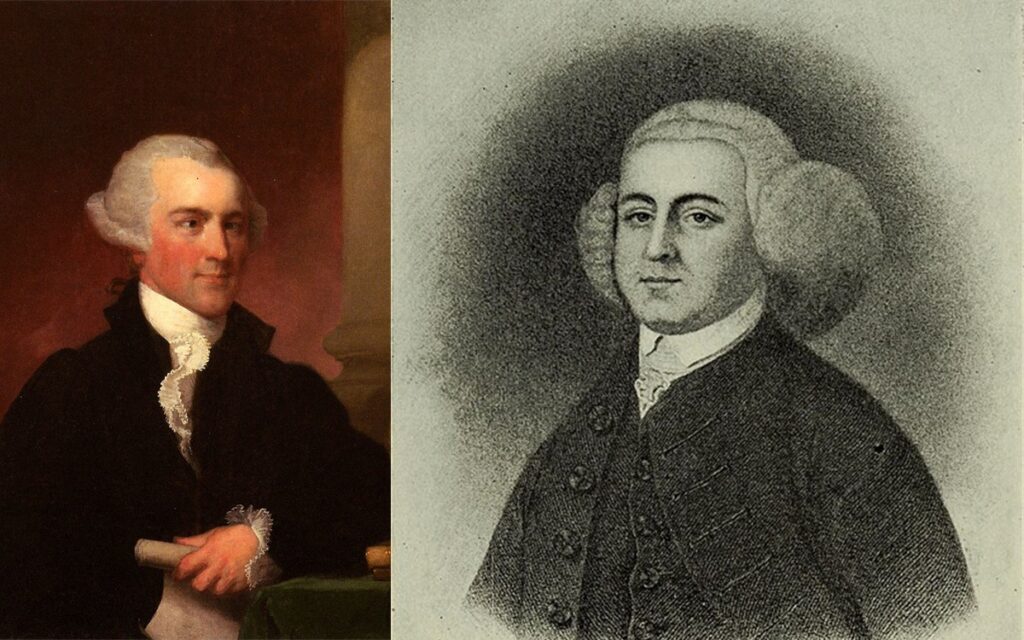
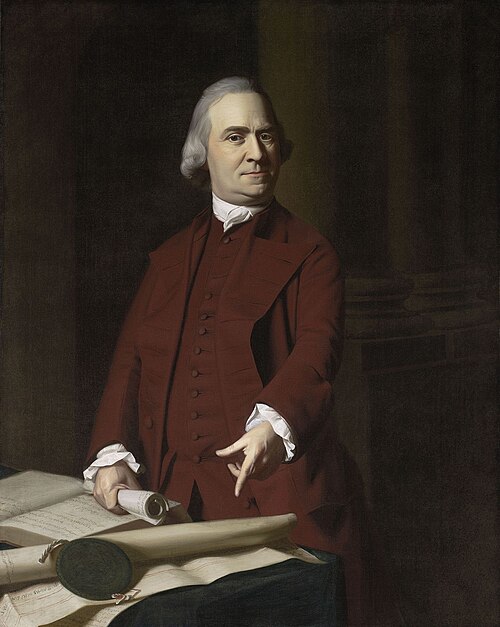 1772 portrait of Samuel Adams by John Singleton Copley, in which he is pointing at the Massachusetts Charter.
Early and Exceptionally Influential
Adams’s path toward independence began early. As far back as the Stamp Act crisis in the 1760s, he was already questioning Parliament’s authority over the colonies.
What made him especially influential was his use of the press. Writing under pseudonyms such as “Candidus” and “Vindex,” he contributed essays to newspapers like the Boston Gazette, shaping public opinion and articulating colonial grievances.
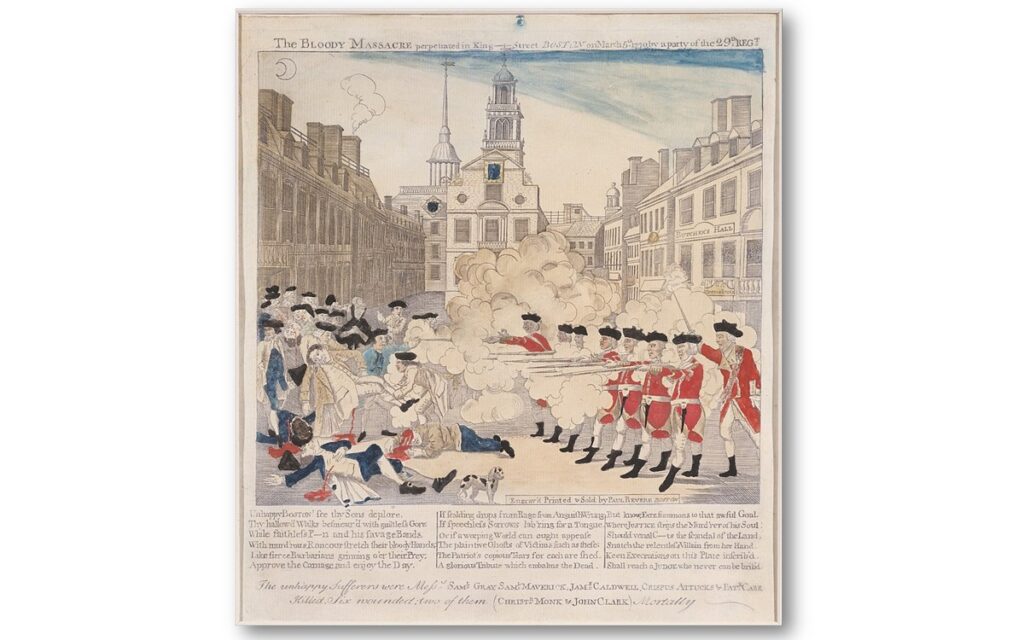
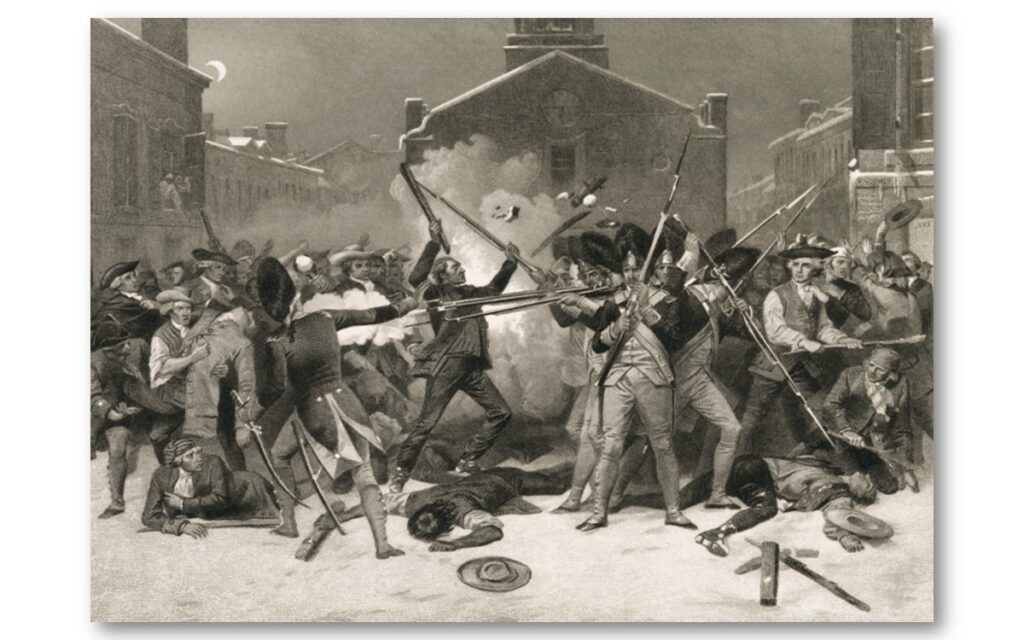
His influence was so significant that some historians later accused him of encouraging the unrest that led to events like the Boston Massacre and the Boston Tea Party. However, there is no clear evidence directly linking him to orchestrating mob violence. More recent interpretations emphasize his reliance on argument and persuasion rather than incitement.
Key Moments in Adams’ Shift Toward Independence
Adams’s move toward independence was gradual, shaped by escalating tensions:
- 1743: In his Harvard thesis, he argued that resistance to authority could be justified if the commonwealth could not otherwise be preserved.
- 1764–1765: In response to the Sugar Act and Stamp Act, he began openly challenging Parliament’s right to tax the colonies.
- 1768: He authored the Massachusetts Circular Letter, calling for unified colonial resistance.
- 1772: He helped establish the Committees of Correspondence, creating a communication network across the colonies.
- 1773–1774: He played a central role in the resistance leading to the Boston Tea Party and pushed for coordinated colonial action after the Coercive Acts.
- 1775–1776: By the time of the Continental Congress, he had become a firm advocate for independence, viewing reconciliation as impossible.
Interesting Samuel Adams Facts
- His father, Deacon Samuel Adams Sr., was a maltster—someone who prepared malted barley for brewing. Adams inherited the business but struggled to manage it successfully.
- Despite popular association with beer today—largely due to the launch of Samuel Adams Boston Lager in 1984—he was not a brewer.
- British forces marching toward Lexington and Concord in April 1775 were not only seeking weapons—they were also attempting to arrest Samuel Adams and John Hancock.
- Just days before the Battle of Bunker Hill, British General Thomas Gage offered a general pardon to most rebels—but specifically excluded Adams and Hancock.
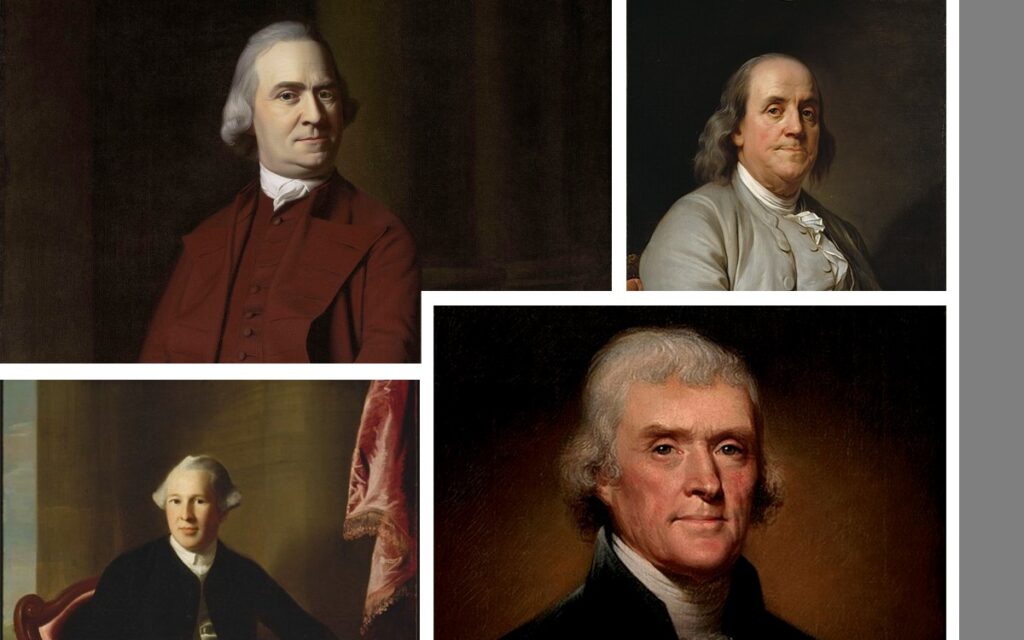
About Featured Image
Clockwise from top:
- 1772 portrait of Samuel Adams by John Singleton Copley, showing him pointing to the Massachusetts Charter
- Portrait of Benjamin Franklin by Joseph Duplessis, circa 1785
- Official presidential portrait of Thomas Jefferson by Rembrandt Peale, 1800
- Portrait of Joseph Warren by John Singleton Copley, circa 1765
All images are in the public domain.
Reading Recommendation
I recently finished reading Samuel Adams: A Life by Ira Stoll, and I highly recommend it.
The book not only provides insight into Adams’s life, but also offers a detailed look into the political tensions, debates, and uncertainties of the pre-Revolutionary and Revolutionary periods. It also sheds light on the debates surrounding the U.S. Constitution.
Although Adams ultimately supported ratification at the Massachusetts convention in 1788, he initially feared that the Constitution created a federal government that was too strong and could threaten individual liberties. He was persuaded, in part, by the promise of a Bill of Rights.
As a bonus, the book also explores the complicated relationship between Adams and John Hancock—marked by rivalry, cooperation, and sharply different personalities.
Quick Quiz Review
Let’s return to the quiz:
Who said this—and in what context:
“Is not America already independent? Why then not declare it?”
- Thomas Jefferson: months before drafting the Declaration of Independence
- Benjamin Franklin: before he joined the “Committee of Five”
- Samuel Adams: before the Battle of Bunker Hill
- Joseph Warren: before the Battle of Bunker Hill
By now, the answer is clear: Samuel Adams.
But before we wrap up, here are two key references from the quiz worth revisiting:
Committee of Five
The “Committee of Five” was appointed by the Second Continental Congress on June 11, 1776, to draft the Declaration of Independence.
Its members were:
- Thomas Jefferson
- John Adams
- Benjamin Franklin
- Roger Sherman
- Robert R. Livingston
Jefferson drafted the document, with input and edits from Adams and Franklin. The draft was submitted on June 28, 1776, and after revisions, adopted on July 4.
Joseph Warren
Joseph Warren (1741–1775) was a physician and a leading Patriot figure in Boston.
He played a central role in the resistance movement, helped draft the Suffolk Resolves, and was deeply involved with the Sons of Liberty. On April 18, 1775, he dispatched Paul Revere and William Dawes to warn that British troops were marching to Concord—and to alert Adams and Hancock.
Although he had been appointed a major general, Warren chose to fight as a common soldier at the Battle of Bunker Hill. He was killed in combat, and his death became a powerful symbol for the Patriot cause.
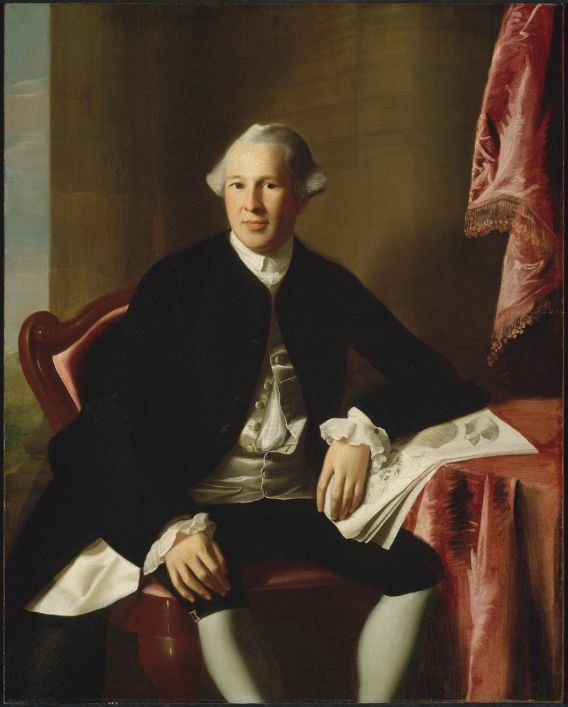 Portrait of Warren by John Singleton Copley, c. 1765
About This Program
Analyzing American Revolution (AAR) is a special series podcast production of the History Behind News program. In this series, 33 professors (and counting) analyze the American Revolution from 33 different angles through in-depth interviews with host Adel Aali.
Themes of the Revolution
Tap below for a closer look at the Revolutionary Era themes we examine—and to meet our guest scholars.

Visit our Revolutionary Era Blog page for
- Interview Transcript Highlights
- Interview Image and Artist Highlights
- Quiz Answers and Backstories

Visual Index of the American Revolution
Explore the backstories and artist bios behind images of our Founding—before and after the American Revolution. These visuals shape how we remember—and reimagine—the Revolutionary Era.

Experienced Analysis of History
About HbN Program:
The History Behind News program (HbN) is committed to making in-depth history researched and written by scholars enjoyable and accessible to everyone. Our motto is bridging scholarly works to everyday news.
The histories we’ve uncovered encompass an impressively wide range of subjects from ancient history to U.S. politics and economy to race, women’s rights, immigration, climate, science, military, war, China, Europe, Middle East, Russia & Ukraine, Africa and the Americas to many other issues in the news. We also receive advanced copies of scholarly books and discuss them in our program (in the context of current news).

Adel Aali, host. Snapshot from his introductory video to AAR podcast. Click to learn more about AAR.
205 Scholars & Counting:
Our guests are scholars in prestigious institutions, such as Oxford, Yale, Caltech, Harvard, MIT, Stanford, the Hoover Institution, the American Enterprise Institute, Quincy Institute for Responsible Statecraft, King’s College London, Princeton University, Notre Dame, Dartmouth College, University of Pennsylvania, Columbia University, the Atlantic Council, Duke, Amherst College, University of Michigan, Rhodes College, Emory University, Northwestern Law, Vanderbilt University, US Naval War College, Air Command and Staff College, Marine Corp University, UVA, Johns Hopkins, Cornell, NYU, Rice, University of Chicago, White House Historical Association, Baylor University, USC, UC Berkeley, UCSF, UCI, UCSD, UC Davis, UCR, Tel Aviv University, Hebrew University of Jerusalem, the Israel Democracy Institute, University of Aberdeen, Universidad Complutense de Madrid, University of Navarra, University of Seville, Helsinki University, Diego Portales University (Chile), Lund University (Sweden), University of Edinburgh, Near East University (Türkiye), Cardiff University, the Free University of Berlin and many others.
They include Pulitzer Prize winners, renowned documentary producers, former White House advisors and other high-ranking government officials, and current and former senior reporters at The Wall Street Journal and New York Times Magazine. Many have testified in Congressional hearings and others frequently contribute to major media outlets and widely read publications, ranging from the BBC, NPR, PBS and MSNBC to The Wall Street Journal and The New York Times.
Think You Know the American Revolution?