Updated: August 2, 2026
Introduction
In this interview: “You could have created a Church of the United States. You could have required the president to be a member, to be a Protestant, right? They didn’t.”
Watch this segment in the video below (01:01:02)
Religion was everywhere in colonial America. So why didn’t the founders create a national church? Why didn’t they establish an official American religion?
If most political leaders were Protestants, why not unite the country under a single Protestant institution?
Was religious freedom the goal? Or was preventing religious conflict the goal?
Did the founders separate religion from the state because religion was weak? Or because it was powerful?
In this interview, Dr. Kate Carté examines religion as a force that shaped the British Empire, the American Revolution, and the creation of the United States. She explains why Britain itself operated through multiple established churches, how religious minorities used military service to claim citizenship rights, and why the constitutional generation viewed religion as both essential and potentially divisive. The result is a more complicated—and more revealing—story about religion, politics, and the American founding.
Video
Watch the full interview with Dr. Carté (timestamped outline below)
Key Themes
- Religious Diversity and Political Power
- Protestantism and the British Empire
- Catholics, Jews, and Revolutionary Citizenship
- Loyalism, Patriotism, and Religious Identity
- Christian Nationalism After the Revolution

Central Question
This conversation raises a central question:
How did a Protestant empire produce a republic without a national church, and why did the founders see religious unity as a potential danger?
How to Use This Post
Use this post as reference guide to the American Revolution through the lens of this interview and the broader Analyzing American Revolution program (AARevolution). Navigate using the interactive table of contents above and the timestamps below (in gray) to discover how this interview deepens the story of the Revolution—and to explore how the program unfolds: its key themes, insights, image gallery, scholars list, history quizzes, and related interviews across the series.
Religion Was Not the Problem—Religious Division Was
The founders inherited a religious world that was far more diverse than many Americans realize. The colonies contained Anglicans, Congregationalists, Presbyterians, Quakers, Baptists, German Lutherans, German Reformed communities, Moravians, Catholics, Jews, and many others.
What’s more is that Britain itself was not governed through a single religious institution. The Church of England was established in England, the Church of Scotland was established in Scotland, and colonial governments operated under a variety of local arrangements.
This diversity created a political challenge. The issue was not whether religion mattered. It mattered enormously. Religious identity shaped communities, loyalties, and political participation throughout the eighteenth century.
Yet the founders also understood that Americans disagreed deeply about religion. If the new nation created an official church, which church would it be? Anglican? Presbyterian? Congregationalist? The challenge was clear: any effort to privilege one tradition risked alienating others and threatening the fragile union that emerged from the Revolution.
So rather than impose religious uniformity, the constitutional generation chose a different path: protecting religious diversity while avoiding the creation of a national religious establishment.
About My 218th Guest: Dr. Kate Carté
Dr. Kate Carté is a Professor of History at Southern Methodist University, where she specializes in early American and Atlantic history. Her research and teaching interests center on the role of religion in the early modern Atlantic world, especially as it intersects with political and economic developments.
Her scholarship has been supported by fellowships from the ACLS, the McNeil Center for Early American Studies, the American Philosophical Society, and the Program in Early American Economy and Society at the Library Company of Philadelphia. Her current work focuses on the intersections of religion, trust, and political partisanship in Revolutionary-era Savannah, Georgia.
Dr. Carté has published extensively, including the following books that we discuss in this interview:
- Religion and the American Revolution: An Imperial History
- Religion and Profit: Moravians in Early America
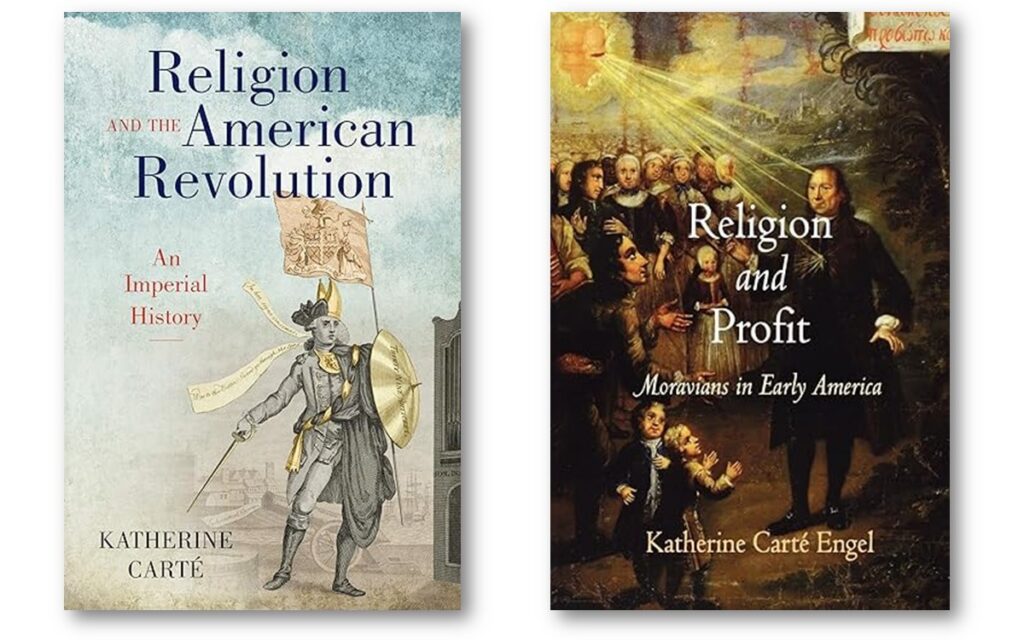 Dr. Carté’s books that we discuss in this interview
About Featured Image
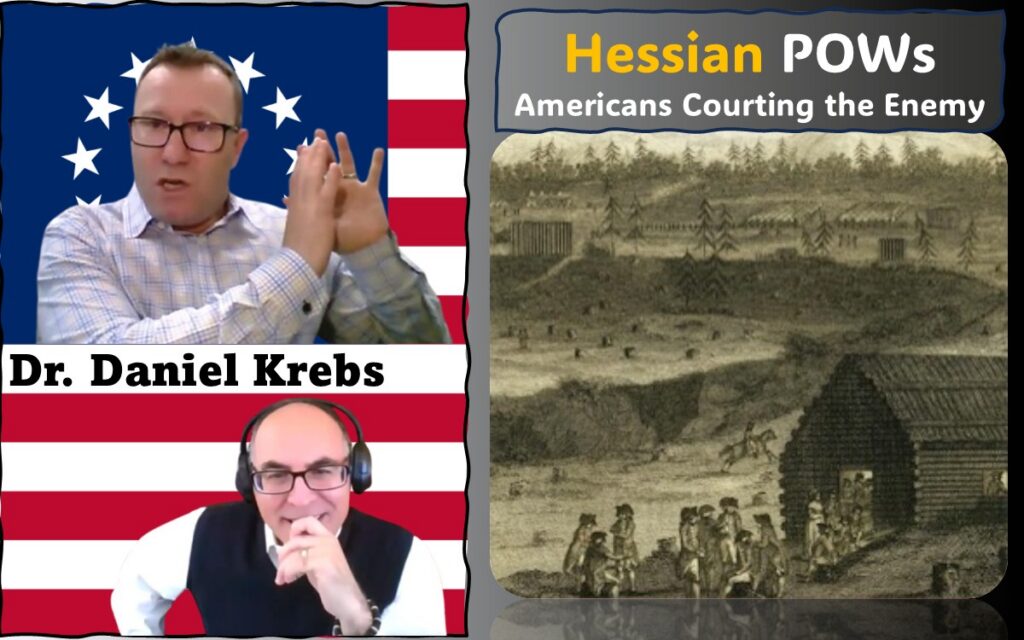
Image of Adel Aali (program host) and his guest, Dr. Kate Carté, superimposed on the Betsy Ross flag, along with the cover image of Dr. Carté’s book Religion and the American Revolution: An Imperial History.
Unless otherwise indicated, all images in AAR—including those in this post—are in the public domain.
AAR Essential Insights
Although the full video and transcript of my conversation with Dr. Carté are included in this post, I’ve selected and summarized several insights that I found particularly revealing and worth emphasizing. These moments — some surprising, others that challenge familiar assumptions — help us see religion, the British Empire and the American Revolution in a different light.
By the way, these insights are my own takes and interpretations from the interview. For Dr. Carté’s perspective and exact framing, please watch the interview above and view the transcript below in the corresponding sections.
Not Just Protestants—Different Kinds of Protestants
One of the points that struck me in this discussion is how easily we flatten the religious landscape of colonial America. We often hear that the colonies were overwhelmingly Protestant and move on. Technically, that’s true. But as Dr. Carté points out, that description conceals almost as much as it reveals.
The real story is that colonial Americans saw themselves as living in a religiously diverse society. Anglicans dominated much of the South. Congregationalists were strong in New England. Presbyterians, Quakers, Dutch Reformed communities, German Lutherans, German Reformed churches, Moravians, Catholics, Jews, and others all occupied different places within the colonial world. Even before we broaden the picture to include Indigenous, African, and Muslim populations, the Protestant community itself was remarkably fragmented.
That fragmentation matters. When we hear the phrase “Christian America,” it is easy to imagine a population united by a common religious identity. Yet many eighteenth-century Americans experienced religion through local churches, denominations, ethnic communities, and regional traditions that often differed sharply from one another. The question was never simply whether America was Protestant. The more interesting question is what kind of Protestant America it was.
Watch this segment in the video above (00:03:40)
Religious Freedom Did Not Mean Religious Equality
One of the most revealing moments in this interview is realizing how different eighteenth-century ideas of religious freedom were from our own.
Today, many Americans hear the phrase “freedom of religion” and assume equal treatment before the law. Colonial governments often saw things differently. A religious minority might be allowed to worship publicly, own property, and gather as a congregation. Yet that same group could still face legal disabilities, political restrictions, special taxes, or barriers to holding public office.
In other words, toleration was not equality. It was a negotiated status. A government could permit a religious community to exist while still treating it as politically suspect or legally subordinate. Catholics provide one of the clearest examples. In some colonies they could worship openly. In others, public Catholic worship remained illegal. Even where tolerated, participation in government was often restricted.
What struck me is how familiar this debate feels. The colonial argument was not simply whether people should be allowed to practice their faith. The deeper question was how much authority, influence, and political standing religious minorities should possess within the larger community. That distinction helps explain why religious liberty became such a contested issue long before the Constitution prohibited religious tests for public office.
Watch this segment in the video above (00:09:31)
The Moravians Behind the Great Awakening
One reason I wanted to spend time on the Moravians is that they are one of those groups that appear repeatedly in early American history yet rarely receive more than a passing mention. Most Americans have likely heard of George Whitefield, John Wesley, Jonathan Edwards, and the Great Awakening. Far fewer have heard of the movement that helped connect many of these figures and ideas together.
What surprised me here is how international the story is. The roots of the movement stretch from Moravia and Bohemia to Germany, Britain, the Caribbean, and North America. Long before the American Revolution, religious ideas, missionaries, and reform movements were already moving across the Atlantic world. The Great Awakening was not simply an American event. It was part of a much larger effort to revive what many believers viewed as stale and overly institutional forms of Protestantism.
The Moravians also remind us that religious history is rarely confined by national borders. A movement that emerged from followers of Jan Hus, was reorganized under Count Nikolaus Ludwig von Zinzendorf in Germany, preached to enslaved populations in the Caribbean, worked among Indigenous communities in North America, and helped shape some of the most influential revival movements of the eighteenth century. That is an astonishing geographic footprint for a group that is largely absent from popular discussions of early American history.
Watch this segment in the video above (00:16:35)
Religious Diversity Was Built Into the British Empire
Many Americans assume that religious toleration emerged because eighteenth-century leaders became committed champions of religious freedom. Dr. Carté points to a more complicated reality. The British political system did not embrace religious diversity simply because it was enlightened. It embraced diversity because the alternative threatened political stability.
After generations of religious conflict, Britain found itself governing a kingdom with multiple religious establishments. England had the Church of England. Scotland had the Presbyterian Church of Scotland. New England maintained its own Congregationalist establishments. These arrangements were not temporary exceptions. They became embedded in the constitutional structure of the empire itself.
What struck me is how practical this solution was. British leaders understood that reopening questions about religious establishment risked reopening older political conflicts as well. Strengthening one church could weaken the delicate balance holding the empire together. In that sense, religious diversity was not merely tolerated. It became part of the machinery of imperial governance.
That perspective changes how we think about the Revolution. The founders did not inherit a political world built on religious uniformity. They inherited an empire that had already learned, often reluctantly, how to manage religious differences without fully eliminating them.
Watch this segment in the video above (00:27:08)
The Revolution Was Not a Religious War
One of the assumptions we often bring to the American Revolution is that religious groups lined up neatly on opposing sides. Protestants here. Catholics there. Patriots in one pew. Loyalists in another. The reality was far messier.
As Dr. Carté explains, people from the same religious communities could be found on both sides of the conflict. There were Patriot Anglicans and Loyalist Anglicans. Patriot Presbyterians and Loyalist Presbyterians. George Washington himself belonged to the Church of England, yet fought against fellow Anglicans serving the Crown. Religion shaped how many people understood the conflict, but it did not dictate their political choices.
What I found especially interesting is what happened after the fighting began. Groups that had often been viewed with suspicion under the British system—particularly Catholics and Jews—used military service to make a broader claim. They had fought, sacrificed, and served alongside their neighbors. Why, then, should they remain second-class citizens? In this sense, the Revolution did more than challenge British authority. It created new opportunities for religious minorities to argue that citizenship should be based on service and loyalty rather than religious identity.
That is a subtle but important distinction. The Revolution was not fought to establish religious equality. Yet participation in the war helped some groups move closer to it.
Watch this segment in the video above (00:48:11)
Christian Nationalism Came After the Revolution
One of the most important distinctions in this interview is the difference between religion during the Revolution and the religious narratives that emerged afterward. Those are not necessarily the same thing.
Many revolutionary leaders were deeply religious. They spoke about Providence. They interpreted events through a religious lens. They sought comfort, meaning, and purpose through faith. Yet as Dr. Carté explains, that did not automatically translate into a desire for a Christian state or a national church. When it came time to build political institutions, the founders faced a practical reality: Protestants themselves were divided. Anglicans, Presbyterians, Congregationalists, and others did not share a common vision of religious establishment.
What I found especially striking is the role of Jedidiah Morse and his generation. They inherited the Revolution rather than lived it. Looking back from the 1790s and early nineteenth century, they sought to construct a more explicitly Christian narrative of the American founding. In many ways, they were responding less to the Revolution itself than to fears unleashed by the French Revolution, democratic upheaval, and social change. Their project was not simply to preserve religion. It was to shape a national memory.
That distinction matters. A religious founding generation is not the same thing as a founding generation seeking a religious state. The interview repeatedly returns to this point. Religion was important. But when the constitutional generation worried about preserving the Union, religious division often appeared as a problem to be managed rather than a tool for national consolidation.
Watch this segment in the video above (00:53:00)
Church of the United States?
Continue watching at 59:05 in the video above
The Interview (S1E22): Adel Aali and Kate Carté
In our conversation, Dr. Carté addresses key questions about religion, the British Empire and the American Revolution. The detailed outline and full transcript below supplement the video above.
Podcast
Watch the full interview on this page with the outline and transcript below, or take the conversation with you on the go through our Spotify podcast.
Outline
Watch the full interview on this page with the outline and transcript below, or take the conversation with you on the go through our Spotify podcast.
Click for Timestamped Outline
- Selected Highlights (00:00)
- Guest Introduction (01:56 )
- Religious Diversity in the Colonies (03:30)
- Protestants, Catholics, Jews, Muslims, and Indigenous Traditions (03:52)
- Why the Colonies Viewed Themselves as Religiously Diverse (05:09)
- Mapping Religion Across British America (06:33)
- Anglicans from Georgia to Maryland (06:46)
- Quakers, Presbyterians, Germans, and New England Congregationalists (07:30)
- Established Churches and Religious Toleration (09:31)
- State Churches, Taxes, and Legal Privileges (10:22)
- Catholics, Public Worship, and Political Exclusion (13:06) – Key Moment (14:23)
- Moravians and the Great Awakening (16:35)
- Awakened Christianity and the Challenge to State Churches (17:07)
- Moravian Missions Among Enslaved and Indigenous Peoples (18:39)
- Jan Hus, Count Zinzendorf, and a Global Movement (20:19)
- Moravian Origins in Central Europe (23:08)
- From Herrnhut to Bethlehem and Salem (24:59)
- The British Empire’s Religious Settlement (26:52)
- The Glorious Revolution and the Act of Toleration (27:20)
- Why Britain Governed with More Than One State Church (30:30) – Turning Point (31:07)
- Great Britain, Protestantism, and Political Loyalty (33:42)
- Why Britain Had Two Established Churches (35:35) – Key Moment (35:56)
- Loyal Protestants and the Limits of Religious Freedom (36:12)
- Religion and Choosing Sides in the Revolution (41:50)
- Patriots, Loyalists, and Anglican Connections to Britain (43:27)
- Why Loyalism Was Not a Single Political Philosophy (45:30) – Turning Point (45:40)
- Catholics, Jews, Quakers, and Revolutionary Citizenship (48:11)
- Military Service and Claims to Equal Rights (48:25) – Key Moment (49:17)
- Free Quakers, Moravians, and Pacifism in Wartime (50:51)
- From the Revolution to Christian Nationalism (53:00)
- Jedidiah Morse and a Providential History of America (53:13)
- Why the Founders Rejected a National Church (58:50) – Turning Point (01:01:02)
- Just One Point (01:05:06)
Transcript
Note: This transcript was generated automatically and may contain minor errors. It is provided for reference and accessibility only.
Click to View Transcript
Adel:
Dr. Carter, it’s a pleasure to have you in our program’s special series. Thank you for taking the time for this conversation with me about the American Revolution. So on the eve of the American Revolution, what were the major religions in the American colonies?
Dr. Carté:
That’s a great question because it’s got multiple answers.
Adel:
Multiple answers, okay.
Dr. Carté:
Multiple answers. Depends on how you ask the question. So if we’re talking about the European-descended colonists in the British Empire, Catholicism was basically illegal.
There were a small number of Catholics, but Catholicism was legally disadvantaged.
Adel:
The overwhelming majority- Were there Catholics mainly in Maryland? Is that where they were?
Dr. Carté:
Maryland, a few other places. They’re just small populations.
Adel:
Okay.
Dr. Carté:
Pennsylvania has quite a few Catholics. But so pulling that out, the vast majority of the European-descended colonists were Protestants. There’s also a few Jews.
When we move beyond the European-descended population, and we have to remember there are a lot of Indigenous and African-descended peoples in the colonies, those people, some of them were Protestants, some of them were Catholic because they had connections to say French or Spanish imperial places, and some of them were Muslim. So there’s non-Protestant religious diversity, but that’s not usually what we’re talking about when people ask about the religion of the colonists on the eve of the Revolution. Usually, they want to talk about the people who were involved in rebelling.
Those people were overwhelmingly Protestant with a small number of Catholics and Jews. But then within that, they perceived themselves as very religiously diverse for two reasons. One, because people had migrated to the colonies.
Protestants had migrated voluntarily to the colonies from a variety of different places. And so you have many people from the British Church of England. You also have many people in New England in particular who are part of what in Britain would be considered non-conformist or dissenting traditions, but here are Congregationalists, descendants of the Puritans, a lot of Scots-Irish Presbyterians, and also a lot of Germans.
So those Germans were German-reformed, German-Lutheran, there are German sectarians, there were Dutch-reformed. So they perceived themselves as having a lot of diversity within the Protestant community, even though when we pull back to that sort of macro level, overwhelmingly Protestant.
Adel:
So let’s, I kind of jumped the gun by asking you about the location, the geographical focus of the Catholics during the American Revolution and the years leading up to it. So let’s go back again. I just want to review once more sort of the geographic focus of these different religious groups.
You mentioned New England, I mentioned Maryland. Can you review that for us, please?
Dr. Carté:
So the British had, you know, they had actually many more than 13 colonies. And in the British Empire, the Church of England was the established church in most of those colonies. And so we see dominant Anglican Church of England populations in the southern colonies, in the Caribbean also, but if we’re talking about the colonies that rebel, in the southern colonies up all the way through Maryland, right?
So Georgia to Maryland, that’s all Church of England, at least legally. There are minorities within that, but that’s the dominant group. And then as you move north from there, Pennsylvania, Delaware, and New Jersey have kind of, Delaware and New Jersey have kind of relationships to the Church of England.
Pennsylvania has official freedom of religion. Pennsylvania has a lot of Quakers, but they are not the majority. They also have a lot of Presbyterians.
New Jersey and Delaware also are places where there’s a lot of Presbyterians and Germans in both of those places also. So big German population in Pennsylvania. So in all those different German communities.
And then as you move farther north, New York had a really interesting mix of Dutch Reformed people who had treaty rights to being Dutch, to being part of the Reformed Church going back to the English conquest of New Amsterdam. And then also a Church of England establishment. And then also a lot of diversity in a place like New York City, which just continues to be incredibly diverse.
It’s a port city. And then when you move up from there, when you get to New England, then it switches and the dominant group is the Congregationalists who were the descendants of the Puritans, but there were significant Church of England minorities there.
Adel:
Oh, and by Church of England to go back, you mean Anglicans.
Dr. Carté:
Right. So they were not a part of the established Church, but there were quite a number of Anglicans in Connecticut and New Hampshire and Massachusetts.
Adel:
I want to go back to two phrases you’ve used so far. One is established Church, and the other one in regards to Pennsylvania, you said freedom of religion. So what does that mean within a state, South Carolina, New Jersey, Massachusetts?
Are you free to practice what you want? And if so, so why did you flag out Pennsylvania for freedom of religion? Go ahead, please.
Dr. Carté:
So this is a really great topic in the colonial era. Both for the colonies and for Britain, right? These are places that remember the English Civil War in the middle of the 17th century is in some ways fought over religion, in many ways fought over religion.
And religious minorities and toleration of religious minorities becomes a kind of key constitutional issue for the British. So the conversations about what does it mean to have religious minorities within your community? What rights does the established church have?
And what rights do non-established churches have? And what’s beyond the pale? Who can’t be tolerated at all?
Those are all really active conversations. So the established churches…
Adel:
Active conversations now among scholars or active conversations back then?
Dr. Carté:
Oh, at the time. This is something people argue about.
Adel:
Okay.
Dr. Carté:
And, you know, contest in all kinds of political ways.
Adel:
Okay.
Dr. Carté:
So in the colonies, the established church, usually what that means is state tax funds are supporting them, right? And then the established church has certain privileges that churches that are tolerated but not established do not have. And one of the most interesting of these is can your clergy marry people?
Can your clergy bestow the state of a legal marriage? So in a place where the Church of England is established, usually the Church of England, and this is contested in the late colonial period, but usually the Church of England is the only church that can legally marry you. And so you could maybe you attend a different kind of church, but you have to go get married by or your marriage has to be officiated by a Church of England clergyman.
So there are disadvantages to being outside of the official church and each one of these places also then has rules for how to treat those people that they tolerate but not ban, right? So there are traditions that are banned completely. If your religion is considered disruptive, if you want to start a new religion and you have a new teaching or you feel that you’re a prophet and you want to start a new religion, that doesn’t count as a religion.
You’re going to get arrested and you’re going to get thrown in jail and that’s illegal. But if your religion is tolerated, in some places, it means different things in different configurations in each place, but in New England, for instance, they tended to have the idea that you could opt out of taxes to the state church if you would join a different congregation by the time we get to the revolution. Now on the ground, this often gets into struggles over, you know, did that actually happen?
Did they allow this Baptist community in Massachusetts to not pay taxes to the official church and all that? So they fight about this in the court.
Adel:
Even though they were not part of the established church, they were tolerated. They could opt out.
Dr. Carté:
Okay. So in Massachusetts, the state church actually is the Congregationalists.
Adel:
Okay. And Baptists could opt out of paying taxes by doing what?
Dr. Carté:
Registering with a Baptist congregation and, you know, they had to go through a process to do that and sometimes they’re allowed to and sometimes they’re not. So it gets, this is the way that people argue over these things is that’s where the kind of legal rubber hits the road.
Adel:
I see. Do you have, do you have examples of banned religions in the American colonies?
Dr. Carté:
So banned, well, so there is, so the most obvious thing is anti-Catholicism, right? So the legally practicing, you know, well, let’s go back to that question about freedom of religion. So in Pennsylvania, they don’t, Catholics are not allowed to participate in the government, but you can have public Catholic worship.
In other places, public Catholic worship would have been illegal. So a group of Catholics buying a piece of land, and they also don’t have the right to incorporate. So buying a piece of land as a congregation and and openly practicing your faith as a Catholic would have been not possible.
Adel:
So in a place where a religion is tolerated, you could openly worship. But that doesn’t mean that you can all of a sudden become the lieutenant governor or, you know, town’s elder men or whatever, right?
Dr. Carté:
Right, absolutely. So when you think about it, you know, the U.S. Constitution says there will be no religious tests for holding public office. That’s a signal that there are two different kinds of law going on here.
One is, what is the ordinary citizen allowed to practice unmolested, right? And usually they say, you know, as long as they demean themselves peaceably. That’s the phrase that that comes up.
Adel:
So demean themselves peaceably.
Dr. Carté:
It’s a phrase that reached all the way back to, I think it’s Charles II used it to refer to Jews in the 17th century, but it’s in the Massachusetts Constitution now. So religious toleration only extends to people who demean themselves peaceably.
Adel:
Still in the Constitution of Massachusetts?
Dr. Carté:
I think so.
Adel:
Oh, that is wild.
Dr. Carté:
I am not a 21st century legal scholar.
Adel:
But it was at least, we know that.
Dr. Carté:
It was, yes. It was for a long time. So if you demean yourselves peaceably, right, which means you can’t say your religion says that you’re going to, you know, commit murder within this.
You can’t in the name of your religion do things that are, you know, in violation of the public peace, right?
Adel:
Exactly.
Dr. Carté:
So if you had toleration and you demean yourself peaceably, right, you could practice your religion in public, right? But you wouldn’t necessarily have all the other rights of the member of a state church. So you wouldn’t be able to, this is true in England too, at that time.
So you wouldn’t necessarily be able to hold public office or that, I mean, that’s the biggest one. It would be holding public office, voting in some contexts, right? So those restrictions are put on people who are religious minorities because they’re considered politically other.
Adel:
Yeah, yeah, that’s fascinating. One of the groups that you did not mention is Moravians. I’ve read about them several times.
And interestingly, I don’t know, I still don’t know much about them. So let’s learn more about them in the context of your book, which is titled Religion and Prophet Moravians in Early America. It was, I think, published 2009 or perhaps 2010, right?
Yeah.
Dr. Carté:
Yeah, it’s somewhere there.
Adel:
Yeah. Yeah. So let’s get into it.
Who are the Moravians or were the Moravians?
Dr. Carté:
The Moravians are really interesting. They’re a really interesting group and part of a much larger, interesting movement, which in American context, we tend to call the Great Awakening, right? They’re some of the early catalysts of that movement.
When I was talking about religious diversity before, I did it in terms of immigration, right? So populations from these places bring the churches that were dominant in those places into the colonies, right? So that’s how we have German reforms and German Lutherans and all of that.
The Moravians are part of a movement that within Protestantism that starts in Central Europe and then spreads where they said that these state churches, these Protestant state churches, were stale. And they become too focused on a kind of orthodox legalism and that they did not pay enough attention to genuine piety. So they would travel to try to bring the word of what they would call an awakened spirituality.
So this is one of the ways that we get the term Great Awakening. And George Whitefield is an English version of this movement. The Wesleys, Charles and John Wesley, who found Methodism, are also a part of this movement and they’re all friends at the time.
Actually, those men are friends at the time in the 1740s. Wesley famously was converted or had a spiritual experience when he watched the Moravians pray during a storm at sea and he was so impressed with their piety. So it was a way of rejuvenating piety and focusing on a kind of heartfelt religious experience that was separate from kind of legalistic state-based religion.
So the Moravians were primarily a missionary movement and they went around and worked to bring people, all people, to this kind of awakened Christianity. So for people who were already Protestants, they were seeking to bring them to this new understanding of faith, but they also worked a lot with enslaved people in the Caribbean in particular. They go to St. Thomas first and they tell the Danish monarchy that they have no intention of preaching earthly freedom, that they are only interested in spiritual salvation, so they’re not anti-slavery.
Adel:
So they’re not going to cause a rebellion. That’s what they’re saying.
Dr. Carté:
They’re not going to cause a rebellion. They work to convert thousands and these movements very quickly, you just have a few German-speaking Moravians there and and then you’ll have a lot of these congregations that clearly are being led by people who are within that community, right? So you have a little bit of Moravian leadership and then a lot or a little bit of German Moravian leadership and then you have a lot of Afro-Caribbean leadership going on there too.
And then they also work among Indigenous Americans in North America. So they move around. They’re a German manifestation of that Great Awakening movement.
People like the Westleys who are working primarily in Britain and then Whitfield who itinerates in the United States or what becomes the United States in the colonies. They’re working among English-speaking populations and they’re seeking to build this new kind of spiritual movement.
Adel:
Two follow-up questions on that. Were the Moravians part of the Great Awakening movement? That was the first Great Awakening.
Dr. Carté:
Yes.
Adel:
Or did they start it and then others joined?
Dr. Carté:
That’s a great question. So when you talk to scholars of the other name for this movement as it develops is Evangelicalism and that term has a lot of meaning in the present and particularly in present-day politics. So I don’t like it because I think the differences are really significant.
But that’s the kind of movement we’re talking about and they if you talk to historians of but in Germany, this is in German circles. This is considered pietism. That’s what they call it?
Adel:
Pietism?
Dr. Carté:
Yeah, so depending on which community you’re talking to because in German the word Evangelical means Protestant. Right. So depending on who you’re talking to they’ll put the origins in different places.
I think there’s a Dutch movement that goes back to the late 17th century that’s called sort of the Further Reformation. There’s also some important early mid-17th century movements, early 18th century movements in in the Austrian Empire that kind of fall into this that kind of get wrapped up in the Counter-Reformation. People who are pushed out by the Counter-Reformation.
So there are European origins to that movement and then it goes to the Moravians spread out and they go to Britain and they are working with people in Britain and then they go to the colonies. But it is undeniably true that the key catalytic figures here that there are other key catalytic figures and those include very significantly Jonathan Edwards in the Colonies and Whitfield and the Wesley Brothers, Selina Hastings, Countess of Huntington. So there are these other figures that are fellow travelers with the Moravians.
And in the early days of what we consider the Great Awakening these people all work together. Eventually, they have some theological fallings out and we now think of Methodism as Wesleyan Methodism is different from some of these other traditions, but in their early days, they’re quite linked.
Adel:
The second question I had on Moravians is this, were they, at least originally in the colonies, an ethnic group at the core and then they sort of spread and others joined. You mentioned Germans speaking. So that’s one hint.
The other thing is that I know this, Moravia is actually a geographical location. It’s not in modern-day Germany. Is it in the Czech Republic?
Dr. Carté:
It’s in the Czech Republic, right?
Adel:
Okay.
Dr. Carté:
So the early days of this, in the early days of the Moravian movement, what happened was that there were a group of actually pre-Reformation, pre-Lutheran Reformation Protestants, followers of Jan Hus.
Adel:
Pre-Lutheran Reformation movement.
Dr. Carté:
So Jan Hus who was martyred in in Prague in 1415, I think. Followers of his movement continued up until into the 18th century and then in the Counter-Reformation, some of them are expelled from Catholic Austria and they moved towards the areas of Germany that are Protestant and a group of them, and so those people were ethnically Moravian and they moved onto the lands of, they actually went to the lands of a noble woman and she said, well, actually my grandson has some space you can live on. And so she sends them down the road to a place, to her grandson.
Her grandson was a man by the name of Count Nicholas Ludwig von Zinzendorf and he was a young guy. He was an imperial count. He was in his 20s and just coincidentally he was very theologically minded.
He trained with some of the important pietist leaders within the German pietist movement and here he had this group of people and he saw this as an opportunity to build a new religious movement and it’s a very interesting discussion among scholars of Moravianism how much of the early Moravian movement comes from that Czech heritage and how much of it comes from the pietist Zinzendorfian stream. But Zinzendorf becomes the leader of the movement. So I think it’s 1722 is when they get there and 1727 is when they sort of reform into a new community.
They build a town that is still in eastern Germany. It’s a town called Herrenhut. It’s about, it’s in the corner of Germany that’s kind of stuck down between Poland and the Czech Republic.
It’s right on the border and a wonderful place. They build a new religious community there and then it’s from that place that they reach out and start building other religious communities to spread their message. So from Herrenhut, which is still the leader of the center of the Moravian world, they send people out to St. Thomas, to England. They have movements that they have, you know, organizing efforts in England. And then they also moved to, they found the Bethlehem part, they found Bethlehem in Pennsylvania and they found the Salem part of Winston-Salem in North Carolina.
Adel:
You said wonderful place. Have you visited it?
Dr. Carté:
Salem?
Adel:
No, no, you were talking about the city, German city, between Poland and the Czech Republic. I think it’s called Herrenhut.
Dr. Carté:
Yes, yes, yes. I’ve been there. Yes, I did a lot of research there.
So it is a lovely place, a beautiful community and really, really wonderful.
Adel:
That’s great. So I want to go back to something that we discussed just a few minutes ago, the English Civil War. And I want to use that sort of as a segue to talk about the British imperial system.
You’ve written a book titled Religion and the American Revolution and Imperial History. Mm-hmm. And in it, in part, I got this by reading about your book and seeing passages.
You argue that British Protestantism was part of a complex transatlantic system that bound religions to imperial politics. We’ll unravel that in just a moment. First, this is what I want to know, though.
Was the British imperial system, the Protestantism, does it go back to Henry VIII and sort of that reformation? Or does it go to what we just talked about, the English Civil War?
Dr. Carté:
It actually comes, it comes one more, you have to jump one more forward, which is the Glorious Revolution. The Glorious Revolution in the 1680s.
Adel:
1680s.
Dr. Carté:
Right, 1680s. But the whole story matters, right? So the English Reformation and Henry VIII’s divorce and all of that.
England ends up with a very kind of slow and complicated and back and forth transition to Protestantism. And that’s one of the things that spawns the English Civil War, because you have radical, radical Puritans who want to expel all, what they see as residual Catholic elements from the church. And then you also have plenty of people within the state church who maybe would have preferred to stay Catholic, although you can’t legally be Catholic in England at that point.
Or who were just more comfortable with a sort of higher church version of Protestantism of the Church of England. So that’s one of the conflicts. And then that conflict has a lot of different political meanings to it as well.
That’s one of the conflicts that builds into the English Civil War. At the end of the English Civil War, This is the 1640s. 1640s, right?
So they just established the Church of England during the, or they get rid of the bishops and everything during the English Civil War. And then it’s re-established afterward. But there’s this other thing that’s going on at the same time, which is that Scotland has become, Scotland is Presbyterian.
Scotland went fully towards the Presbyterian end. And the state church of Scotland is Presbyterian. So, they re-established the Church of England after the English Civil War.
But there are still residual Puritan elements within England. And in the Glorious Revolution, King William, William and Mary, in order to try to move past religious conflict, embraces the act of toleration, which allows people who are not conforming to the Church of England, as long as they follow, they’re legally restricted in certain ways, right? The kind of ways I was talking about, right?
They can’t be members of corporations. They can’t go to Oxford and Cambridge. There’s all kinds of things they can’t do.
But they can practice their worship in public as long as the doors are open. It has to be able to be monitored by people from the state. They have to register and say that they’re doing this.
And if they do that, and they swear loyalty to William and Mary, then they can have that toleration. And then really quickly after that, there’s a move to bring, that’s when you get the the active union, when the Scottish Parliament is dissolved.
Adel:
1701, yeah.
Dr. Carté:
And you’re bringing those two states together. The Church of Scotland is Presbyterian. So now you have an official, you have the Church of England and some toleration in England.
And you have the Church of Scotland in Scotland, and they’re joined in one parliament with one sovereign. And the the king, the sovereign, Queen Anne, but then the sovereigns after that, the Georges, they have to swear to uphold the rights and privileges of the Church of Scotland. Even though they are also heads of the Church of England.
So built into the British system, after the Glorious Revolution and the Act of Union, the Act of Union is like as in, so the Glorious Revolution, you get the Act of Toleration, and then the Act of Union, you get this divided state church. After that, Britain itself includes these religious diversities. Of course, all of that happens after the colonies have been founded, right?
Many of the colonies have been founded. And as that’s coming together, there’s also this issue that the Puritans have a state church in New England, have state churches in New England, it’s more than one colony, that are neither Protestant nor Anglican.
Adel:
And the You mean they’re neither Presbyterian nor Anglican?
Dr. Carté:
Right.
Adel:
Oh, that’s right. I said Protestant, I meant Presbyterian.
Dr. Carté:
Neither Presbyterian or Anglican. So the, and the Solicitor General, I think it is, in Parliament for Britain, rules that they can keep their establishments, right? So even though members of the Church of England, the largest and most powerful entity in the system, would like to make it the Imperial Church, they can’t, because the King is sworn to uphold the rights and privileges of the Church of Scotland, and there is another establishment in in the colonies.
So all of this pressure to create strong religious establishments, which actually, which really exists, on the other side, is this reality that they cannot remove the diversity that is built into the laws of those three different state churches. And it goes even further into the system, or it becomes even more important when you think just about England and Scotland, because for the Scots, they don’t have a parliament anymore. The protection of the rights of the Church of Scotland are sort of the base of their inclusion or their peaceful participation in the British system.
So any movement that leaders in England would have made to tap down on religious diversity in the colonies, particularly diversity that might have to do with Presbyterians, runs the risk of moving against laws that have to do with what’s going on in the active union. Parliament does not think religion is that important. Parliament is not going to touch this question.
Opening up the religious establishment of England in order to strengthen religious establishments in the colonies would have meant opening up questions around the active union, and they don’t want to do that.
Adel:
Oh, wow. So in the imperial system, religion is not in the forefront of politics to suppress or persecute or anything like that. Perhaps there are many different reasons for it, but one prime reason is that if they mess with it, they’re going to actually mess with the strength of Great Britain itself and perhaps divide the home front.
Dr. Carté:
Right, and that’s just not worth it. And it’s not that people are so dedicated to protecting religious freedoms or rights. They’re just not really interesting in opening up that question.
So to solve the problem of religious wars in the 17th century and to bring together England and Scotland, they build this religious agreement into the DNA of Great Britain. And the act of succession brings the Georges to the throne that says that you have to have a Protestant as the head of that system. The act of succession, they didn’t take the Protestant language out of that until I think it was when Princess Kate, whatever the current Princess of Wales, when she was pregnant with her first child, I think, people can check on this because this is not my center, but I think that’s when they both took out the language that said a first-born daughter will be seceded by subsequent sons and the language about Protestantism. It just wasn’t worth touching.
Adel:
Wow. So, okay, we just had this really interesting chat about the imperial system and religion. So did Great Britain have a state religion?
Dr. Carté:
Yeah, well, Great Britain had two.
Adel:
Okay, Anglican and Presbyterian.
Dr. Carté:
Right.
Adel:
And then there’s the Church of England.
Dr. Carté:
The Church of England is Anglican, right?
Adel:
I see.
Dr. Carté:
And then the Church of Scotland is Presbyterian.
Adel:
And this is further complicated. You mentioned the Georges, so you’re talking about, if I’m saying this correctly, House of Hanover, right? Yes.
And those guys are German. They’re not even Church of England.
Dr. Carté:
And here’s where you see they really get invested in the concept of being a Protestant, right? Which is not a church. It’s not a structure.
It’s not an institution, but they have to be flexible enough in their understanding of how religion supports politics, who are our insiders in terms of religion and politics. And they think of political participation in terms of religion, right? Your qualifications for political participation have to do with your religion.
So they have to be flexible enough in that identity that they can have a Lutheran king who is swearing to uphold, who is the head of the Church of England and swearing to uphold the Church of Scotland. So they have to say Lutherans, what we now think of as Episcopalians, right? Members of the Church of England and Presbyterians are all very similar.
And in that you can hear the beginnings of the denominational system that we know in the United States today where different Protestant churches on some level, they’re kind of interchangeable, right? And the big challenge in American religious history is and Americans think of that as it means that they’re tolerant, right? The fact that they’re comfortable with other loyal Protestants, right?
Which is really a phrase they use. You have to be a loyal Protestant. So political loyalty first.
The Americans think of their embrace of loyal Protestants as meaning they believe in religious freedom even though they don’t think that Catholics necessarily can be good citizens. Catholics have all these other problems that keep them from being good citizens. They don’t think that Jews necessarily can be good citizens.
That takes a lot of political work. And even today, right? I mean in the state that I’m living in, in Texas, there are political debates about discomfort with what it means to have Muslim members of the polity and is there, can Muslims or another version of this in the 19th century, early 20th century, can Mormons be good citizens, right?
So we’ve continued to talk about this, even though we believe because we’re comfortable with this diversity within Protestantism that we believe in religious diversity, right? So the two ideas can kind of go hand in hand.
Adel:
Two quick follow-ups. These are just, I just want to confirm. It’s kind of factoid, but I still, I think it’s interesting for me.
So would the Georges, George the first, second and third, would they attend Anglican church and important events? Okay, even though they were not. And that was fine.
That was fine, right?
Dr. Carté:
Yes, and I don’t know exactly what process George the first went through in order to you know, he wouldn’t have to be re-baptized because they would have recognized each other’s baptism. So it’s not something like that, but he becomes an Anglican effectively, right? And then George the second and George the third, that’s a, that’s a, that’s an easy way to put it.
It’s a much easier process. George the second, I think was already born when that happens, but yeah, and George the third English speaking, you know, yeah, you know, that’s, yeah.
Adel:
My second question, this is, I guess, more a confirmation than really a question. Based on this religious tolerance that you and I have discussed for the last 30 minutes or so, the British empire is a relatively more inviting place for people than, let’s say, the Habsburg empire, the Russian empire, the Spanish empire, or the kingdom of France, right?
Dr. Carté:
Or no, you smile, you’re inviting, inviting to whom, right? So they are inviting to other Protestants who are, there’s a, there’s a act of naturalization and immigration acts that say that Protestants, any Protestant can, can, might, if they have a certificate from their minister saying they’re Protestant in good standing, they can migrate to the colonies. So they are very welcoming of French Huguenots and they’re very welcoming of German Protestants, Dutch Protestants.
But when you think about the size of the Protestant world compared to the size of the Catholic world, so the Austrian empire, you know, fascinating multi-ethnic entity, and insofar as Catholicism is the state church that is, you know, it’s that you can see that as a limiting factor. They don’t want, they don’t have a problem with like diplomats and things like that, but they don’t have legal Protestant communities within that. On the other hand, you know, that’s the majority of the Christian, European Christian world.
And so you can move around between those communities without, there’s no problem, right? And of course, the mass is in Latin and the, you know, so if we’re thinking, if we think about diversity in a sort of multifaceted way, religion is one axis of diversity, right? Another axis of diversity is language or, you know, ethnic community or whatever.
I think you might’ve found Vienna to be a more diverse place than Edinburgh.
Adel:
So the answer is inviting to whom? That’s really, exactly. Let’s take a break here.
In the next segment, I asked Dr. Karte about religion and the fight for or against the revolution. We’ll be right back. Dr. Karte, did different religions fight on opposing sides during the American revolution?
Dr. Carté:
So it is not a war of religion. So the reasons people fought overwhelmingly did not come from religion. Now, the way they understood why they were fighting often did draw on their understanding of good and evil and right and wrong, right?
So I don’t want to say religion isn’t a factor. Religion was absolutely a factor. But people from the same religious community or organization end up on both sides of, on both sides of, every community has people on both sides.
So there are loyalist Presbyterians and there are revolutionary Presbyterians. And when you were, and same with Anglicans. And when you remember that the British army includes both of those groups, right?
So you have American Anglicans, George Washington, an American member of the Church of England, is fighting against other Anglicans in the leadership of the other side, right? So, and then there are also a lot of loyalists who are Anglicans. So we have to remember that there’s, for neither side was religion predictive, or at least 100% predictive.
We can say that there tended to be certain traditions that went more strongly in one direction or the other. So Anglicans tended more commonly to be on the loyalist side. And there are a lot of different reasons for that.
There’s a lot of Anglicans, and there’s a lot of reasons for that.
Adel:
Could one reason, if I may just add here, could one reason for Anglicans being on the loyalist side, is it because their priests, pastors were sent from England?
Dr. Carté:
Yes, absolutely.
Adel:
Absolutely.
Dr. Carté:
And they, and also, you know, so in many places, well, in the northern cities, Anglicans were disproportionately, like, so wealthy merchants were disproportionately Anglican. So those people have a lot invested in the British Empire for multiple reasons, right? Might be because they’re Anglican.
It also might be because they’ve been sending their kids to England, and all their business ties are English, right? In New England, there is a substantial English minority, or I mean, an Anglican minority. They tend to be disproportionately loyalist.
Does that come from the fact that they were tied to England by religious faith, or does that come from the fact that they were religious dissenters within that system and didn’t feel like the dominant Presbyterian or dominant Congregationalist culture treated them right, right? They were kind of a subculture, and they lined up on the other side. So there’s a lot of evidence that when people are sort of picking sides, they do it as much by community as anything else.
And I think this is something we can really imagine looking at our own political world and its fractures today.
Adel:
What you just shared with us, the example you gave us about Anglican community, which is a super minority in New England back in those days, that’s actually really telling. So were they loyal because they were just loyal to the British Empire, or were they part of the loyalist group because they were not treated well in their community? Had New England been more accommodating, they may not have been loyalist.
Is that what you’re proposing?
Dr. Carté:
That’s one way to look at it, right? And it’s important to remember that loyalism was not a political philosophy. Loyalisms were arguing against revolution, but they weren’t necessarily, and for remaining in the British Empire, but many of them disagreed with a lot of the tax measures that the British had passed, for instance, but just didn’t think that what the British had been doing rose to the level of revolution, right?
So they could share in disagreement over, say, the coercive measures after the Boston Tea Party. They could say that that was wrong, but not think that you should take up arms. It could be, you know, there are loyalists who just think they’ll lose, right?
And that we have more to lose by revolution than by not. So when we’re talking about loyalists, we’re not talking about a group with a unified political philosophy.
Adel:
I see. So that distinction that you were making, it was the difference between pushing for your rights as British subjects versus war, revolutionary war for independence. Those are two different things.
Dr. Carté:
And you see active patriots, people who had even been outspoken patriots, some of them who peel off when you get to independence, where they say, we were with you until then, but not independence. Not independence is wrong.
Adel:
I see. Now, you mentioned Anglicans that, you know, generally speaking, and you said there’s no hard and fast rule, leaned loyalists. What about Presbyterians?
Scots had a lot to benefit from Great Britain. They got all these, I guess you could call it patronage system. They got all these offices.
All of a sudden, they were important. They came out of all sorts of places in Scotland and served in the empire.
Dr. Carté:
And actually, King George actually even says at one point, this is a Presbyterian war. The English like to pick on the Scots for being revolutionary. That gets into English Scottish beefs, right?
And so Presbyterians sort of generally lean onto the patriotic side, but it’s not predictive when you get down to individuals. So individual personal experience. You know, there’s plenty of people who were loyalists who were Presbyterian.
Adel:
Okay. So my suggestion that perhaps Presbyterians tended to lean more loyalist. That doesn’t.
Dr. Carté:
No, they tend to lean more patriot.
Adel:
More patriot. Okay. I’m glad.
Any other generalizations about fighting between religions, religious groups?
Dr. Carté:
You know, I think one of the most interesting things from my perspective is that some of those groups that had been really disadvantaged under the British system. It’s the small groups. I think the bell are really interesting kind of bellwethers.
So Catholics and Jews disproportionately line up. Well, Maryland’s Catholics and Jews disproportionately line up on the patriot side. And Washington.
So the first American chaplain, I believe, for the American army was Catholic. And Washington made very clear that he welcomed any soldier. Right.
Jews historically have not been able to serve and Jews were not allowed to serve in armies and in most of Europe. And so there was a stereotype, which to some extent still exists or certainly existed up through World War Two, that Jews were not capable of being soldiers, that they were weak and unmanly. Jews signed up for the American Revolution in significant numbers, not 100 percent, but in significant numbers.
And Jews and Catholics use their military service as the war progresses. And as the states start writing new constitutions, they use their military service as a way to say we fought in the same way you fought and we should have the same rights. So the war, so not necessarily the political conflict, not sort of political philosophy around toleration, but actually the war itself becomes a mechanism through which minority religious groups are able to show that they are worthy of the same citizenship claims.
Adel:
That is fascinating. That plays out again in the 20th century with respect to race, World War Two and President Truman desegregation of the military.
Dr. Carté:
So if military service is one of the hallmarks of modern citizenship, who is allowed to serve matters and when you serve. And also then think about the fact that those people are then fighting in units together and they’re getting to know one another. And so you have rank and file, fully advantaged Protestant citizens who can say, yeah, I don’t have any problem with Catholics having rights.
Catholics quite evidently fought alongside me and did great. And so that spreads that experience.
Adel:
Two interesting points, and we don’t need to spend much time on this. I just want to make sure what I’ve read resonates with facts. I’ve read that in some areas preachers took up arms and Quakers actually got involved in the fighting.
Dr. Carté:
Yeah. So there’s a whole group called Free Quakers. So most Quakers and sort of the dominant Quaker story is to not, they want not to fight.
The Quaker story is actually really interesting in that they, and here I’m drawing on the work of a great historian named Sarah Crabtree. They believe themselves to be a part of a nation of Zion. So they were not a part of an earthly nation.
They were part of a separate community, transatlantic community, and they did not believe in violence. They believe there’s that of God in everyone and that you do not take up arms against God or against another person. Their neighbors and the Patriot movement is really held together by kind of neighbor to neighbor political violence.
And their neighbors reject this completely and say, if you’re not with us, you’re against us. And so Quakers suffer quite a lot. Now, every movement contains diversity.
Parents have a hard time passing along to their children the same commitments that they have. This is sort of universally true. And so there are significant numbers of Quakers who decide that they’re convinced by the political arguments and they want to take up arms for the American side.
Adel:
And you call them Free Quakers?
Dr. Carté:
That was the, so that’s a movement there. You see the same thing happen with Moravians who have a strong pacifist teaching. Not quite the same as the Quaker teaching.
The Moravians were comfortable with taking up arms in self-defense in a way that Quakers were not. But the Moravians tried to stay out of it largely because they’re German and they have rights. Many of them are German speaking and they have rights under the British parliamentary system.
They’re afraid they’ll lose. And so they try to stay out of it. But that doesn’t really work.
And some Moravians end up joining up too. And some pastors join up. Many pastors, if they’re really committed, can become chaplains.
There is an official military role for pastors. Some of them take up arms.
Adel:
You’ve written about Jedidiah Morris.
Dr. Carté:
Yeah.
Adel:
Who is him? Why did you, you know, particularly select him?
Dr. Carté:
Oh, I don’t like Jedidiah Morris. I’ve been dishing on Jedidiah Morris. I don’t believe in gossip.
And I teach my kids not to say bad things about people. But I will say bad things about Jedidiah Morris. And he can’t even defend himself because he’s been dead for 200 years.
Adel:
That’s the perfect person to gossip against.
Dr. Carté:
Yeah, right. So Jedidiah Morris, he’s a little bit too young to have served in the revolution. But he’s a part of the kind of religious elite of New England.
He comes from those families and he has that education. He did spend some time as a congregational minister. But he was also, he’s principally remembered as a writer and an organizer.
During the period right after the revolution, as he became an adult, he traveled around and he did a lot of studying. And he wrote some really important, what become textbooks. So he writes a really important geography, American geography.
And also he writes an early history of the American Revolution.
Adel:
Hmm. Is he a writer from the perspective of religion or is it just?
Dr. Carté:
So he’s writing this. It actually comes out in the early 1820s, I think. But in about 1815, he writes to.
So he’s trying to write this providential history of the American Revolution. And there are already other histories of the American Revolution that are out there. But he believes that none of them emphasize as much as should be done.
God’s role in bringing the United States together. And when he says the United States, when he does that, what he’s talking about is as it culminates in the Constitution. He’s a federalist, a New England federalist who believes in social hierarchy.
And he wrote. So he writes to Adams and he says, can you tell me about the revolution? And Adams gives him kind of a standard answer.
Adel:
Samuel Adams. John Adams. Oh, Samuel.
Dr. Carté:
Yeah, this is 1815.
Adel:
Yeah.
Dr. Carté:
And so Adams is a former president.
Adel:
Yeah.
Dr. Carté:
And and then he he says, no, no, no. I want to write a providential history. I need more about religion here.
And so Adams gives him some answers. They’re actually quite different than the answers Adams would have given him during the era. Right.
As as he was living through it. But in 1815, Adams and other federalists are very worried about the rise of of what they see as a kind of too democratic religion. They’re worried about the worry about everything that Jefferson represents.
And they say.
Adel:
Are you too democratic? Do you mean like populism? Is that what you mean?
Dr. Carté:
What they what they would have viewed as a kind of dangerous populism, insufficiently attentive to the wisdom of elites. And and so they. So Morse writes his history in such a way that the United States appears to have always been Christian and by Christian at that point, what what Morse means is something that’s a little bit closer to to not there yet, but closer to what we would consider an evangelical Christianity.
And he believes he he believes in in disestablishment because that’s part of the system. But he believes strongly that you need an army and he helped to build an army of benevolent organizations that keep America Christian. So the first people who are really worried about.
The fate of Christianity in the United States are actually not the people who are writing the Constitution, it’s this next generation and Jedidiah Morse represents this next generation and they read back into the revolution a kind of Christian nationalism that doesn’t represent the experience of the revolution. It represents the experience of an anxious elite in the 1790s and going forward. And what they’re really worried about more than anything else is the French Revolution.
Right. So French Revolution, the Haitian Revolution. It’s this it’s this irreligion that they see coming on the on the that it could be associated with with revolution.
How do we keep our revolution separate from that French thing that’s going on because it’s so chaotic. So in that environment, they envision a past for themselves and create a narrative for themselves that doesn’t represent the complexities of what had come before.
Adel:
OK, one comment and one important question. My first comment is that. Even in the pre-revolutionary years or early revolutionary years, let’s say 75, 76, Sam Adams, who many consider sort of the forgotten founder, the one that doesn’t get all the press that, let’s say, Jefferson and others do.
He was extremely religious. In fact, I’m actually reading, yeah, Ira Stahl’s book about Sam Adams. So but you’re saying so based on what you’re saying, the fact that Sam Adams was very religious.
That that did not include all the other founders and American elites perspective on why the revolution was happening, it was not like God, like, you know, Providence, that revolution was taking place.
Dr. Carté:
Well, so many of them were very religious. Religion is profoundly important to the revolutionary era in many different ways. Providence, you know, Washington used the word Providence a lot.
And and they many people believed that people who wanted to find solace in dangerous times of war would see God on their side. They can they can sort of name events that they believe were providential, including, you know, the British evacuation of Boston, for instance, that that must have been Providence or, you know, capturing Benedict Arnold, you know, any number of things that they see as providential people who are in favor of the revolution. So I’m not saying that revolution wasn’t important.
But when it came to state making, their primary concern was that revolution or that religion could be divisive. They were very nervous about anything that could divide them. And so they didn’t want to move towards having a single religious establishment or limiting people’s religious options.
Because even though they were, you know, I’ve said they they were all many of most of them are Protestant. Most of the political culture is Protestant. They perceive that Protestantism as internally divided, as internally diverse.
And so they protect that diversity. And they don’t they’re very aware that they don’t share a vision of exactly how religion is going to play into the state. If there’s going to be one church, one national church, if they were to have created an establishment, if they were to have created a Christian nation in the way the British Empire had been a Christian nation, which church would it have been?
Would they have created some sort of amalgam of the Church of England in the in the South, Presbyterians in the Middle Colonies and Congregationalists in the North, the three state churches of Britain? Would they have brought that under one system?
Adel:
Kind of almost like a new religion for America.
Dr. Carté:
Yeah, you know, they could have created the Church of England, literally just Anglican Church just means Church of England, right? You could have created a Church of the United States. You could have required the president to be a member, to be a Protestant, right?
They didn’t. They are aware. And it’s not because they don’t take religion seriously.
It’s because they’re aware that it is potentially divisive. And so they back up from that. And they want to protect people’s religious diversity, protect people’s religious freedoms, and not compel individuals or states to compromise on this.
Right? And it’s parallel to what they do with slavery, right? They back up from this.
We’re going to compromise with it. We’re going to work around it. But we know, and slavery is a bigger division, right?
A much more politicized division at that moment. They know that compelling one direction or another on slavery is going to fracture, would fracture the nation. South Carolina from the beginning is clear that South Carolina will not be a part of a state that does not protect slavery.
So they’re not going to go there. And it’s similar logic for religion.
Adel:
I see. So Adams seems to be walking back some of that early concerns and fears about too much cohesion or attempts to bring it all together may actually make the whole enterprise that they were working on in 1787, 1788 that the constitution may all fall apart. But now in 1815, an elderly Adams talking to Morris, he’s saying that we probably need more systems, more institutions of religion in America sort of that is hierarchical.
Is that it?
Dr. Carté:
Well, not hierarchical. So what they do is they dump all of this into the individual, right? They start saying individuals need to cultivate.
Americans need to be, and this is sort of where American religion goes after this, right? Americans as individuals, as citizens need to be religious. The state isn’t going to be religious.
The state isn’t going to have an establishment. We’re not going to compel religion, but we need to have all of these private organizations. It’s the same time.
Morris is one of the people who founds the American Bible Society, right? So we need to make sure everybody has a Bible. So everybody will be Christian so that our Republic will be protected because everyone within it will be basically of the same religion without the state mandating it, right?
Adel:
I see.
Dr. Carté:
And it’s not a coincidence that Jedediah Morris’ son, Samuel F. B. Morris, is one of the most virulent, gives us the Morse code, but one of the most virulent anti-Catholics that we had in the era of the 1830s and 1840s, aggressively arguing that Catholics cannot be citizens and he’s arguing that as a citizen and he’s arguing against other Catholics who are citizens.
But there’s this, people like Jedediah Morris put their, they take their anxieties about the fate of the Republic and move that into a sense that you need to make sure that every American is, in their view, a Protestant Christian and so if we look at Christian nationalism today, you can hear echoes of that or early stirrings of that there saying, we’ve got to make sure if this is going to work, we’ve got to make sure everybody’s a Protestant Christian, which is not what the people who wrote the Constitution, many of them were very religious, I’m not saying anything, their personal faith, it’s the strength between the state and religion.
Adel:
Wow, that’s fascinating. If you wanted our audience to remember just one point about the impact of religion in the American Revolution, on the American Revolution, what would it be?
Dr. Carté:
Actually turn it around and say the most important thing is that we remember the impact of the American Revolution on religion and that the American Revolution, the political turmoils leading up to it, the lengthy and destructive war, the social turmoil that comes from it, the crafting and re-crafting of governments and laws, that whole long process transformed people’s religious lives, the way they organized themselves as religions, the way they thought about religion and citizenship, so that it’s an incredible inflection moment, not so much in sort of underlying theologies, it’s not like, the American Revolution is not an event in theological history in the short term, there are some ways that it is important and other scholars have written about that, but it was incredibly destructive to the practices of religious life.
Adel:
Incredibly disruptive.
Dr. Carté:
Destructive, yeah.
Adel:
Well, that’s wonderful. Dr. Carter, thank you so much for educating me and our audience about the American Revolution and to our audience, if you know of any history that could provide more perspective about the American Revolution, please share it with us and tell us what’s your perspective. Thank you so very much.
Dr. Carté:
Thank you, thank you. It was a pleasure to talk with you.
Related Interviews and Essays
Austrian Empire and the Habsburg Monarchy
In this interview, Dr. Carté references the Austrian Empire several times while explaining the religious diversity of Europe and how that broader context shaped the religious diversity of the American colonies.
As it turns out, the Austrian Empire and the Habsburg Monarchy had a more significant relationship with the American colonies and the early United States than many Americans realize. Yet, for an unexpected reason—one that will likely surprise most students of American history—the Austrian Empire became the last major European power to establish formal relations with the United States.
Dr. Jonathan Singerton, the author of The American Revolution and the Habsburg Monarchy, explains the following interview in our program:
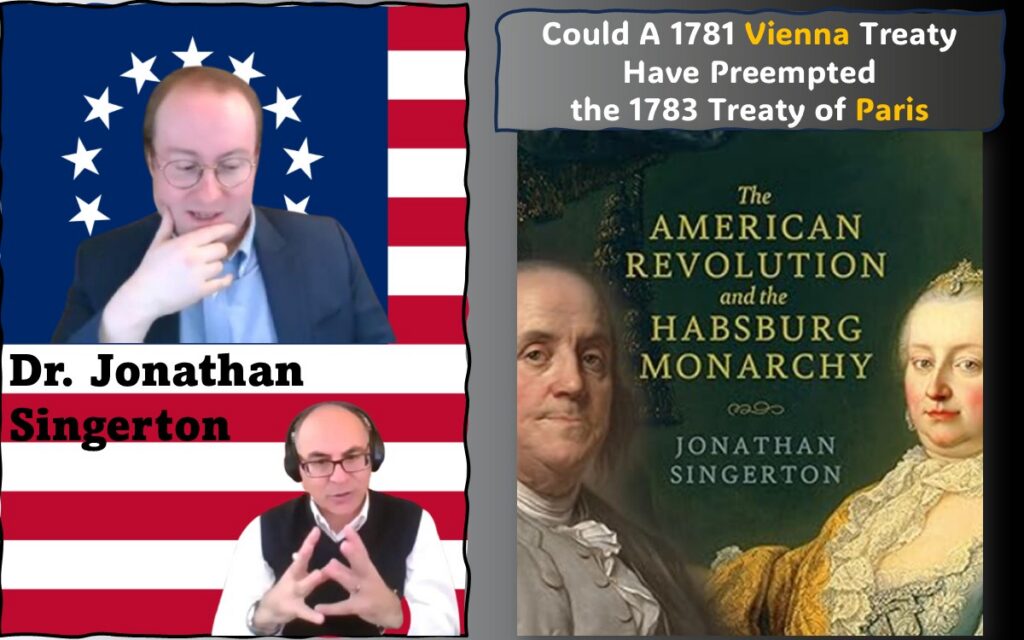 The Habsburgs and the American Revolution: A Missing Chapter
Religion and The Enlightenment
What impact did religion have on the Enlightenment? And what impact did the Enlightenment have on religion? Were religious institutions uniformly opposed to Enlightenment ideas? Was the Enlightenment itself hostile to religion? And how did debates about conscience, authority, and reason shape emerging ideas about religious liberty?
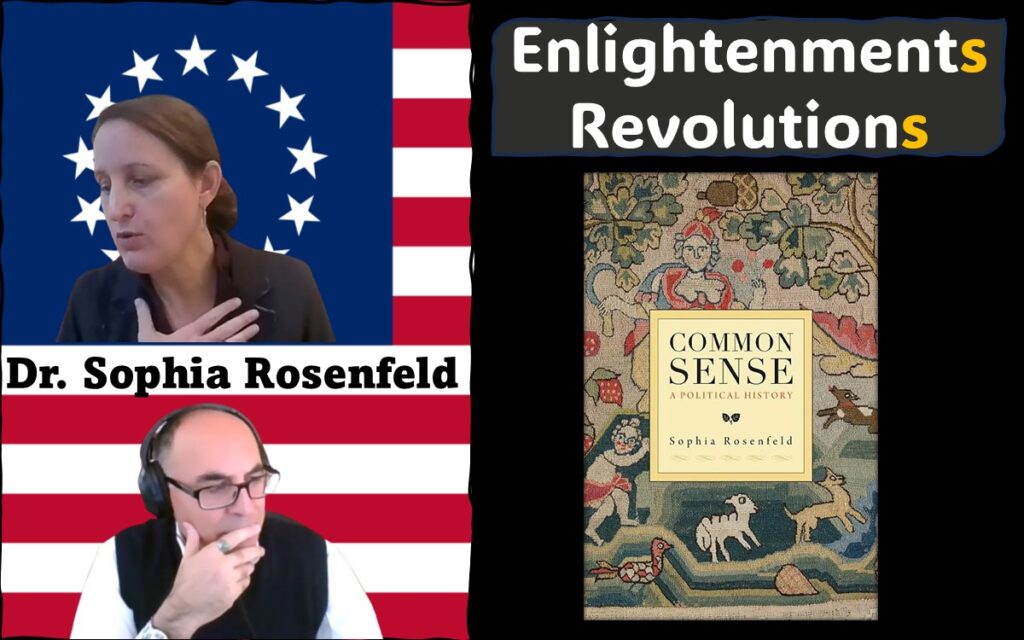
These questions are at the heart of my interview with Dr. Sophia Rosenfeld on the intellectual foundations of the American Revolution. Among other topics, we discuss the Enlightenment’s religious and anti-clerical strands, the relationship between reason and faith, and how ideas that emerged in eighteenth-century Europe influenced political thought in revolutionary America.
►My interview with Dr. Sophia Rosenfeld: The Enlightenment and Intellectual Foundations of the American Revolution
Dr. Rosenfeld’s major works include the following:
- The Age of Choice: A History of Freedom in the Modern World
- Common Sense: A Political History
- A Revolution in Language: The Problem of Signs in Late Eighteenth-Century France
- Democracy and Truth: A Short History
 The Enlightenment’s Anti-Clerical and Religious Variants
Thomas Paine’s Views On Religion
Was Thomas Paine anti-religious? In his view, what is government’s only role in religion? How did Paine perceive religious diversity in the American colonies? What did Paine me by “civic religion”? Was Paine’s Age of Reason an attack on organized religion and a defense of God?
►My interview with Dr. Harvey Kaye: Thomas Paine to Obama: Why America’s “Original” Founder Still Matters Today
Dr. Kaye’s major works include the following:
- The Powers of the Past: Reflections on the Crisis and the Promise of History
- Why Do Ruling Classes Fear History?
- Are We Good Citizens? Affairs Political, Literary, and Academic
- The Fight for the Four Freedoms: What Made FDR and the Greatest Generation Truly Great
- Thomas Paine: Firebrand of the Revolution
- Thomas Paine and the Promise of America
 Paine’s Influence Through the Ages-What He Would Say About America Today
The Loyalists and Religion
Could one predict who would become a Loyalist by their religion? Did you know that General Nathaniel Greene was a “Fighting Quaker”? Who served as ministers in Anglican churches throughout the colonies? Were Presbyterians and Lutherans more likely to support the Crown or the Revolution?
►My interview with Dr. Rebecca Brannon: Was the American Revolution a Civil War? Story of American Loyalists
Dr. Brannon’s major works include the following:
- From Revolution to Reunion: The Reintegration of the South Carolina Loyalists
- A Cultural History of Old Age in the Era of Enlightenment and Revolution (1650-1800)
 Was It Possible to Predict Who Would Become a Loyalist—or Even Determine Who Was a Loyalist?
About This Program
Analyzing American Revolution (AAR) is a special series podcast production of the History Behind News program. In this series, 33 professors (and counting) analyze the American Revolution from 33 different angles through in-depth interviews with host Adel Aali.
Meet Our Guest Scholars
A structured body of thought on the American Revolution—where leading scholars advancing distinct interpretations that give this program its depth.

Thematic Collection
Tap below for a closer look at the Revolutionary Era themes we examine—and to meet our guest scholars.

Library
- Interview Transcript Highlights
- Interview Image and Artist Highlights
- Quiz Answers and Backstories

Image Gallery
Explore the backstories and artist bios behind images of our Founding—before and after the American Revolution. These visuals shape how we remember—and reimagine—the Revolutionary Era.

Support AAR
AAR is an independent program built on sustained research, preparation, and production. Your support helps continue this series and expand our program.

Experienced Analysis of History
About HbN Program
The History Behind News program (HbN) is committed to making in-depth history researched and written by scholars enjoyable and accessible to everyone. Our motto is bridging scholarly works to everyday news.
The histories we’ve uncovered encompass an impressively wide range of subjects from ancient history to U.S. politics and economy to race, women’s rights, immigration, climate, science, military, war, China, Europe, Middle East, Russia & Ukraine, Africa and the Americas to many other issues in the news. We also receive advanced copies of scholarly books and discuss them in our program (in the context of current news).

Adel Aali, host. Snapshot from his introductory video to AAR podcast.
233 Scholars & Counting
Our guests are scholars at leading institutions. They are highly recognized, having received prestigious grants and fellowships as well as notable awards, including the Pulitzer Prize. They include celebrated documentary producers, former White House advisors and other high-ranking government officials, and current and former senior reporters of major national and international newspapers. Many have testified in Congressional hearings, and others frequently contribute to major media outlets and widely read publications.
Think You Know the American Revolution?