Updated: April 23, 2026
Boston Tea Party: Why China Mattered to the American Revolution – Part I
China wasn’t part of the American Revolution…
or was it?
In the 1760s and 1770s, American colonists weren’t just thinking about liberty—they were thinking about status, taste, and refinement.
Tea, porcelain, and lacquerware weren’t trivial imports. They were tied to British culture and elite aspiration. Even in the colonies, artisans imitated East Asian styles, reflecting how deeply these goods shaped social identity.
But access to them was controlled.
The British East India Company held a monopoly over the tea trade, linking everyday consumption to imperial power. What people drank, displayed, and valued was not just a matter of preference—it was structured by a global system of trade and control.
This is what makes tea so significant.
By the time it became a political flashpoint, tea was more than a commodity. It connected China, commerce, and colonial resistance in ways that are easy to overlook.
So the issue wasn’t just taxation.
It was something deeper:
How do you resist an empire when your identity, your habits—even your sense of refinement—are shaped by the very system you’re pushing back against?
Maybe the Boston Tea Party wasn’t just an act of protest…
…but a moment where global trade, social ambition, and political resistance collided.
Here is the portion of my interview with Dr. Serena Zabin that speaks directly to this point:
About Featured Images
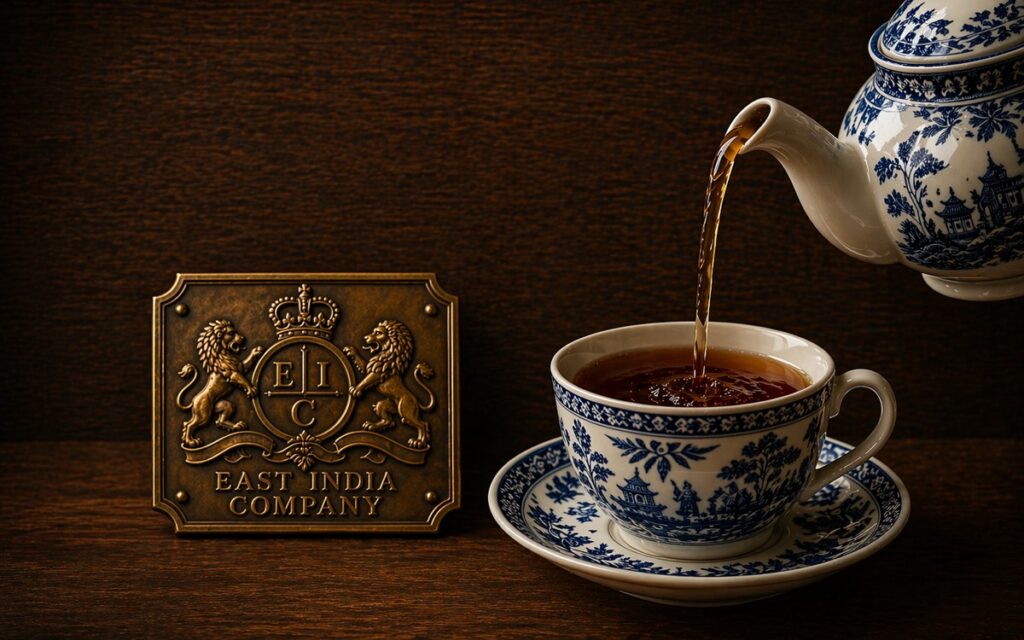
Teapot pouring tea into a porcelain teacup beside a brass East India Company plaque on a wooden surface. Image created by AAR.
Unless otherwise indicated, all images in AARevolution—including those in this post—are in the public domain.
Related Interviews and Essays
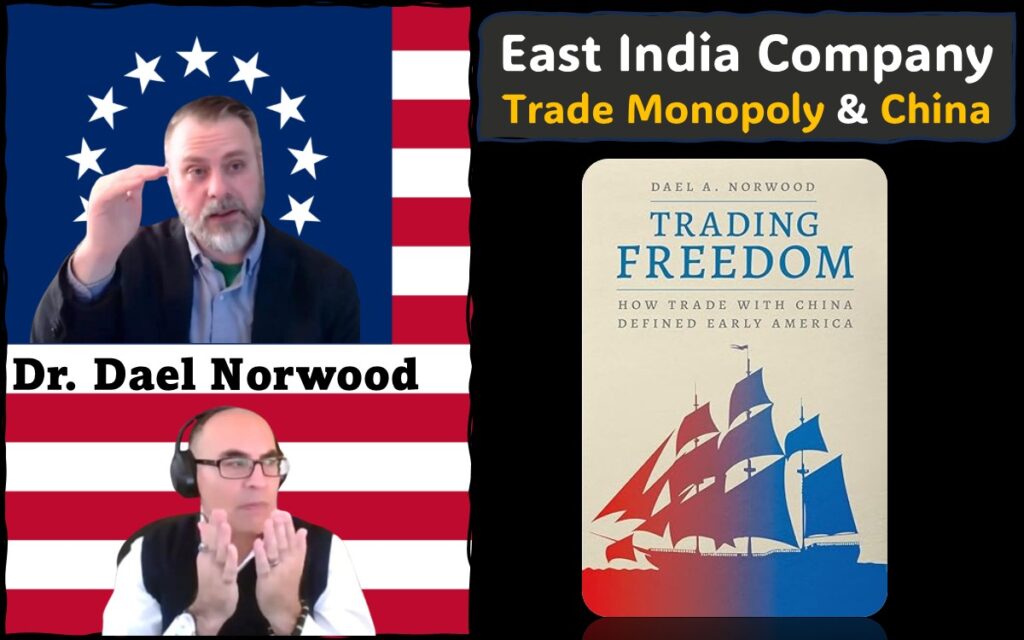
For more on the history of China and early America, see my full conversation with Dr. Dael Norwood —including our interview’s video, timestamps for key sections, and my takeaways.
 China, Trade, and Consumer Goods in Colonial America
Dr. Norwood is the author of Trading in Freedom: How Trade with China Defined Early America
This 5-Part Series
- Part I: American Colonists Thought About China (this essay)
- Part II: China Indirectly Affected British Trade and Tariff Enforcement (that essay will be linked here when it publishes)
- Part III: The East India Company’s Role in Colonial Unrest (that essay will be linked here when it publishes)
- Part IV: Why the Boston Tea Party Became a Revolutionary Flashpoint (that essay will be linked here when it publishes)
- Part V: China Trade After Independence: American Strategies to Out-Compete British Trade in China (that essay will be linked here when it publishes)
About This Program
Analyzing American Revolution (AAR) is a special series podcast production of the History Behind News program. In this series, 33 professors (and counting) analyze the American Revolution from 33 different angles through in-depth interviews with host Adel Aali.
Thematic Collection
Tap below for a closer look at the Revolutionary Era themes we examine—and to meet our guest scholars.

Library
- Interview Transcript Highlights
- Interview Image and Artist Highlights
- Quiz Answers and Backstories

Image Gallery
Explore the backstories and artist bios behind images of our Founding—before and after the American Revolution. These visuals shape how we remember—and reimagine—the Revolutionary Era.

Experienced Analysis of History
About HbN Program
The History Behind News program (HbN) is committed to making in-depth history researched and written by scholars enjoyable and accessible to everyone. Our motto is bridging scholarly works to everyday news.
The histories we’ve uncovered encompass an impressively wide range of subjects from ancient history to U.S. politics and economy to race, women’s rights, immigration, climate, science, military, war, China, Europe, Middle East, Russia & Ukraine, Africa and the Americas to many other issues in the news. We also receive advanced copies of scholarly books and discuss them in our program (in the context of current news).

Adel Aali, host. Snapshot from his introductory video to AAR podcast.
233 Scholars & Counting
Our guests are scholars at leading institutions. They are highly recognized, having received prestigious grants and fellowships as well as notable awards, including the Pulitzer Prize. They include celebrated documentary producers, former White House advisors and other high-ranking government officials, and current and former senior reporters of major national and international newspapers. Many have testified in Congressional hearings, and others frequently contribute to major media outlets and widely read publications.
Think You Know the American Revolution?