Historians debate whether recognition requires official state action—or whether a public gesture can have significant impact and, for all intents and purposes, be tantamount to recognition.
Time's up
Clockwise from top left: Johannes de Graeff (Dutch governor of St. Eustatius); Joseph II (Holy Roman Emperor); Louis XVI (King of France); and comte de Vergennes (French foreign minister)
Question Hint:
This letter did not come to light until the 21st century.
Time's up
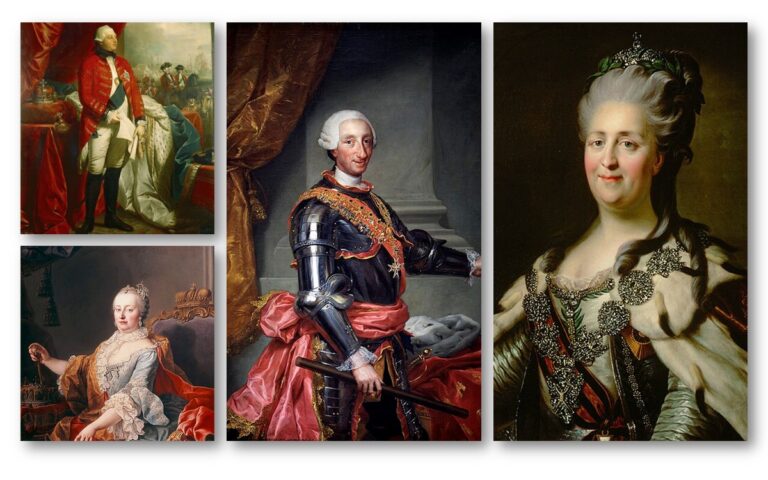
Clockwise from bottom left: Empress Maria Theresa, King George III, King Carlos III, Empress Catherine II
Question Hint:
The answer to this quiz hinges on a major shift in Britain’s strategic priorities.
Time's up
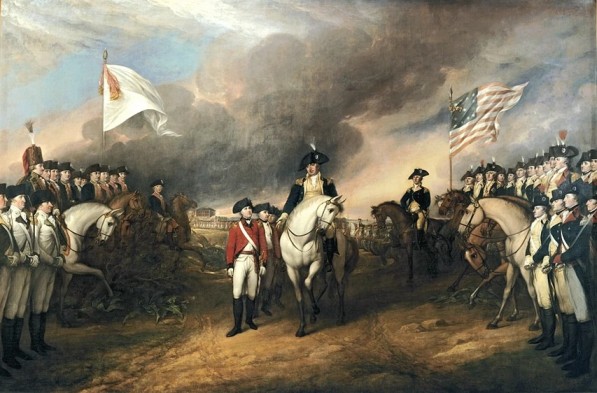
"Surrender of Lord Cornwallis", a painting by John Trumbull depicting the British surrender in 1781. If you look closely, you'll note that a very important person is missing. Click image to learn who.
Question Hint:
Their monarch famously issued a declaration that led to the League of Armed Neutrality.
Time's up
Two portraits of Hessian soldiers during the American Revolution. Hessians.
Question Hint:
Hint: This Founding Father’s father was a maltster.
Time's up
Clockwise from top: Samuel Adams; Benjamin Franklin, Thomas Jefferson, and Joseph Warren.
Question Hint:
Hint: The person who penned this famous line transformed a rebellion in the American colonies into a full-fledged Revolutionary War for independence. Brief explanation and link to the deeper-dive appear after the quiz.
Time's up
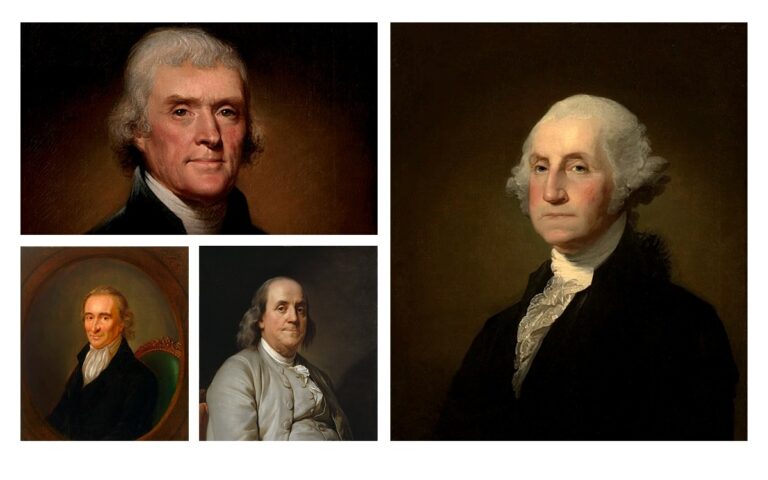
Clockwise from top: Thomas Jefferson, George Washington, Benjamin Franklin, and Thomas Paine.
Question Hint:
Hint: Consider both the immediate deaths and those who later died from wounds received that night. Brief explanation and link to the deeper-dive appear after the quiz.
Time's up
The Boston Massacre, March 5, 1770
Question Hint:
Hint: This organizational innovation proved crucial to the Revolution’s success. Brief explanation and link to the deeper-dive appear after the quiz.
Time's up
Boston Committee of Correspondence meeting under the Liberty Tree